
Last updated November 18, 2026








Free written scope consultation - allowances, timeline, and change-order rules on paper before a single trade is scheduled
Kitchen Remodeling Warning Signs Every Homeowner Should Know
Most kitchen remodeling disasters don’t start with a bad tile job. They start with a conversation. A contractor walks through your kitchen, nods at the cabinets, says “we’ll figure out the details as we go,” and gives you a number out loud instead of on paper. That single moment – a verbal quote with no written scope behind it – is the most reliable predictor of a surprise invoice six weeks later. We’ve watched it play out across North Las Vegas kitchens from Aliante to the older blocks off Carey Avenue, and it almost never turns out well. This guide covers the warning signs you can spot before you hire and the ones that only surface mid-project, when walking away gets expensive.
Quick Answer
The biggest kitchen remodeling warning signs are no written quote, no verified license, a deposit over 50% upfront, and a contractor who can’t explain the permit process. Mid-project, watch for work that expands without a signed change order, unexplained crew absences, and materials swapped without your approval. Any one of these is a reason to stop and ask questions before the next payment goes out.
Styles & brands we work with
- Kitchen remodeling
- Bathroom remodeling
- Home additions & ADU
- Roofing
- Windows & doors
- Driveway & pavers
- Fence
What You’ll Find in This Guide
- Pre-Hire Warning Signs You Can Walk Away From
- Why the Permit Process Is the Truest Test of a Contractor
- Mid-Project Warning Signs When Walking Away Gets Expensive
- What a Legitimate Change Order Looks Like
- How to Read a Contract for Landmines Before You Sign
- The Contractors Who Go Quiet: Busy Versus Hiding Something
- Material Swaps and the Brands You Actually Approved
- Common Mistakes to Avoid
- Frequently Asked Questions
Pre-Hire Warning Signs You Can Walk Away From
The cheapest moment to fire a contractor is before you’ve paid them anything. That’s why the vetting stage matters more than any other part of a kitchen remodel. In our experience, the pre-hire red flags are consistent enough that you can screen for them in a single conversation.
Here’s what to watch for:
- No written quote. If the number lives only in the air, it isn’t real. A written price before any work starts is the baseline, not a premium service.
- No license you can verify. Ask for the license number and confirm it with the state. A contractor who dodges the question is telling you something.
- A deposit over 50% upfront. Large upfront draws are a classic cash-flow warning. A reasonable deposit for materials and scheduling is normal; handing over half the project cost before a single cabinet comes off the wall is not.
- They can’t explain their permit process. If they can’t tell you who pulls the permit, which jurisdiction issues it, and when the inspection happens, they probably aren’t pulling one.
- Pressure to sign today. A real contractor will still be there next week. Scarcity language – “only two slots left” – is a tactic, not a fact.
North Las Vegas adds its own wrinkle here. Because so much of the housing stock went up during the mid-2000s boom, a lot of kitchens sit in homes where the original layout hides quirks: non-standard cabinet depths, plumbing that doesn’t match current code, and sometimes unpermitted prior work from a previous owner. A contractor who quotes your North Las Vegas kitchen sight unseen, without opening a cabinet or checking under the sink, is guessing. And you’ll pay for the guess later. If you’re weighing whether to hire a general contractor for the whole job or a specialist, our general contractor in North Las Vegas guide walks through how the roles differ.
Why the Permit Process Is the Truest Test of a Contractor
The permit process is where a contractor’s real operation shows. It’s also where cheap quotes fall apart, because permits cost money, inspections take time, and a contractor who skips them is quietly pocketing the difference.
A legitimate kitchen remodel in North Las Vegas involves at least three permit touchpoints. Here’s the sequence you should be able to recite after one conversation with your contractor:
- Scope identify. The contractor tells you exactly what in your kitchen triggers a permit – moving a wall, relocating plumbing or gas, adding or moving electrical circuits, changing the range hood venting. Cosmetic swaps like cabinet doors may not need one; structural and system changes usually do.
- Pull and post. The permit gets pulled under the licensed contractor’s name and posted visibly on site. Not “we’ll handle it later.” Not “my guy knows a guy.”
- Inspect at the right stages. Rough-in inspections happen after framing and systems are exposed, before drywall closes them up. Final inspection happens after cabinets, counters, and finishes are in.
Ask any contractor you interview: “Walk me through how the permit and inspection sequence works for my kitchen.” The answer tells you nearly everything. A pro answers in two minutes with real detail. A warning-sign contractor gets vague, changes the subject, or tells you permits aren’t necessary for “a job this small.” In North Las Vegas, that last answer is the loudest alarm bell in the room. Unpermitted kitchen work can complicate a future sale, and it can void insurance coverage on a claim tied to the work itself. When you’re comparing bids, ask each contractor the same question and compare. The one who answers cleanly is usually also the one who puts prices in writing.
Mid-Project Warning Signs When Walking Away Gets Expensive
The hardest phase of any remodel is the middle. You’ve paid a deposit, cabinets are on order, and suddenly walking away means losing money and time. This is when the second category of warning signs shows up, and when awareness matters most.
Watch for these mid-project signals:
- Scope creep without a written change order. The job “just needs” one more thing and the price goes up verbally. Every addition needs paperwork.
- Unexplained crew absences. A day lost to weather is normal. A week of silence with no explanation is not. If nobody tells you why your crew didn’t show, that’s a communication failure even before it’s a scheduling problem.
- Materials swapped without approval. If you approved a quartz counter from a specific brand and something different arrives, that’s not a “close enough” – it’s a bait and switch unless you signed off.
- “It costs more now” with no detail. A real cost increase has a cause, a price, and a document. Anything else is an invoice surprise waiting to happen.
- No photo updates. If you have to drive across town to see progress, or worse, to verify that progress happened at all, your contractor’s communication is broken.
In North Las Vegas, we’ve seen the timing of these warnings line up with the summer heat. When afternoon temperatures push past 110, exterior work that feeds into a kitchen remodel – venting, window swaps, exterior doors – slows down. A contractor who tells you up front how the heat will affect your schedule is being straight with you. One who blames “delays” with no specifics is probably managing something else, and not well. If you’re also planning a bathroom during the same stretch, our guide to bathroom remodeling in North Las Vegas covers how to slot two projects without one eating the other’s schedule.
What a Legitimate Change Order Looks Like
A change order is a written amendment to your original contract. It says what’s changing, why, what it costs, and how it affects your timeline. A contractor saying “it costs more now” is not a change order. It’s a conversation. And in a dispute, conversations don’t hold up.
Here’s what a real change order contains, every time:
- Description of the change. “Relocate the sink plumbing eight inches to fit the new cabinet run” – not “adjust plumbing.”
- Reason for the change. Usually one of four: you asked for it, an unforeseen condition surfaced, code required it, or a material became unavailable.
- The price delta. A specific number, positive or negative, that gets added to or subtracted from the contract total.
- Timeline impact. Does the completion date move? By how long? A change order without a schedule note is half a change order.
- Your signature. Nothing proceeds until you sign. Ever.
This is where the surprise invoice gets built. A contractor who handles changes verbally can stack five “small” additions over a six-week job and hand you a bill that’s 40% higher than the number you thought you agreed to. The remedy is process, not vigilance: a contractor whose standard practice is a written change order before any new work starts makes the warning signs nearly impossible to hit. Ask in the interview: “Show me a sample change order from a recent job.” A pro will have one ready. A warning-sign contractor won’t.
How to Read a Contract for Landmines Before You Sign
Most homeowners read the price and skim the rest. That’s backward. The clauses below the price are where the real risk sits, and in a North Las Vegas remodel, they almost always appear in the same small handful of spots.
Read for these specifically:
- “Unforeseen conditions” language. A clause allowing the contractor to bill extra for conditions they didn’t foresee is standard in this trade – but the scope of “unforeseen” matters. Vague language that lets them bill for anything they “didn’t expect” is a landmine. Well-written language names what qualifies: hidden water damage, structural issues behind drywall, code violations from prior work.
- The payment schedule. Deposits, draws, and final payments should tie to completed milestones, not dates. “Due June 15” is weaker than “due when rough-in inspection passes.”
- Change-order procedure. Without a written procedure, you have no leverage when the price moves.
- Warranty terms. What’s covered, for how long, and what voids it? A warranty that disappears if you use another contractor for a thermostat swap isn’t much of a warranty.
- Dispute resolution. Mediation clause? Arbitration? Court? You want to know before you need to.
- Cancellation and lien notices. Nevada has specific rules around mechanics’ liens and cancellation rights. Missing notices in the contract are a warning sign.
Bring the contract home. Read it twice. If a clause is unclear, ask for it in writing – an email from the contractor clarifying the point counts. Any contractor who resists explaining a clause, or pushes you to sign “because the crew starts Monday,” is telling you how they’ll handle every disagreement on the job. High-pressure signing is the contract-stage version of the “only two slots left” pitch. Both come from the same playbook. If you want to see what a clean, milestone-tied schedule looks like in practice, the kitchen remodeling in North Las Vegas process page walks through it step by step.
The Contractors Who Go Quiet: Busy Versus Hiding Something
A two-day gap in texts isn’t automatically a crisis. Contractors in the middle of a big install genuinely do go quiet for a stretch. The skill is telling “busy” apart from “hiding.”
Here’s how to tell the difference:
- Busy means no reply for a day but a live update the next time you ask, plus a specific reason. “I was on a tile set all day yesterday – here’s a photo of where we got to.”
- Hiding means the silence compounds. You ask for a status, get nothing, ask again, get a one-line reply, then silence for four more days.
- Busy keeps the written record current. Delays get communicated before they happen, not after.
- Hiding lets the schedule slip without acknowledging it until you press. When pressed, the story shifts.
The fix is the same for both: ask for it in writing. A contractor willing to put “the cabinet delivery was delayed to Thursday and the counter template is Friday” in a text or email is being transparent, even if they’re slow to reply. A contractor who only communicates by phone – where nothing gets recorded – is removing your evidence trail. In North Las Vegas, we’ve seen this show up most often with out-of-state crews who take on projects here and leave the state after the deposit clears. If your contractor’s address, phone log, and schedule don’t add up, trust the pattern over the promise. Photo updates before and after are the standard you should expect; if your contractor can’t produce them, the quiet isn’t about busy.
Material Swaps and the Brands You Actually Approved
Material swaps are one of the quietest warning signs because they often look fine. The countertop is still quartz. The cabinet doors still close. The windows still open. And yet what landed isn’t what you approved, and the price doesn’t reflect the swap in your favor.
Where this shows up most in North Las Vegas kitchens:
- Countertops. You approved a Cambria, Silestone, or Caesarstone slab; a no-name slab shows up at a similar color. The brands are different for a reason: durability, stain resistance, warranty backing.
- Cabinets. KraftMaid and Wellborn both carry manufacturer warranties. A generic cabinet from a local fabricator may not.
- Windows and doors. Names like CWS and ES Windows have specific ratings and warranty support. If your spec sheet listed a brand and something else arrives, ask.
- Fixtures. A Kohler or Moen fixture has identifiable model numbers on the box and the piece. Verify before installation.
The remedy is simple: keep your approved spec sheet, and inspect deliveries before they get installed. Not after. A contractor who resists this is telling you something. If you hired on a written price, the materials should match the written scope line by line. For a look at the full home picture – including how exteriors and roofing partnerships tie in – see our Sawyer Remodel North Las Vegas home page.
Common Mistakes to Avoid
- Accepting a verbal quote “to save time.” The time you save now gets spent arguing over the invoice later. A written price takes a day and protects the whole project.
- Paying the full deposit before the permit is filed. In North Las Vegas, the permit is your proof the contractor is operating legally in this jurisdiction. Payment should not get ahead of paperwork.
- Approving “small” changes verbally. A hundred-dollar addition approved on the phone becomes a thousand-dollar line item at reconciliation. Every change in writing.
- Assuming the crew on day one is the crew on day thirty. Ask who’s assigned and whether a subcontractor will be brought in. Substitutions mid-project, especially without notice, are a warning sign.
- Skipping the manufacturer spec sheet. If you can’t point to the exact brand and model of a fixture you approved, you can’t tell if you got it.
- Reading the contract for price only. The clauses around unforeseen conditions and change orders matter more than the bottom line. They’re where the surprise lives.
- Letting heat and season catch you by surprise. North Las Vegas summers slow exterior work and complicate cabinet installs in unconditioned garages. A contractor who plans around it is being honest; one who ignores it in the schedule is not.
See the difference
 Before
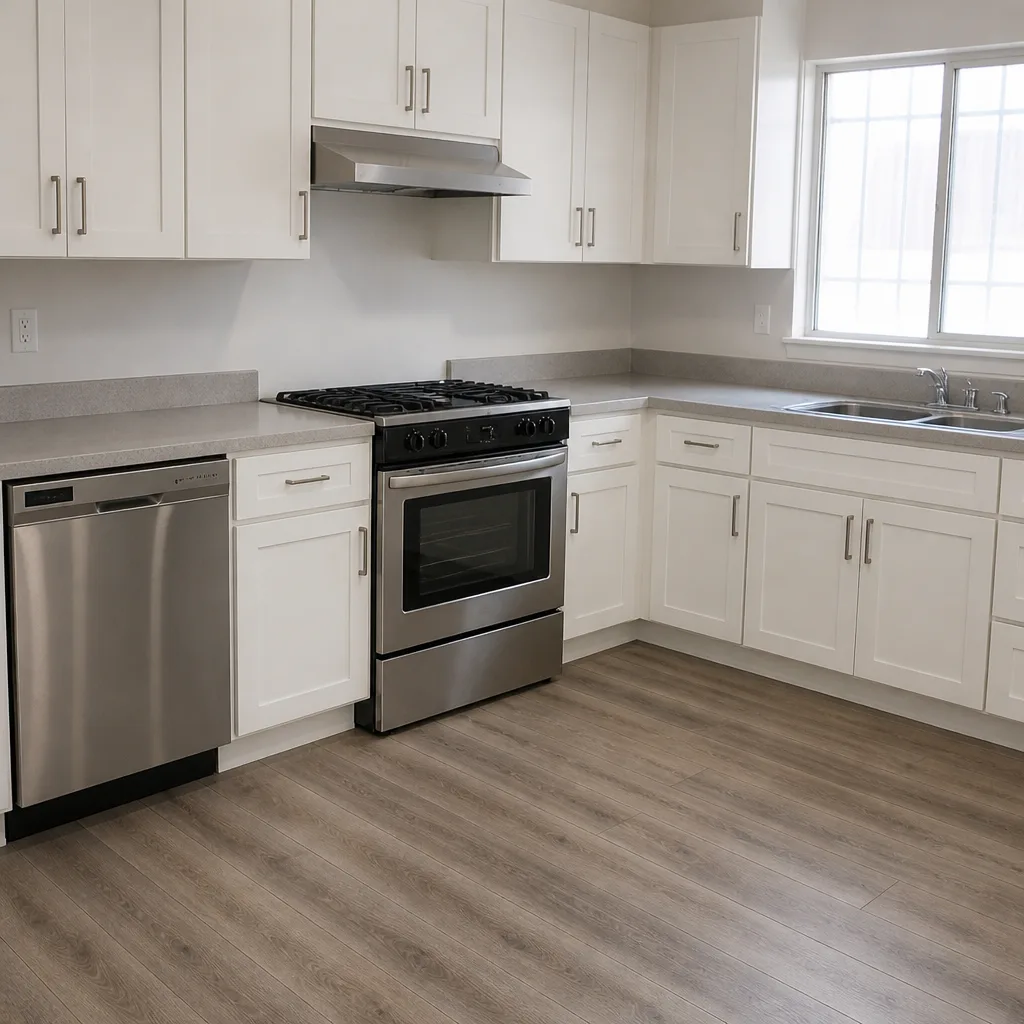 After
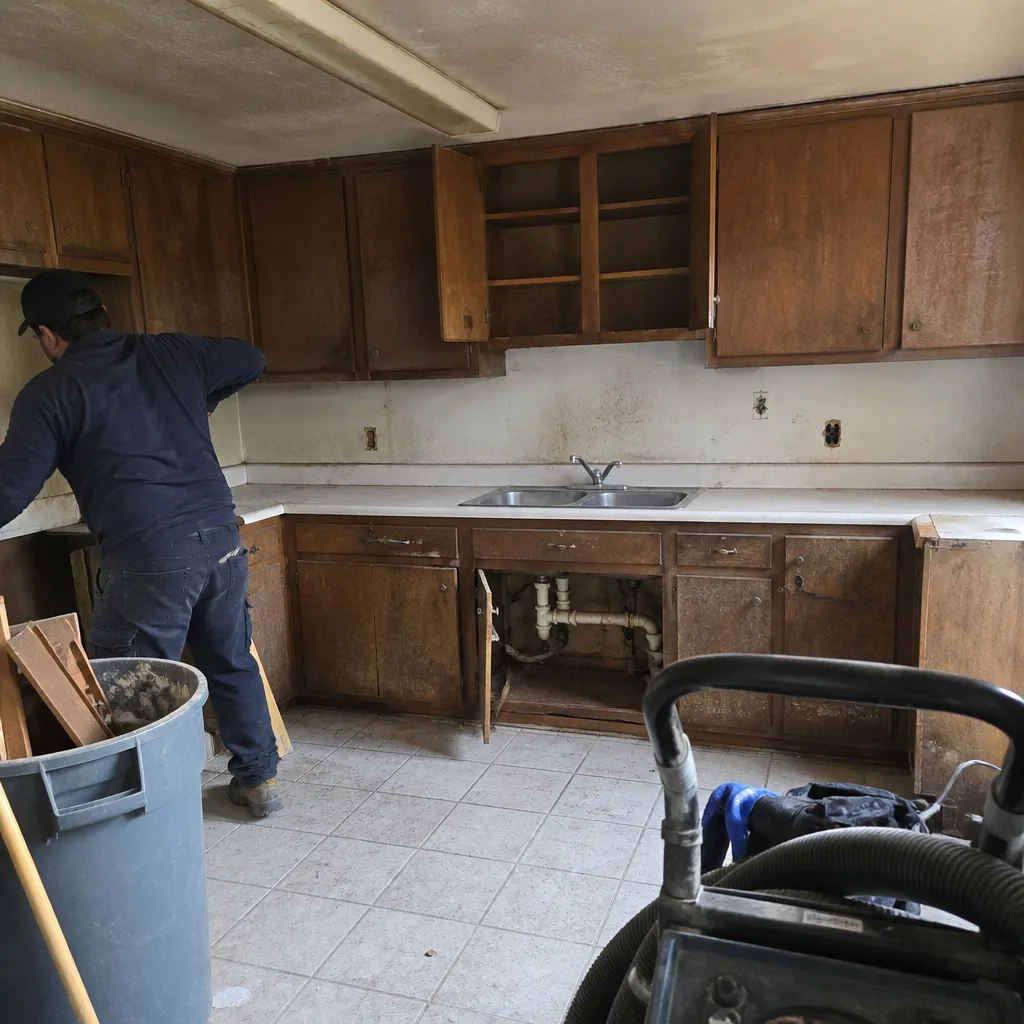 Before
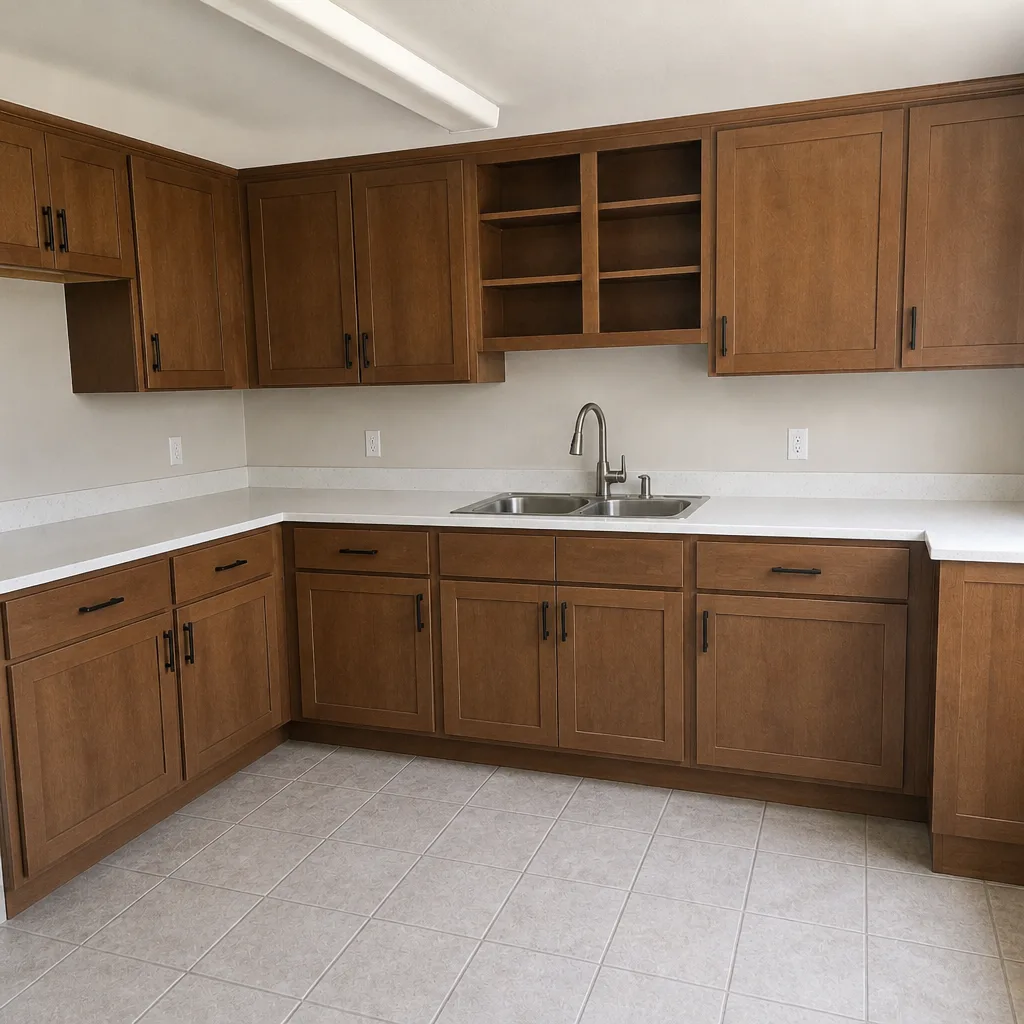 After
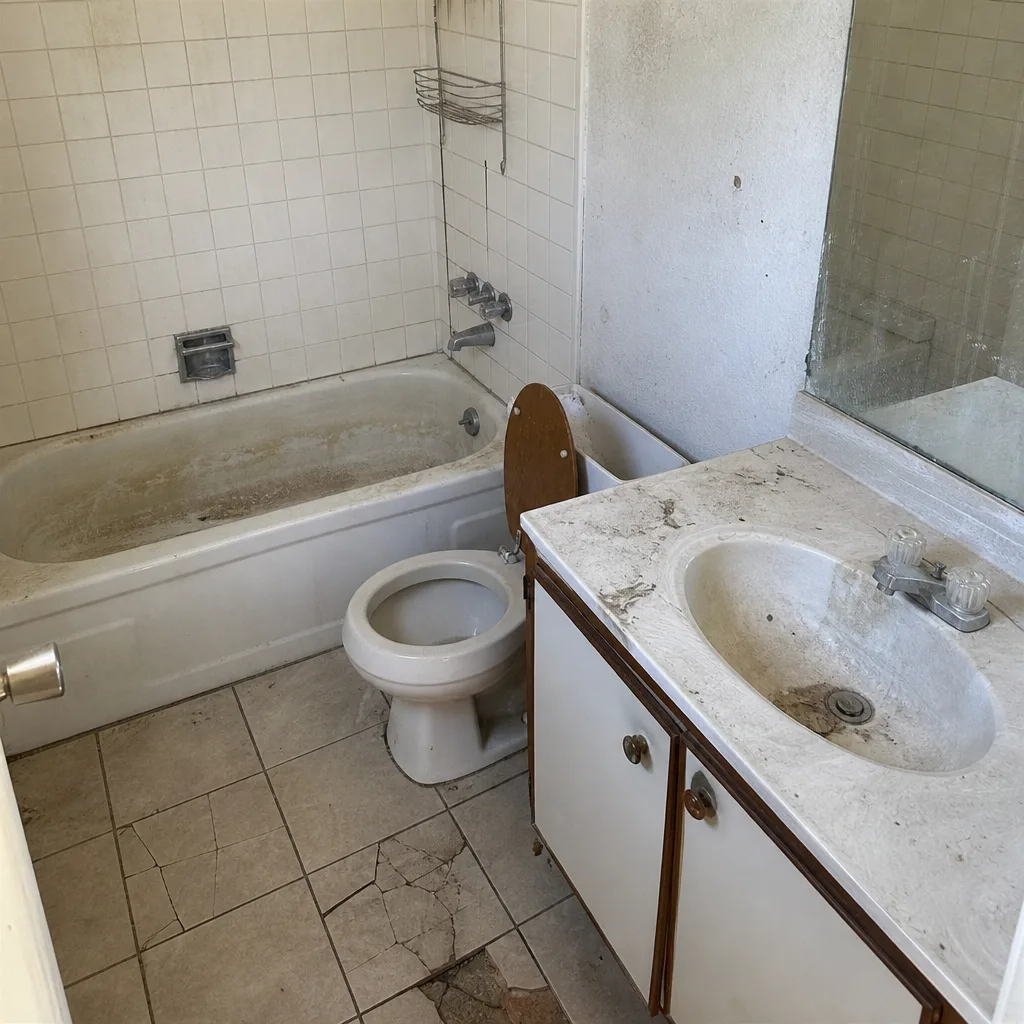 Before
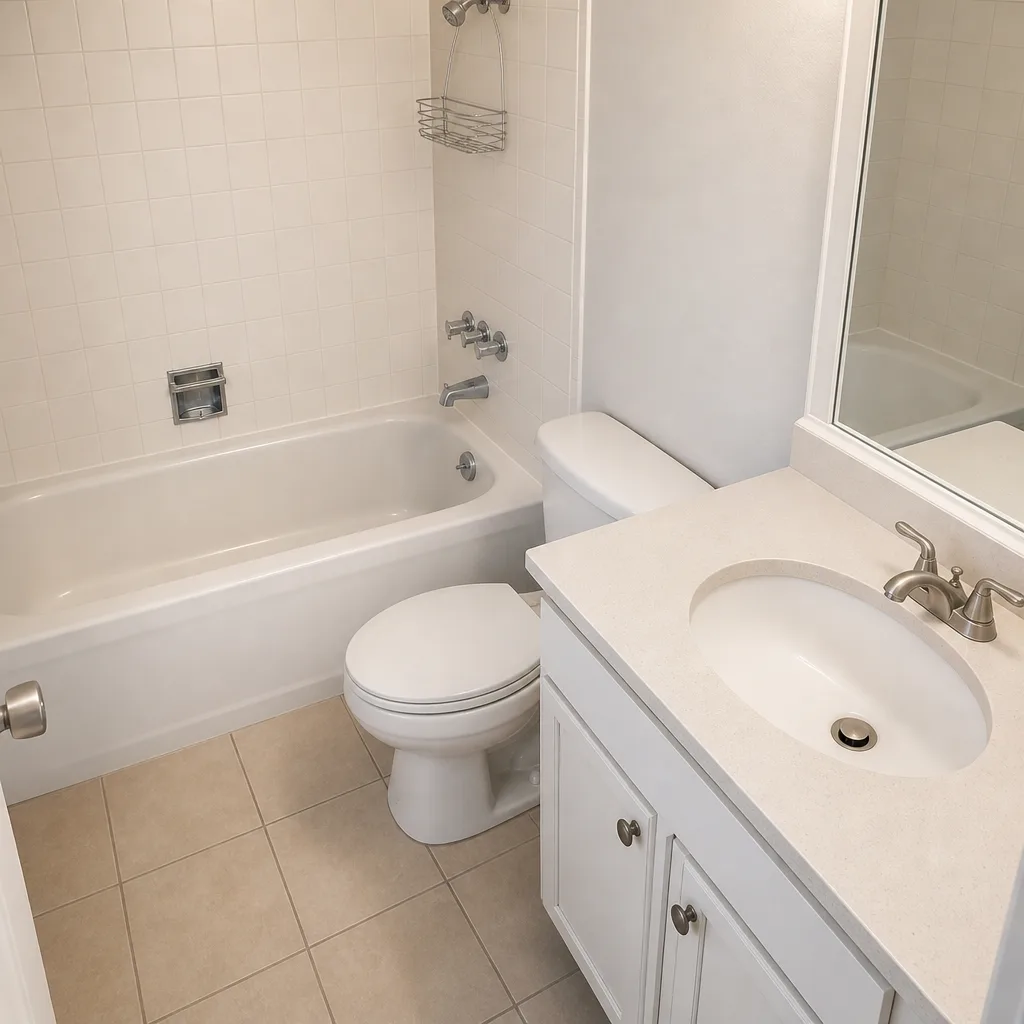 After
When to Call a Professional

Some kitchen problems don’t wait for a scheduled remodel. Water damage under a sink, a failing shutoff valve, a gas line concern, an electrical panel that can’t support the appliance load you want – those need a licensed professional now, not a weekend DIY attempt. Electrical and gas work in particular are genuinely dangerous, and no guide should walk you through doing them yourself. Our technicians have up to 21 years of experience, and every job we run is background-checked, uniformed, and covered by a written guarantee on the repair. If your kitchen has a live problem, or you want a written estimate before you commit to a remodel, stop guessing and get a professional assessment. Sawyer Remodel North Las Vegas offers free estimates in North Las Vegas – call (844) 834-9656.
Frequently Asked Questions
No written quote is the biggest red flag. A contractor who won’t put the price on paper is giving you nothing enforceable and everything to argue about later. Ask for a written scope and price before you sign anything.
Fifty percent upfront is high. A reasonable deposit for materials and scheduling is normal, but half the project cost before the first cabinet comes off the wall is a cash-flow warning. Ask what the deposit covers and whether the payment schedule ties to completed milestones.
A legitimate change order includes a description of the change, the reason for it, a specific price delta, any timeline impact, and your signature. Verbal “it costs more now” is not a change order, and you shouldn’t accept it as one.
Ask for the license number and confirm it with the state, and ask the contractor to explain their permit process for your specific kitchen. A licensed North Las Vegas contractor will pull the permit under their own name and walk you through the inspection stages. A warning-sign contractor will get vague or change the subject.
The main mid-project warning signs are scope creep without a written change order, unexplained crew absences, materials swapped without approval, and vague cost increases. Any of these should trigger a written question before the next payment goes out.
A busy contractor gets back to you the next day with a real update and a photo. A contractor hiding a problem goes quiet, gets vague when pressed, and lets the schedule slip without acknowledging it. Ask for written status updates on a fixed schedule – the answer will tell you which you’re dealing with.
Kitchen remodels in North Las Vegas often come in higher than quoted because of unpermitted prior work from the mid-2000s building boom, hidden plumbing or electrical issues behind drywall, and summer heat affecting exterior work. A contractor who checks under the sink and opens panels during the estimate is the one whose number holds. Call (844) 834-9656 for a written quote – estimates are free.
The Bottom Line
Kitchen remodeling warning signs come in two flavors: the ones you can walk away from before hiring, and the ones that show up mid-project when walking away is expensive. The first list is short – no written quote, no verified license, big upfront draw, no permit process – and every item on it is fixable by asking for the same thing: a written price, a clean schedule, and a process for changes. The second list is harder, but the same defense works. Written change orders, photo updates, and material receipts prevent almost all of it. Pick a contractor who puts the price in writing before work starts, informs you at every step, and answers the phone when you call. That’s the whole game.
If you’re planning a kitchen remodel in North Las Vegas and want a written price before anything begins, call Sawyer Remodel North Las Vegas at (844) 834-9656 for a free estimate. We answer by a live person, we show up when we say we will, and the number on the invoice is the number you approved.
Written by the team at Sawyer Remodel North Las Vegas.