Last updated November 18, 2026



Free written scope consultation - allowances, timeline, and change-order rules on paper before a single trade is scheduled
DIY vs Professional Bathroom Remodeling: What’s Safe to Do Yourself
Most homeowners ask the wrong question. They ask “am I handy enough?” The better question is “what happens if this specific task fails?” That reframe changes everything.
Every year we walk into bathrooms across North Las Vegas where a homeowner saved $400 on a weekend project and spent $6,000 fixing the damage eight months later. Not because they lacked skill, but because they picked the wrong task to save on. Some jobs fail loudly and cheaply. Others fail silently and expensively.
This guide draws that line task by task, so you spend your DIY energy where it actually pays off and step back from the work that can wreck the room.
Quick Answer
Demo, painting, vanity replacement, and finish work like trim and hardware are generally safe to do yourself. Tile setting is doable if you’re patient. Anything involving waterproofing in a wet zone, plumbing rough-in, or electrical work behind the walls is not a good DIY bet, because the failure mode is hidden damage that surfaces months later. In Nevada, electrical panel work and permitted plumbing rough-in legally require a licensed contractor.
Styles & brands we work with
- Kitchen remodeling
- Bathroom remodeling
- Home additions & ADU
- Roofing
- Windows & doors
- Driveway & pavers
- Fence
Table of Contents
- The Real Framework: Downstream Consequences, Not Skill
- Demo: The Cheapest DIY Win
- Waterproofing: The One Task to Never DIY
- Tile: Doable With Real Patience
- Plumbing Rough-In: Where Nevada Law Weighs In
- Electrical: The Legal Line
- Vanity Install and Finish Work: Yours for the Taking
- Does DIY Actually Save Money? Run the Math
- The Hybrid Approach: Structure It Right
The Real Framework: Downstream Consequences, Not Skill
Here’s the mental model we use on every bathroom in North Las Vegas. Sort each task by how its failure behaves. There are three buckets.
Fails loud and cheap. A crooked piece of trim, a vanity that sits slightly off level, a paint line that’s not sharp. You can see it, and redoing it costs a few hours. DIY these without hesitation.
Fails slow and moderate. Tile without enough cure time, a shower niche that leaks at the corner. You might not know for six to twelve months. Repair means removing finishes, then replacing them, so you pay twice for materials.
Fails silent and expensive. A pinhole in a waterproofing membrane. A plumbing joint behind a wall. A junction box buried under drywall. The damage accumulates out of sight, so you don’t learn about it until mold is in the studs or water is running down the inside of a wall.
The hidden-failure bucket is where a “small mistake” turns into a five-figure repair. It’s also where homeowners consistently overestimate themselves. In our experience, that’s the single biggest cost driver in owner-led bathroom projects in North Las Vegas. Not lack of talent. Wrong task selection.
Demo: The Cheapest DIY Win
Demo is the best value in DIY remodeling. Labor is heavy, it takes time, and any licensed professional will charge you for the hours. Doing it yourself is a clean win, with one exception that creates more work than it saves.
The win: pulling tile, pulling a vanity, tearing out drywall, and hauling debris. The exception: tearing out around plumbing or electrical you haven’t identified yet. A sledgehammer near a valve or a live wire is how an afternoon turns into a service call. Turn the water off at the main, kill the breaker, and mark pipes and wires before the first swing.
- Turn off the water at the main shutoff and shut off bath circuits at the breaker. Test with a meter, not a guess.
- Remove fixtures, vanity, and cabinet doors first. They come out clean and don’t need force.
- Mark all visible plumbing and wiring before you start on walls.
- Pull tile with a wide flat bar angled low. Don’t pry at the wall to remove tile; you’ll crack the substrate and multiply the work.
- Bag debris as you go. Dust escapes loose piles and settles across the house.
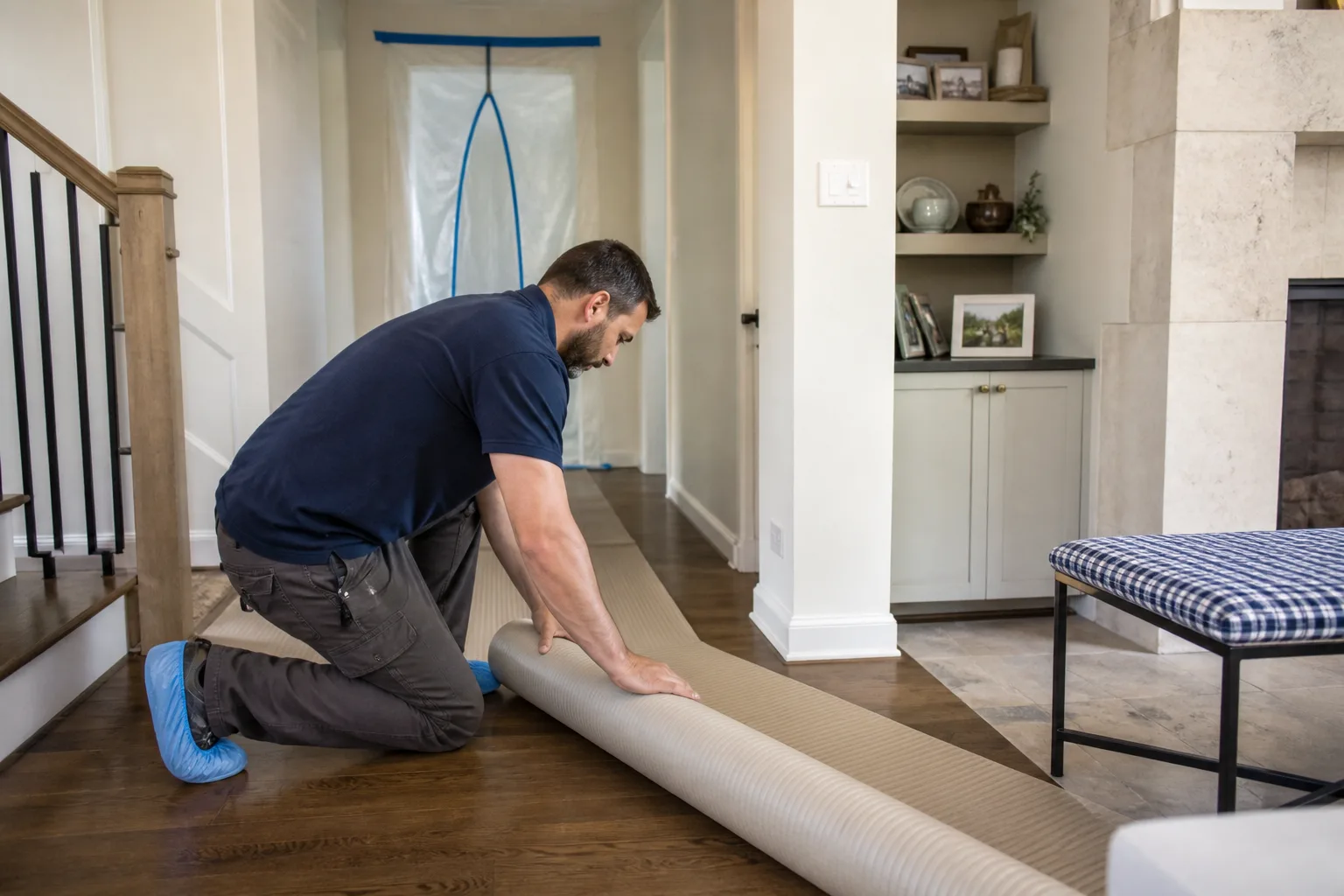
North Las Vegas demo has one quirk worth knowing. Our dry air means debris dust carries further into ducts and carpet than in humid climates. A quick layer of plastic and a fan pointing out a window saves a full-house cleanup. If you’re remodeling a bathroom in a newer community in North Las Vegas, expect drywall backing to be bolted to metal studs in some builds, which changes pry technique and tool choice.
Waterproofing: The One Task to Never DIY
Installing your own shower waterproofing membrane is the highest-risk DIY task in the bathroom. Not because it’s technically hard, but because a small gap anywhere in the membrane doesn’t announce itself. A pinhole miss means mold inside your wall that won’t surface until it’s a $6,000 remediation job, plus a rebuilt shower.
Waterproofing in a wet zone means a bonded sheet or liquid-applied membrane over the substrate, lapped correctly at corners and floor transitions, with a waterproofed slope to the drain and a pre-formed pan around the drain body. The tolerances are small. A lap that’s reversed, a fastener that goes through the membrane, a corner that’s taped but not sealed, or a pre-formed pan installed over a subfloor with any flex all create the same hidden outcome.
Here in North Las Vegas, our dryness is a help and a trap at the same time. The shower dries fast between uses, so tape-and-thinset mistakes don’t show up the way they would in coastal climates. Then the failure appears weeks after the tile went on. Not what you want to discover on a Tuesday night.
Some contractors will waterproof and set your tile while you do finish work elsewhere. That’s the right split. Never do all the finishing yourself and skip the waterproofing scope. The membrane is the one line we won’t cross on DIY.
Tile: Doable With Real Patience
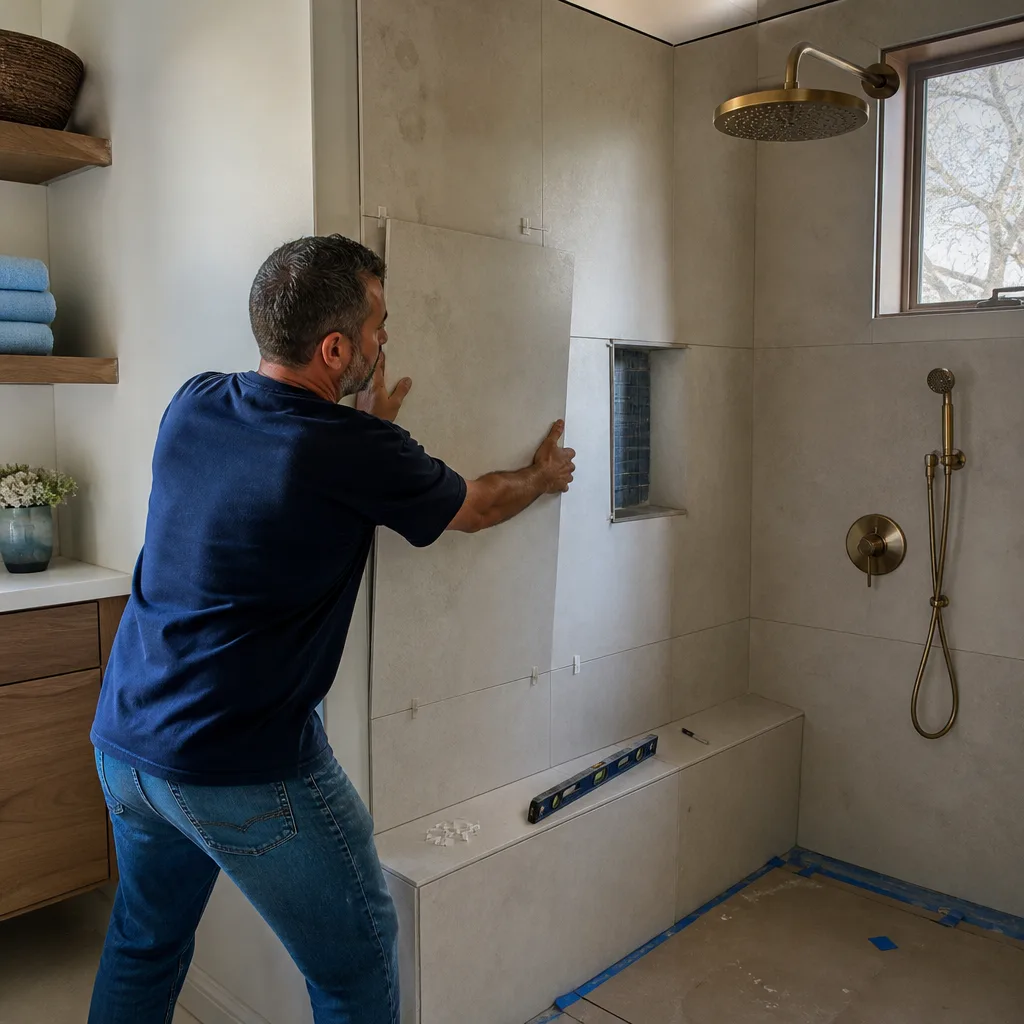
Tile is the most common DIY overreach. It looks like a knowledge problem, and it’s actually a time problem. Setting tile well requires layout, consistent bed depth, and cure time you don’t rush. A DIYer who budgets one weekend for a job that needs three will produce a finished shower that fails at the corners within a year.
Here’s the honest guide. Floor tile in a dry zone, backsplash, and trim tile are safe to DIY with reasonable patience. A full wet-area tile install, especially a shower floor, is where DIY budgets blow up. If you set a shower floor tile with the wrong slope, water pools and finds its way under the tile at the drain, whether the membrane is right or not. If you rely on mastic in a wet zone because it’s faster, that’s a recipe for delamination.
- Safe DIY: floor tile in the dry zone, backsplash, accent niches, caulk lines, trim tile.
- Careful: wall tile around a tub. Doable, but plan for prep and cure time.
- Leave it to a pro: a shower floor, a shower enclosure with a niche, any tile installed over a new waterproofed pan.
One local note. Our water in the North Las Vegas area runs hard, and hard water is a late-discovery problem with improperly sealed grout. If you’re doing your own tile, seal it and understand the trade-off before you install. If you’d rather not manage that, a Bathroom Remodeling in North Las Vegas crew will set the tile on a waterproofed base with the right cure times.
Plumbing Rough-In: Where Nevada Law Weighs In
Plumbing relates to what fails when it’s hidden inside a wall. Any plumbing rough-in that requires a permit in North Las Vegas needs a licensed contractor, which means relocated drains, moved supply lines, or a moved toilet. Replacing a showerhead, a sink fill valve, a shutoff, or a flexible supply line is fine to do yourself. Moving a drain in the slab is not a homeowner job.
Nevada law and North Las Vegas permitting requirements call for licensed plumbing on permitted rough-in work. Skip the permit and the problem isn’t just a failed inspection. It’s a project that can’t be finalized or sold, and a future buyer’s inspector will catch a rough-in that doesn’t match the permit file. Sellers get hurt on this every year.
The quiet failure mode in plumbing is a slow leak on a joint that’s buried, or a fixture set too close to the substrate. Both look fine when you close up the wall and both cost real money to fix. Water behind a vanity or a shower pan doesn’t need a catastrophic break to cause damage; a drip over weeks is enough.
The dividing line, clearly:
- Okay to DIY: replacing a faucet, changing a showerhead, swapping a flapper, replacing a supply hose.
- Permit required, licensed contractor: relocating a drain, moving supply lines inside a wall, replacing a shower valve body, adding a second sink on a shared drain.
If you’re tearing into tile and drywall anyway, ask for a rough-in quote alongside the scope. It’s cheaper now than after the drywall goes back up. Our General Contractor in North Las Vegas page covers what a permit-ready scope looks like.
Electrical: The Legal Line
Electrical is where Nevada law is clearest and where homeowners most often blur the rules. Replacing an outlet cover is fine. Replacing a bathroom exhaust fan is doable for an experienced homeowner on a straight swap of same location and same circuit. Anything touching your electrical panel, a new circuit, a fan wired into ceiling joists with a bathroom damper, or wiring new outlets in a wet zone requires a licensed electrician.
The reason isn’t bureaucracy. Bathroom electrical lives in a wet environment. A missing ground, a bad GFCI, or a light fixture installed too close to the shower envelope is the kind of mistake that sits quietly for years, and then doesn’t. Smoke is one thing to avoid; hidden junction boxes and improper wire connections behind drywall are a bigger deal because they don’t produce a visible warning.
We flag this clearly because the DIY safety discussion too often stops at “wear safety glasses.” A missing ground is not a safety-glasses problem. It’s a training-and-licensing problem. The right answer is a licensed electrician and a permit, not a YouTube tutorial.
Safety caveat: never work live in an electrical panel. Any panel work, new branch circuit, or wiring inside the shower envelope requires a licensed electrician. We don’t provide step-by-step instructions for that work, because the wrong instruction is a hazard.
Vanity Install and Finish Work: Yours for the Taking
The vanity is the poster child for a good DIY project. Clear scope, mostly cosmetic, and a failure you can see. A vanity installed off level doesn’t cause hidden damage; you see it and correct it. If you’re replacing a vanity on the same plumbing rough-in, the work is manageable with a helper and a couple of hours.
Finish work rounds out the safe bucket: paint, baseboard, towel bars, mirror hanging, trim, lighting on existing wiring (with the breaker off), caulk lines, and shelving. These are the chores that turn a “done” bathroom into a finish product, and they’re worth doing yourself.
Two local notes for North Las Vegas:
- Set your vanity on a plywood shim and check both level and plumb before you notch the back. A crooked vanity telegraphs to the countertop edge and drives the whole look.
- Use quality caulk rated for wet zones. Cheap caulk fails at the seals in a wet environment, and that’s the first thing a buyer’s inspector notes.
Where we see homeowners get hurt is scope creep. “I’ll do the vanity” becomes “I’ll also move the drain” which becomes “why is water in the wall?” Draw the line clearly on plumbing and electrical, and the finish work is a solid weekend project. Our Sawyer Remodel North Las Vegas home page has more on how we scope these kinds of projects.
Does DIY Actually Save Money? Run the Math
DIY rarely saves what homeowners think it will. Once you subtract tool rental, waste, and the cost of one redo, the savings on most mid-sized tasks shrink to a modest number. Here’s how to run the math on any bathroom task.
- Subtract tool costs. Tile saw, wet saw, mixing drill, pry bars, oscillating tool, plumbing tools. Rent what you don’t own; buy only what you’ll reuse.
- Subtract materials waste. DIYer waste on tile runs 15% to 20% versus 10% for a pro. A $1,500 tile budget often means $200 to $300 wasted.
- Subtract your hours at a real rate. Value your weekend honestly. If the task is a hard one and takes three weekends, the number is not small.
- Subtract the redo risk. If there’s a 15% chance of redoing a $400 job, that’s $60 of expected cost. If there’s a 15% chance of a hidden failure costing $6,000, that’s $900 of expected cost. That’s the whole argument.
- Compare with a fixed written price. That’s the only fair comparison, and why the first thing we hand a client is a written number before the work starts.
A rough North Las Vegas comparison for a guest bath in a newer community: DIY-able finish and demo work commonly saves a few hundred to a couple thousand dollars compared with a full labor package. Waterproofing, plumbing rough-in, and tile in the wet zone are where that savings evaporates. Homeowners who run this math clearly tend to do demo and finish work themselves and hire out the wet zone. That’s the healthy split.
The Hybrid Approach: Structure It Right
The hybrid approach is genuinely the best value, and it’s how we see most successful owner-led remodels run. You hire a licensed contractor for waterproofing, plumbing rough-in, electrical, and the wet-zone tile setting. You handle demo, vanity, trim, paint, and lighting hardware on existing wiring.
The key is structuring the conversation with your contractor before the price is final. Contractors price risk. When the scope is unclear or bracketed with “I’ll do some of it,” the price goes up to cover ambiguity. That’s not a complaint; that’s how the trade works. Clarity is the lever that moves the number.
Here’s the conversation frame that works in our experience:
- Name the exact tasks you’re keeping. “I’m demoing, setting the vanity, painting, trim, and hardware. You’re waterproofing, setting the wet-zone tile, doing the plumbing rough-in, and the electrical panel work.”
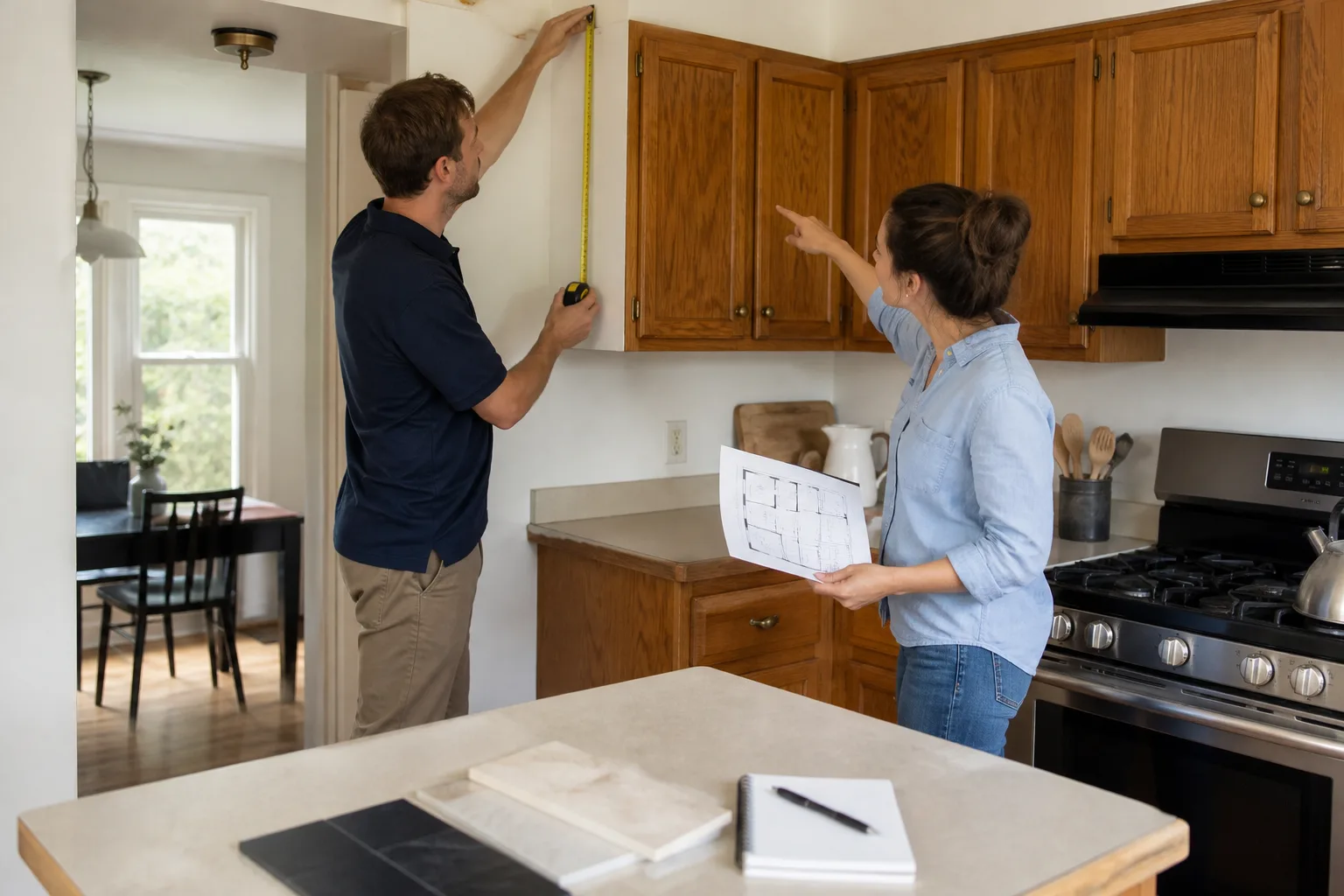
- Name the sequence and dependencies. Demo must be done by a date, then waterproofing, then tile, then finish. Agree who cleans up between stages.
- Agree on the inspection points. Water test before tile, rough-in inspection before drywall. A contractor who pulls permits and passes inspections leaves you a paper trail that protects resale.
- Ask what happens to price if your part changes. A written number with clearly defined scope and change-order rules is the only version of “fixed price” that holds up.
The Relay Visibility Guarantee exists to make this exact conversation easy. A live arrival time, photo updates before and after, and a written price before a tool is picked up. When you do part of the work yourself, that clarity protects both sides. Every bathroom in North Las Vegas we scope this way leaves a clear paper trail. If you want to see how that plays out in a Kitchen Remodeling in North Las Vegas project, the scoping process is the same.
Common Mistakes to Avoid
- Tiling over an unproven waterproofing job. Water-test the pan before you set the first tile. Twelve hours of soak is nothing versus a rebuild.
- Doing demo around unidentified plumbing or electrical. Turn off the water and breakers, then mark before the first swing. In older North Las Vegas builds, expect wiring you didn’t plan for.
- Treating dry air as proof of a good shower. North Las Vegas dries caulk and grout fast. Fast drying is not proof the membrane behind it is intact.
- Choosing mastic in a wet zone. It’s faster. It’s also a known delamination risk in a shower. Use the right setting material.
- Skipping a permit on plumbing rough-in. A permit file follows the house. An unpermitted rough-in is a live problem at resale, not a paperwork footnote.
- Buying budget material on visible surfaces. Cheap fixtures and surfaces cost the same to install but fail sooner and can’t be manufacturer-backed. Camria, Silestone, and Kohler are on our partnership list because they back the install.
- Not writing down the scope split. A verbal “I’ll do the demo” is a change order waiting to happen, and change orders are the opposite of a fixed written price.
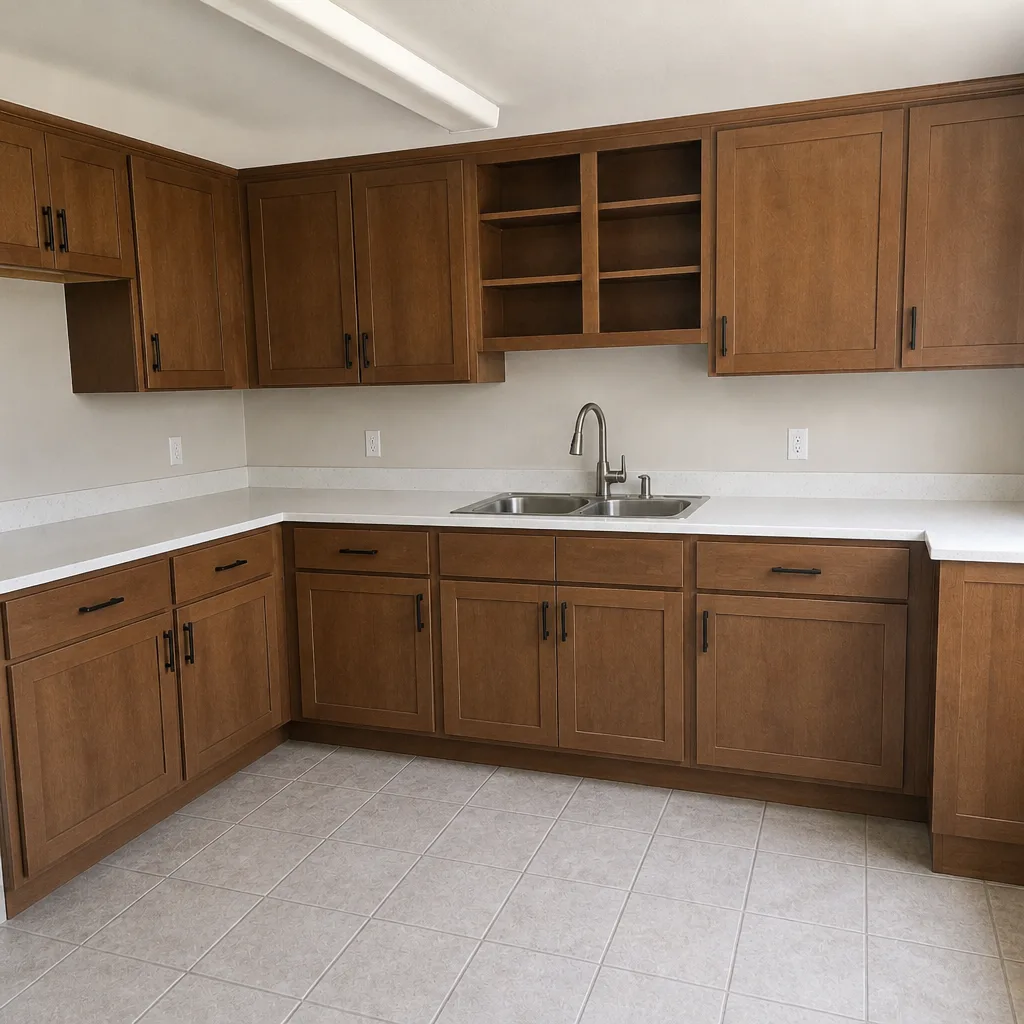
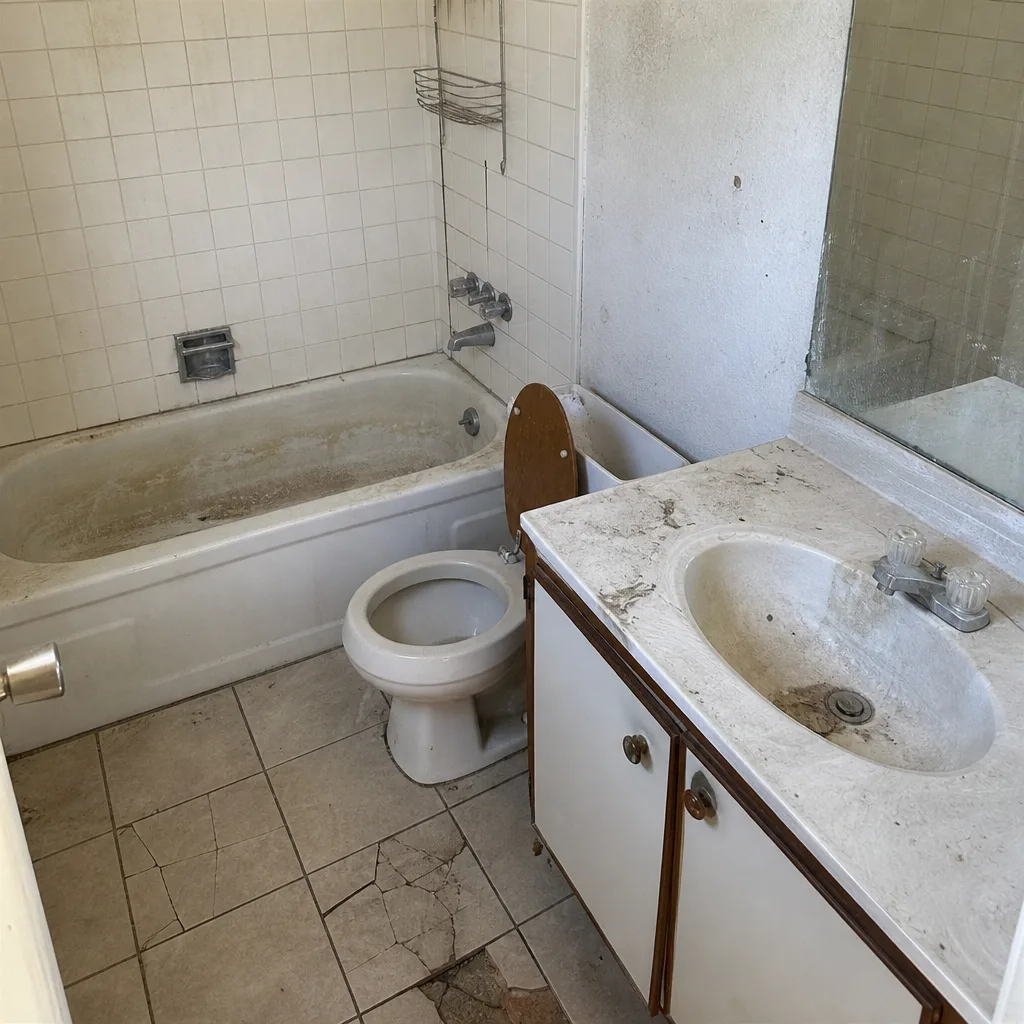
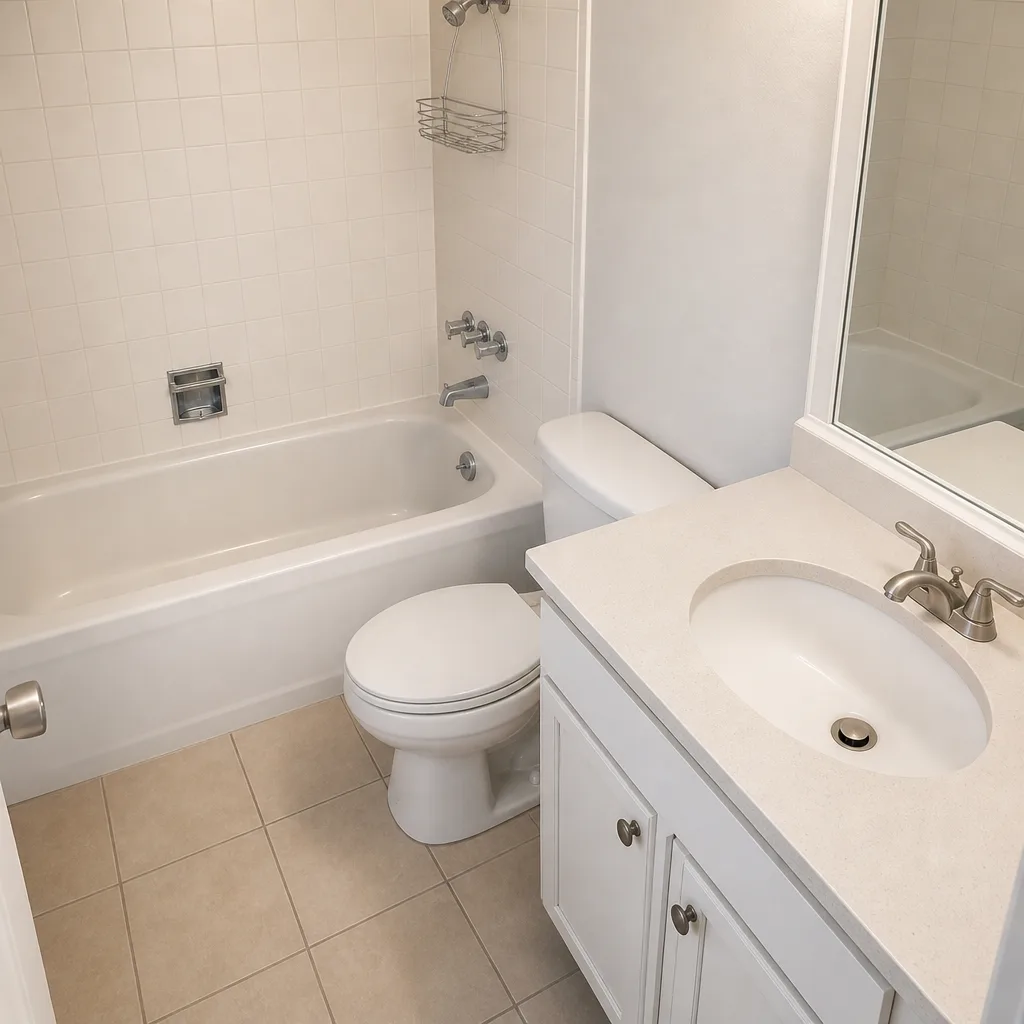
See the difference
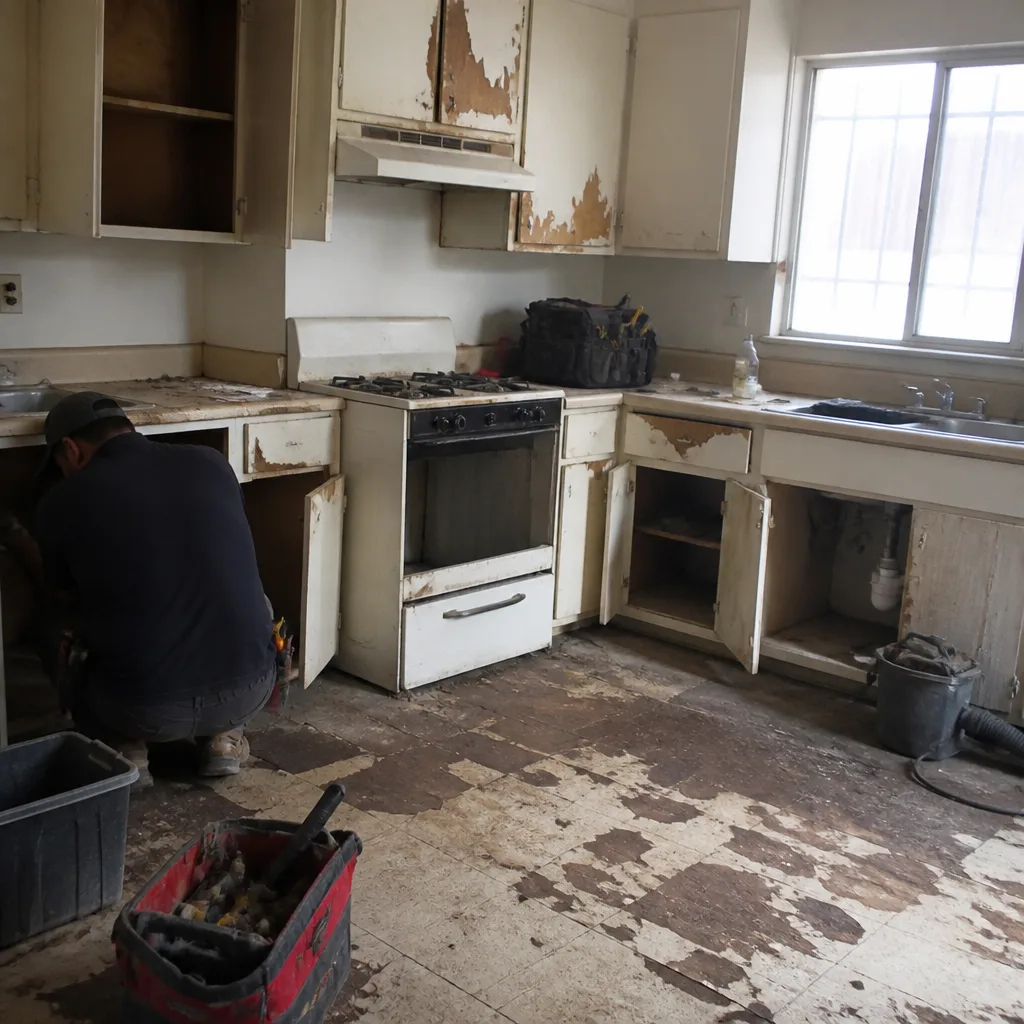 Before
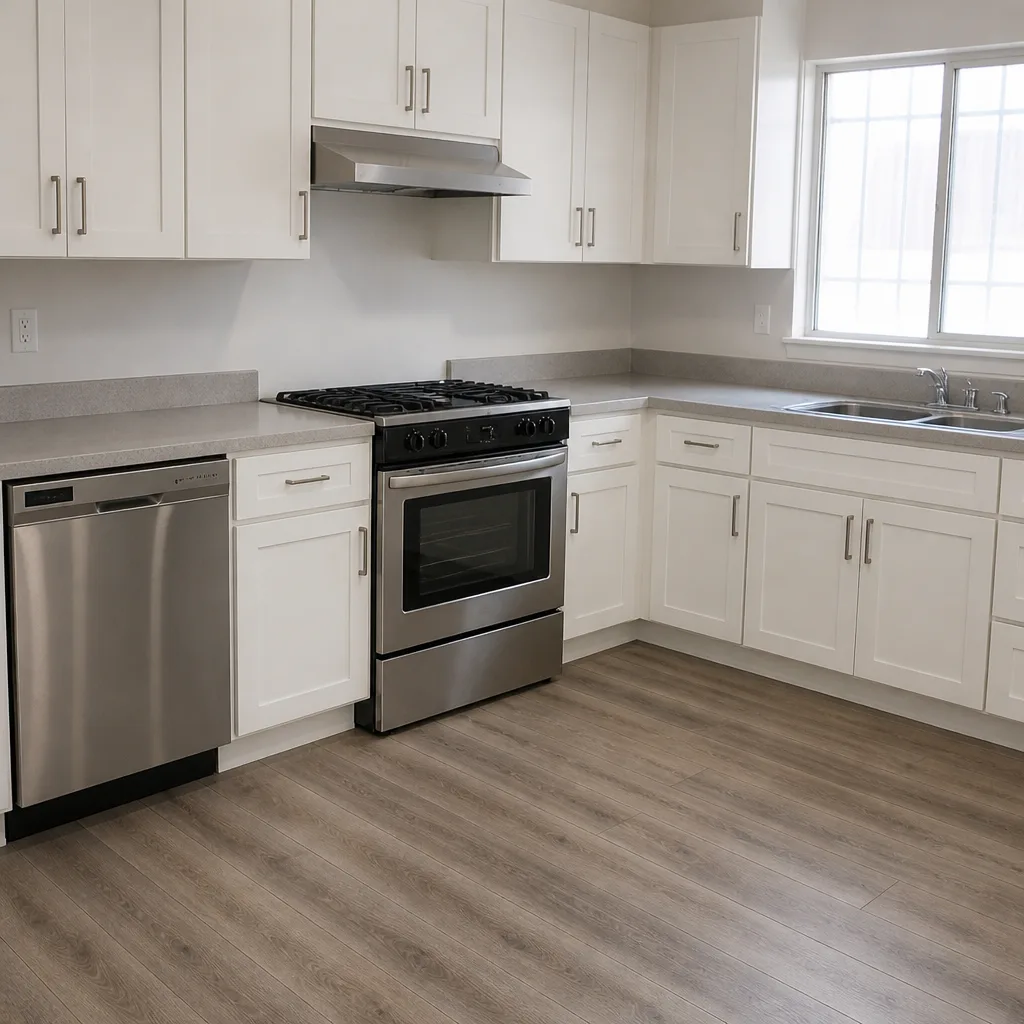 After
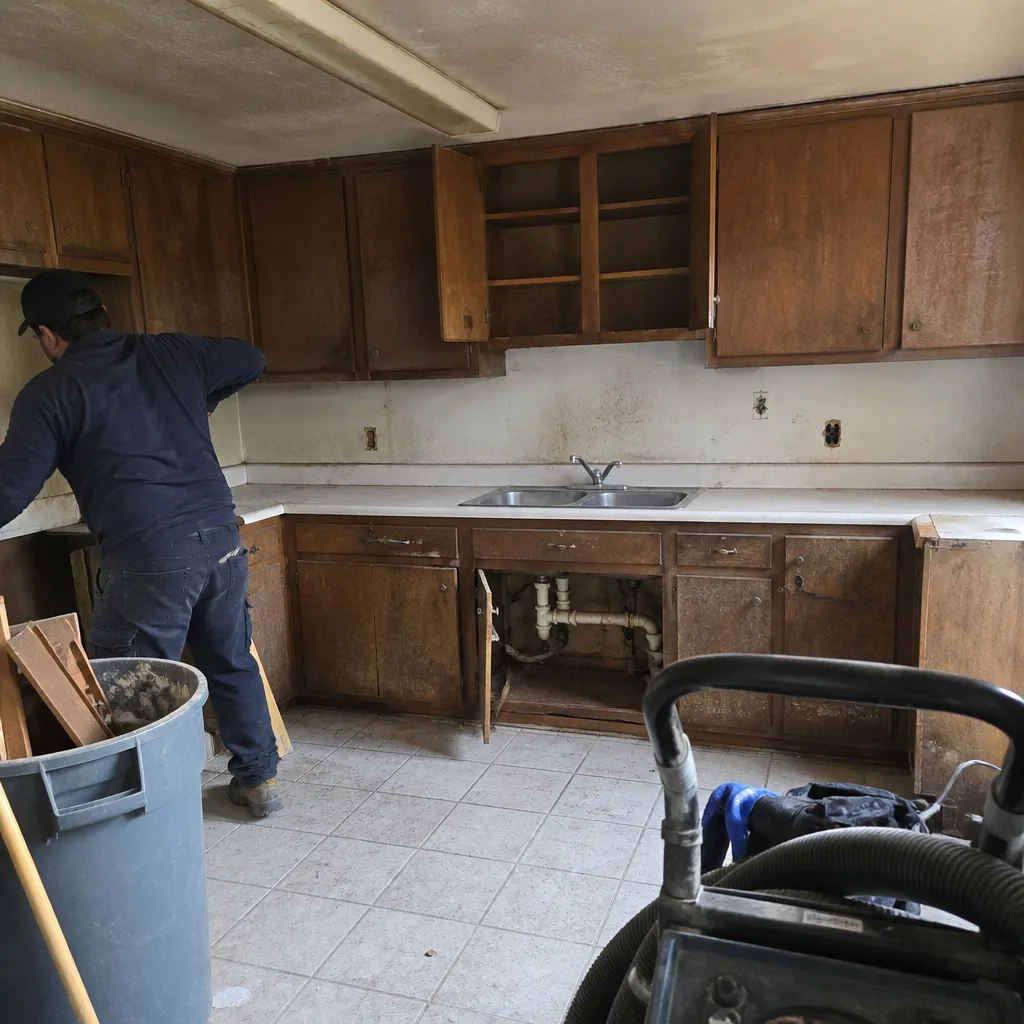 Before
 After
 Before
 After
When to Call a Professional
Call a professional when the task involves plumbing rough-in, an electrical panel or new circuit, waterproofing in a wet zone, or tile on a shower floor. Also call if you’re changing the footprint of the bathroom, because room layout changes affect plumbing, venting, and structure together, and the inspection trail matters. Getting permits pulled and inspections passed is the part that protects your resale value, and it’s the part DIY can’t give you.
Our technicians have up to 21 years of experience, and we see the hidden-failure work as the core of the job, not the add-on. If you want to know which specific tasks in your bathroom should stay with a licensed professional and which you can keep, that’s a free estimate conversation. Sawyer Remodel North Las Vegas offers free estimates in North Las Vegas, call (844) 834-9656. A written line-item price lands in your hands before any work starts, so the number on the invoice is the number you approved.
Frequently Asked Questions
You technically can, but we don’t recommend it. Waterproofing failures are hidden, and a pinhole miss in a membrane can turn into a mold remediation bill that dwarfs the tile. In North Las Vegas’s dry air, the mistake often isn’t visible until months after the shower has been in use. Call (844) 834-9656 for a free estimate on the waterproofing scope alone; a project can be split so you do the finish work.
Electrical panel work, new branch circuits, and permitted plumbing rough-in require a licensed contractor in North Las Vegas and across Nevada. The line is clear: any permit-required plumbing rough-in and anything that touches your electrical panel. Fixture swaps and finish work are yours to do. Call (844) 834-9656 if you’re unsure which side of the line your project falls on.
Most North Las Vegas bathrooms we see land roughly in one of three ranges: a cosmetic refresh from a few thousand dollars, a mid-size remodel with tile and new fixtures in the low five figures, and a full wet-zone rebuild toward the higher end. The exact number depends on whether you’re moving plumbing or staying on existing rough-in. We put the price range in writing before work starts. Call (844) 834-9656 for an exact quote; estimates are free.
Not on our projects. No-hassle upfront pricing means a written price lands in your hands before any work begins, so the number on the invoice is the number you approved. If scope changes, that gets agreed in writing first. This matters especially in hybrid projects where part of the work is yours. Call (844) 834-9656 for a written, fixed scope.
Prying at the wall to get tile off instead of working the tile off the substrate. That cracks the substrate, and a cracked substrate means more demo, more prep, and a longer rebuild. Turn off water and power, mark pipes and wires, and use a wide flat bar angled low. In North Las Vegas, dry debris means plastic and a fan pointed out a window saves a whole-house cleanup. Call (844) 834-9656 if you want a pro to scope the demo left for you.
Plan on roughly three to six weeks for a typical full bathroom in North Las Vegas, with the wet zone accounting for most of the time. Tile cure time and inspection windows set the floor; you can’t rush waterproofing, cure, or inspections. A hybrid project where you do the finish work often adds a week of your own schedule, but the contractor-controlled portion stays the same. Call (844) 834-9656 for a schedule scoped to your bathroom.
The Bottom Line
The DIY vs. professional question comes down to hidden failure. Demo, vanity, paint, trim, and finish work are safe to do yourself because you can see a mistake and fix it in an afternoon. Waterproofing, plumbing rough-in, and electrical behind the walls are not, because the failure is invisible until it’s expensive. The math is stark: a five-figure remediation bill versus a few hundred dollars of saved labor. Run that comparison on every task before you commit your weekend.
The durable approach for most homeowners we work with in North Las Vegas is a hybrid. Keep the finish work and the demo. Hire out the wet zone and the permit-required lines. Do it with a written price before work starts, and the 365-Day Done Right Promise covering the result.
If you want a straight answer on which tasks in your bathroom you can keep and which need a professional, call Sawyer Remodel North Las Vegas at (844) 834-9656 for a free estimate. A written line-item price, a live arrival time, and photo updates before and after, all confirmed before work begins.
Written by the team at Sawyer Remodel North Las Vegas.