Last updated November 18, 2026








Free written scope consultation - allowances, timeline, and change-order rules on paper before a single trade is scheduled
Construction Emergency Preparedness Guide for North Las Vegas Homes
In 2023, a single hailstorm over North Las Vegas generated more than 4,000 roofing insurance claims in 72 hours. Most of those homeowners had no tarp in the garage, no contractor’s number saved, and no photos of what their roof looked like before the sky opened up. That’s the part nobody plans for. Construction emergencies in North Las Vegas aren’t only burst pipes. They’re monsoon water pushing through a block wall, stucco cracking off after a 115-degree summer, and shingles shredded by hail that fell for nine minutes. This guide gives you the NLV-specific emergency list, a triage plan by urgency, and the documentation routine that decides whether insurance pays or denies.
Quick Answer
The most common construction emergencies in North Las Vegas are hail and wind roof breaches, monsoon flood intrusion through block walls and foundations, stucco failure after extreme heat, and burst irrigation supply lines. Your action plan is the same for each: stop the water or secure the opening, document everything with photos before anyone touches it, then call a licensed contractor and your insurer in that order. Pre-storm documentation and a written estimate are what separate a covered claim from an out-of-pocket rebuild.
Styles & brands we work with
- Kitchen remodeling
- Bathroom remodeling
- Home additions & ADU
- Roofing
- Windows & doors
- Driveway & pavers
- Fence
Table of Contents
- The North Las Vegas Emergency List: Four Failures We Actually See
- Pre-Emergency Documentation: The 40-Minute Walkthrough
- Emergency Triage: Tonight, Tomorrow, or Before the Next Rain
- Roof Breach After Hail or Wind: What to Do in the First Hour
- Monsoon Flood Intrusion Through Block Walls and Foundations
- Stucco Failure After Extreme Heat
- How to Vet an Emergency Contractor Fast
- What Insurance Covers: Sudden Failure vs. Gradual Deterioration
The North Las Vegas Emergency List: Four Failures We Actually See
Most national “emergency preparedness” guides are written for a generic suburb with four seasons and a basement. North Las Vegas doesn’t have basements, gets around 4 inches of rain a year in a handful of violent events, and bakes at temperatures that push building materials past their design limits. That produces a specific set of failures.
- Roof breach from hail or wind. Hail bruises asphalt shingles and knocks granules loose, which exposes the mat underneath. Wind then lifts the compromised shingles. The 2023 storm proved how fast this cascades: 4,000-plus claims in three days across the valley.
- Monsoon flood intrusion. When a summer storm dumps an inch of rain in 20 minutes, water sheets across hard caliche soil that can’t absorb it. It pools against block walls, finds the cold joint where your stem wall meets the slab, and wicks into interior drywall.
- Stucco failure after extreme heat. Three-piece stucco on a west-facing wall can hit 160 degrees on a July afternoon. The thermal expansion pulls it away from the lath, and you get hairline cracks that let monsoon water straight into the sheathing.
- Burst irrigation supply lines. Landscape lines under NLV lawns take a beating from heat cycling and root intrusion. A failed line at 2 a.m. can soak a foundation for hours before anyone notices.
Each of these has a different response window, which is why triage matters more than panic.
Pre-Emergency Documentation: The 40-Minute Walkthrough
The single highest-value thing you can do this weekend is document your home’s current condition. Insurance adjusters decide sudden-versus-gradual based almost entirely on what you can prove about the “before.” Do this walkthrough once, photograph everything with your phone, and store the images in cloud backup with the date visible.
- Photograph every roof plane from the ground. Use a zoom lens or a pole-mounted phone. Get the ridge lines, valleys, and the north-facing shingles where moss and hail bruising show first.
- Shoot the perimeter at the base of every exterior wall. Capture the stucco-to-grade transition, the weep screed, and any existing hairline cracks. Date-stamp each frame.
- Document the block wall and its footing. Note any existing cracks or leaning panels. A hairline crack photographed before a storm proves it wasn’t caused by flooding.
- Record interior ceiling and wall photos in every room. Future water staining will be judged against these.
- Print a one-page home inventory. Note the roof’s install date, material brand, and any warranty paperwork. If your roof is GAF or CertainTeed, keep the manufacturer’s documentation with this sheet.
- Save a contractor contact and your insurer’s claims number in your phone under “Home Emergency.” Not buried in email.
A dated photo of an intact roof is worth more than any verbal explanation at claim time. We’ve seen adjusters approve a full replacement on the strength of a pre-storm photo set and deny a nearly identical claim for lack of one.
Emergency Triage: Tonight, Tomorrow, or Before the Next Rain
Not every construction emergency needs a 2 a.m. call. Sorting by urgency saves you money, saves contractor time, and keeps you from paying emergency rates on something that could wait until Tuesday.
Call tonight
- Active water intrusion into living space that won’t stop after you shut off the supply.
- Roof breach where you can see daylight or water is dripping onto electrical fixtures.
- Burst irrigation or supply line at the foundation that you can’t isolate at the valve.
- Any structural movement: a block wall leaning after a storm, or a door that suddenly won’t close in its frame.
Call tomorrow
- Hail bruising visible on shingles with no active leak.
- Stucco cracks that are cosmetic and not exposing sheathing.
- Water staining on a ceiling with the source already stopped.
Call before the next rain
- Existing cracks in block walls or stucco that could admit monsoon water.
- A roof over 15 years old that took any hail, even if it looks fine.
- Any drainage path that currently runs toward your foundation instead of away.
If you’re not sure which bucket a problem falls into, that’s the moment to pick up the phone. A licensed pro can triage from a photo. If you’re planning a larger repair or replacement rather than a patch, our general contractor in North Las Vegas page covers how full-project scopes get priced and sequenced.
Roof Breach After Hail or Wind: What to Do in the First Hour
Hail damage doesn’t always leak the same day. Bruised shingles often fail weeks later when the next wind event lifts them. The first hour after a hailstorm is about stopping water, documenting condition, and getting a professional eye on the roof before you file anything.
- Stay off the roof. Hail leaves shingles slick and wind leaves loose panels waiting to give. This is genuinely dangerous work, and we never recommend homeowners climb up after a storm. Get photos from the ground with a zoom.
- Check the attic for daylight and water staining. A flashlight sweep of the roof decking takes five minutes and tells you whether a breach has already opened.
- Place buckets and plastic under active drips. Move electronics and furniture out of the way. Don’t puncture a ceiling bulge – call a pro to relieve it safely.
- Photograph everything before any tarp goes up. Your insurer needs the pre-mitigation condition. Take photos, then call for emergency tarping.
- Document the storm. Screenshot the weather report and note the date and time. Hail claims depend on a provable event.
If you’re replacing rather than patching, ask about GAF or CertainTeed systems, which carry manufacturer warranties tied to a certified installer. Material choice matters in North Las Vegas because the UV load here is brutal on lower-grade shingles.
Monsoon Flood Intrusion Through Block Walls and Foundations
The desert floods fast. A monsoon cell can drop more rain in an hour than North Las Vegas sees in three normal months, and the hard caliche soil underneath your yard sheds almost all of it. Water that can’t soak in runs along the surface until it finds the lowest point, which is usually the base of a block wall or the stem wall of your foundation.
The typical intrusion path has three stages. First, water pools against the exterior. Second, it enters through the cold joint where the stem wall meets the slab, or through a hairline crack in the block. Third, it wicks up into interior drywall and baseboards, and you don’t notice until the paint blisters.
What to do when it happens:
- Shut off power to any affected room at the panel before you step in water.
- Pull back wet carpet and baseboards immediately, and photograph the wet line on the wall – that line is your evidence for the adjuster.
- Run fans and a dehumidifier continuously. North Las Vegas is dry enough that surface water evaporates fast, but the wall cavity stays wet for days and grows mold.
- Note and photograph the drainage path outside. If your neighbor’s grading or a blocked swale sent water at your wall, that matters for the claim.
After any flood intrusion, ask the contractor to check the footing and install a proper drainage path before the walls go back together. Patching drywall without fixing the water path just schedules the next flood. If the damage extends into a bathroom, our bathroom remodeling in North Las Vegas team routinely re-waterproofs wet zones with Schluter systems when we rebuild.
Stucco Failure After Extreme Heat
Stucco on a west-facing wall in North Las Vegas lives a hard life. Summer surface temps can run 60 to 80 degrees above ambient, and the expansion and contraction cycle over a decade eventually pulls the coat away from its lath. You’ll see it first as spider-web cracking near windows and corners, then as a hollow sound when you tap the wall, then as a section that lets go completely.
Cracks that matter:
- Hairline cracks under 1/16 inch are usually cosmetic, but they still admit monsoon water. Seal them before the next rain.
- Cracks over 1/8 inch, or any crack that runs diagonally from a corner, need inspection – they can indicate movement behind the stucco.
- Any hollow, drummy area means the stucco has detached from the lath and will eventually fall.
- Rust streaks mean moisture has reached the lath and framing. That’s a structural warning, not a cosmetic one.
Repair scope varies widely: patching a hairline is a small job, while re-stuccoing a detached wall panel means removing the failed section, inspecting the sheathing, and rebuilding the three-coat system properly. Prophylactic elastomeric coating on the sun-blasted walls buys years of life in this climate. Spring, before the heat and the monsoon, is the right window to inspect and repair stucco in North Las Vegas.
How to Vet an Emergency Contractor Fast
Storm events bring out contractors who follow the hail from state to state, knock on doors the day after, and are gone before the check clears. The difference between them and a legitimate local pro shows up in five minutes of questions.
- Ask for a physical local business address. A legitimate North Las Vegas contractor can give you one. A storm-chaser gives you a cell number and a P.O. box.
- Ask for the written price before any work starts. No exceptions. A real contractor puts the number in writing – not a verbal “roughly $X.” If they won’t, walk away.
- Ask whether they pull permits. Roof replacements and structural repairs in North Las Vegas require permits. A contractor who says “we don’t bother with permits for this” is telling you exactly how the job will go.
- Ask what the warranty is in writing. A verbal “lifetime warranty” is worth nothing. A written guarantee with a defined term and remedy is.
- Ask for proof of licensure and insurance. The local pro should be licensed and insured as Nevada requires. Any hesitation on this is a red flag.
- Ask what happens if the repair fails. A serious contractor has an answer. Ours is the 365-Day Done Right Promise: if it’s not done right, we make it right.
One more filter: a real pro will tell you to document and file with your insurer before they touch anything. A storm-chaser will offer to “handle the paperwork” for you, which usually means inflating the scope. Our Sawyer Remodel North Las Vegas home page lays out how we run jobs under The Relay Visibility Guarantee, including the written price and photo updates that make this whole process easier.
What Insurance Covers: Sudden Failure vs. Gradual Deterioration
The line that decides your claim is the difference between a sudden event and a slow failure. Most homeowner policies cover sudden failures – hail, wind, a burst line. They typically exclude gradual deterioration – a roof that wore out, stucco that cracked over ten years, a foundation that settled.
What falls on each side, generally:
- Covered, generally: hail bruising, wind damage, water intrusion caused by a storm event, burst supply lines, roof breaches from falling debris.
- Not covered, generally: long-term stucco cracking, a roof at end of life, foundation settlement over years, water damage that built up slowly from a slow leak.
Your proof is everything in the Pre-Emergency Documentation section above. The adjuster’s first question is “what was the condition before the storm?” A dated photo set answers it. So does a contractor’s written condition report from before the event. When we quote a repair on a home we’ve serviced before, we often have photo records from the prior visit that can help establish the pre-storm baseline.
File the claim before the repair, keep every receipt for emergency mitigation (tarps, fans, drying equipment), and don’t sign anything from a contractor that includes “we’ll bill your insurance directly” without a written scope and price on your own copy. Insurers won’t approve what they can’t see itemized.
Common Mistakes to Avoid
- Tarping before photographing. Once the tarp goes up, the pre-storm condition is gone. Take photos first, tarp second – always in that order.
- Climbing the roof yourself. Hail-slick shingles and heat exhaustion are a real danger in North Las Vegas. Get ground shots and call a professional for anything above.
- Signing with a door-knocker the same day. Storm-chasers rely on urgency. A legitimate contractor will still be there tomorrow – and will put the price in writing before touching your roof.
- Patching without fixing the drainage path. Drywall gets replaced, the next monsoon floods it again. The water path has to be solved at the same time as the visible damage.
- Ignoring hairline stucco cracks. A 1/16-inch crack is a monsoon entry point. Seal it in spring, not after the water’s in the wall.
- Filing without documentation. An adjuster with no pre-storm photos defaults to “gradual deterioration” and denies. The 40-minute walkthrough prevents this.
- Using a verbal quote. “Roughly $2,000” becomes $4,000 on the invoice. Get the written price with line items before the work starts.
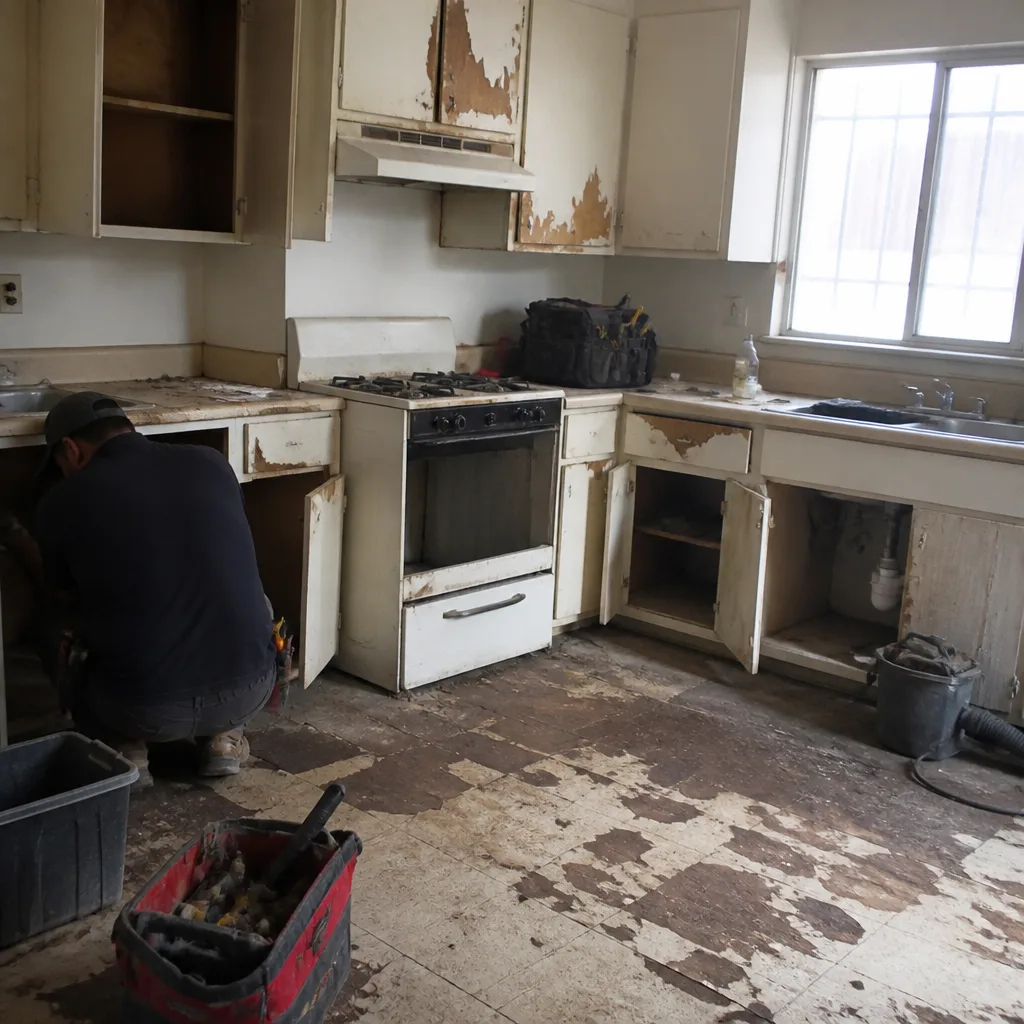
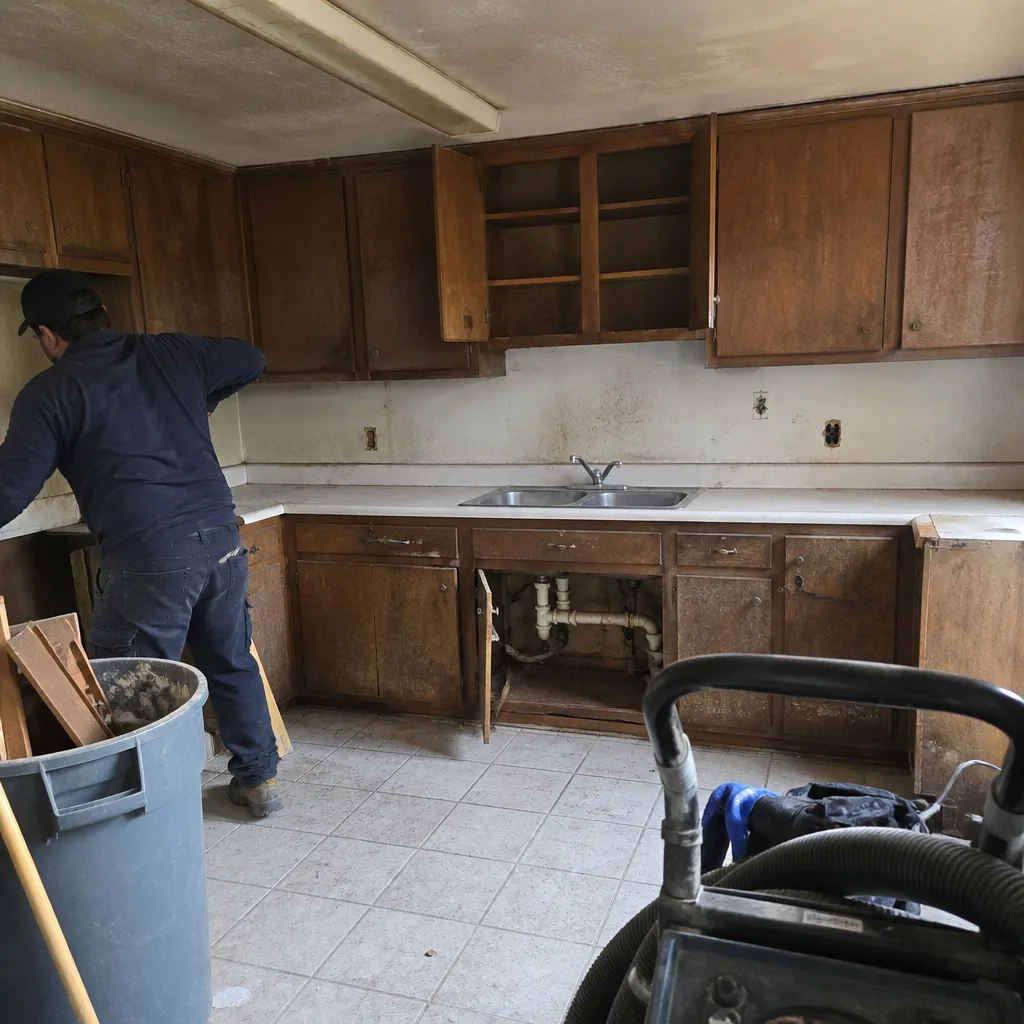
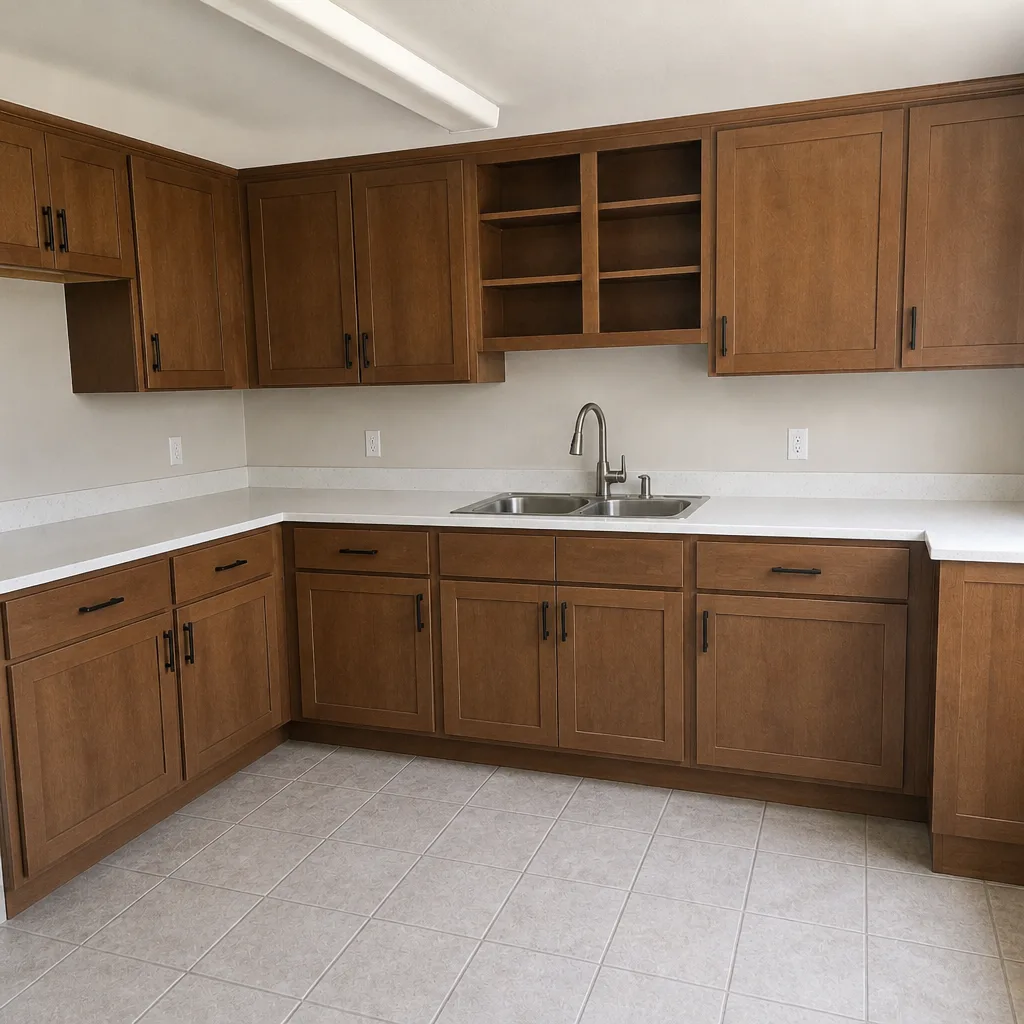
See the difference
 Before
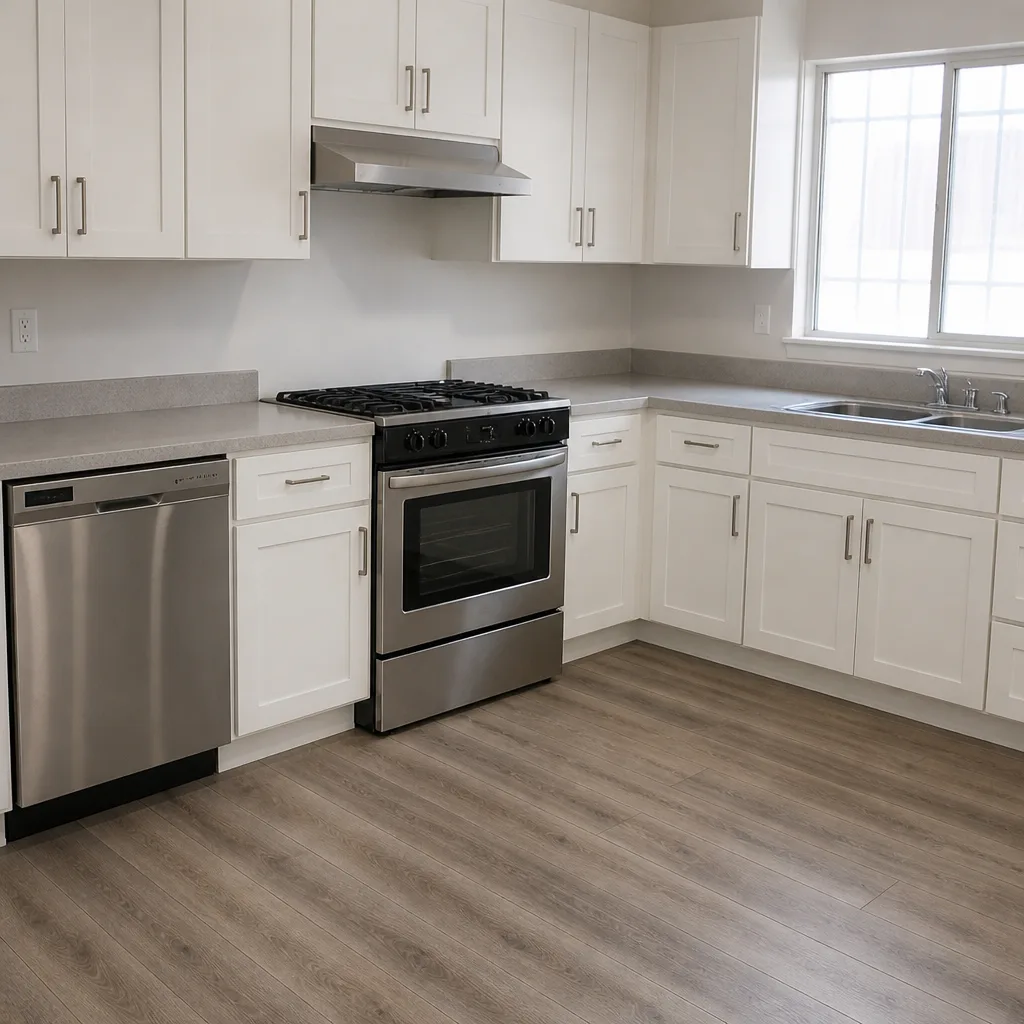 After
 Before
 After
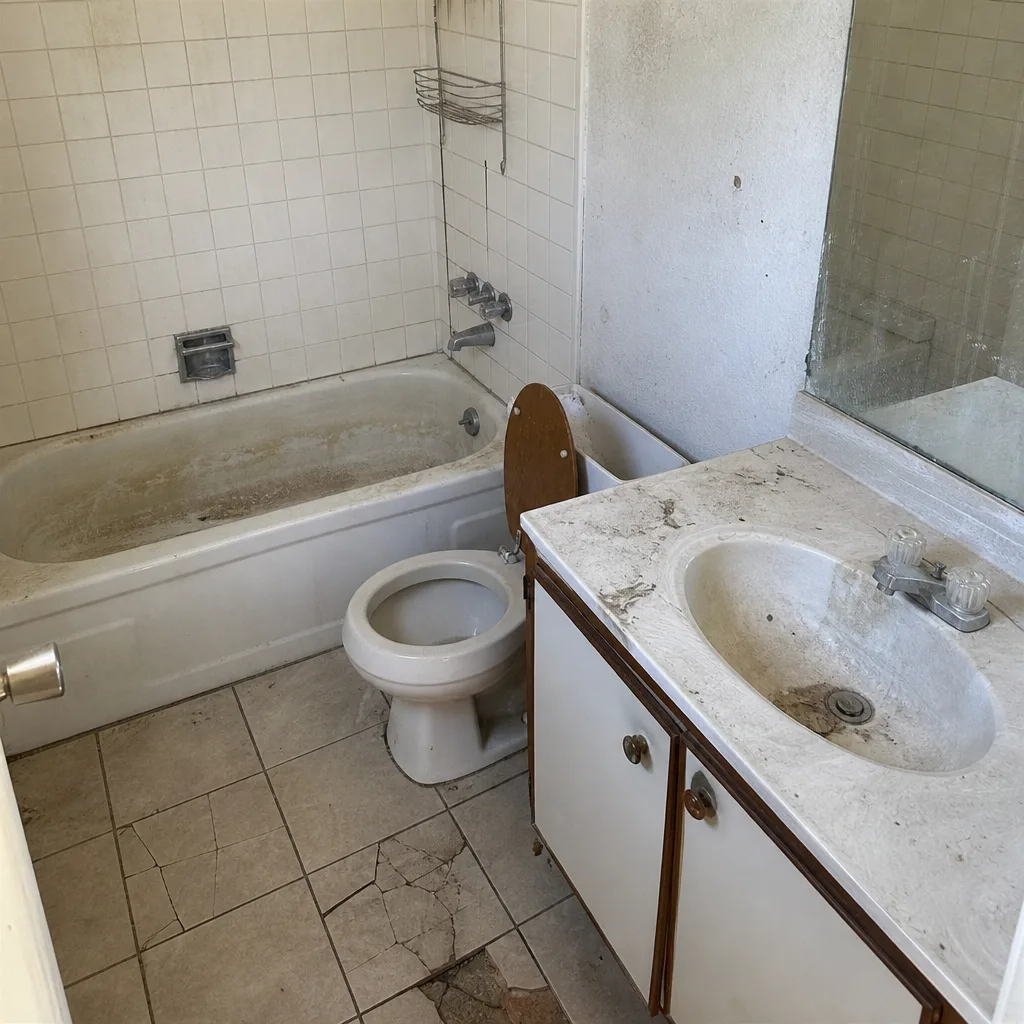 Before
 After
When to Call a Professional
Call a professional the moment you’ve stopped active water and secured the immediate hazard – not before, and not later. Specifically: any active roof leak, any water intrusion that reached an interior wall or floor, any block wall that has moved or cracked more than a hairline, any stucco section that sounds hollow when tapped, and any suspicious crack near a window or corner after a storm. Don’t attempt to diagnose structural movement from a phone video. These are the calls where a trained eye on site saves the most money, because what looks like a $300 patch can be a $30,000 rebuild if the underlying issue gets missed. Sawyer Remodel North Las Vegas offers free estimates in North Las Vegas – call (844) 834-9656 to get a written scope and price before any work starts.
Frequently Asked Questions

Anything actively threatening your home’s structure or interior: an active roof breach, water intrusion into living space, a burst water or irrigation line, or any visible structural movement after a storm. North Las Vegas adds specific risks: hail and wind roof damage, monsoon flood intrusion through block walls, stucco failure after extreme heat, and irrigation line breaks under heat-cycled lawns. If active water or a structural opening is involved, treat it as an emergency and call tonight.
File within 72 hours of the storm if you can, and photograph your roof condition before any tarp or repair. Hail claims on Nevada roofs move fastest when the event date, pre-storm condition, and post-storm damage are all documented and matching. Contact your insurer for the claim, and get a written estimate from a licensed contractor to attach to it. Call (844) 834-9656 if you need a contractor’s written scope in a hurry.
Usually yes, for anything beyond a temporary patch. Roof replacements, structural repairs, and re-stuccoing of a failed wall system generally require permits through the City of North Las Vegas. A legitimate local contractor pulls the permit and passes inspection; a storm-chaser who says “we don’t bother with permits for a repair this size” is telling you how the job will go. Ask before signing.
A legitimate contractor has a physical local address, will put the price in writing before starting, pulls permits, and shows proof of licensure and insurance as Nevada requires. A storm-chaser has a cell number, a P.O. box, a verbal quote, and a “we’ll handle your insurance paperwork” line. Ask for all five and watch what happens. Any hesitation on the written price is enough to walk away.
Check and improve water drainage away from your foundation before the first monsoon. Photograph the state of your stucco, block walls, and roof now, walk the property looking for low spots, and clear any swale or grading that runs water toward the house. Then save a contractor’s number in your phone. Monsoon damage is fast and sudden; the best defense is a documented, drained homesite and a pro you already know.
Usually no, if the cracks are gradual deterioration from normal heat cycling. Insurance typically covers sudden events, not slow wear. The exception: if a sudden event (hail impact, wind-driven debris, an adjacent flood) caused the crack or opened a pre-existing one, that can be covered. Pre-event photos of the stucco condition are the decisive evidence. If you’re not sure which category a repair falls in, call (844) 834-9656 for a free walkthrough and written assessment before you file.
The Bottom Line
Construction emergencies in North Las Vegas are shaped by this desert’s specific violence: hail that shreds shingles in minutes, monsoons that flood block walls in an hour, and heat that fails stucco over time. The action plan for each is the same: stop the water, document the pre- and post-event condition, then call a licensed contractor and your insurer. The 40-minute walkthrough you do this weekend is the single highest-return prep you can make – photos of your roof and walls today are what decide a covered claim tomorrow. Keep a contractor’s number saved, keep your pre-storm photos in cloud backup, and don’t sign a verbal quote from anyone. The guide stays useful as long as you keep the habit up year over year.
If you’re facing a repair and you want a written price before anyone touches your home, call (844) 834-9656 for a free estimate from Sawyer Remodel North Las Vegas. Every project runs under The Relay Visibility Guarantee – written price before work starts, live arrival time, and before-and-after photos – and the 365-Day Done Right Promise backs the work. Estimates are free, and the number on your invoice is the number you approved. From a bathroom rebuild after flood damage to a full kitchen remodeling in North Las Vegas after a burst line, we’re set up to handle the whole scope when an emergency turns into a project.
Written by the team at Sawyer Remodel North Las Vegas.