Last updated November 18, 2026








Free written scope consultation - allowances, timeline, and change-order rules on paper before a single trade is scheduled
Home Renovation Troubleshooting: Common Problems and How to Fix Them
A renovation dispute that ends up in small claims court almost always could have been settled in a single phone call at the first sign of trouble. The homeowners who lose those cases usually didn’t lose because the contractor was a crook. They lost because they couldn’t say, in one clear sentence, whether their problem was a contract violation, a code violation, or a plain misunderstanding. Those are three different fights with three different endings. This guide is a map. It walks through the most common renovation failures, shows you which category each one falls into, and gives you the exact steps to take in order. We’re writing it from North Las Vegas, where the desert heat, the building inspection queue, and the busy contractor market all shape how these problems show up.
Quick Answer
Most renovation problems get resolved fastest when you first sort the issue into one of three buckets: a contract problem (work or payment that violates what was agreed in writing), a code problem (work that fails inspection or wasn’t permitted), or a communication problem (a mismatch in expectations that never made it onto paper). The fix depends entirely on the bucket. Contract issues go to written change orders and formal notice. Code issues go to your local building department and, if needed, the state contractor licensing board. Communication issues go to a direct, documented conversation before the next phase starts.
Styles & brands we work with
- Kitchen remodeling
- Bathroom remodeling
- Home additions & ADU
- Roofing
- Windows & doors
- Driveway & pavers
- Fence
Table of Contents
- The Problem-to-Resolution Map
- Is It Negligence, a Manufacturer Defect, or an Inspection Miss?
- Nevada’s Contractor Licensing Board: What It Actually Resolves
- The Documentation Checklist That Makes Any Dispute Winnable
- How to Have the Hard Conversation Without Blowing Up the Job
- Why Cost Overruns Happen and How to Stop Them Mid-Project
- North Las Vegas Climate Problems Specific to Desert Remodels
- What to Do When a Contractor Walks Off the Job
The Problem-to-Resolution Map
Every renovation failure lands in one of four groups. Match your problem to the group, then follow the steps in order. Don’t skip ahead to the nuclear option. The order matters, and the paperwork you build in Step 1 is what gives you leverage later.
Poor workmanship. The work is done but wrong, sloppy, or failing early.
- Photograph the defect from multiple angles, with something in frame for scale (a tape measure, a coin, a hand).
- Put the complaint in writing, dated, and send it to the contractor by email or text so you have a timestamped record.
- Reference the specific line in your written scope or contract that the work violates.
- Give a reasonable window to respond in writing (5 business days is standard).
- If it’s a warranty claim, cite the warranty term. If it’s a code issue, call the building department next.
Missed scope. Something in the agreement wasn’t done at all.
- Pull out the written scope and highlight the missing item.
- Confirm it wasn’t moved to a signed change order (check your records before you accuse anyone).
- Request a written schedule for completing it.
- Withhold only the payment tied to that specific item, not the whole invoice, unless your contract allows a broader hold.
Cost overrun. The invoice is higher than the price you approved.
- Compare the invoice line by line against the written price and any signed change orders.
- Request written justification for every charge that doesn’t match.
- Refuse to pay undocumented charges until they’re explained on paper.
Abandoned project. The contractor stops showing up.
- Send a written notice of default by email and certified mail.
- Photograph the current state of the site and secure it.
- File a complaint with the Nevada State Contractors Board if the contractor is licensed.
- Get a written estimate from another licensed pro before you spend anything on a replacement, so you have a documented number.
Is It Negligence, a Manufacturer Defect, or an Inspection Miss?
This is the question that trips up most homeowners, and it changes who pays. In our experience running general contractor work in North Las Vegas, misdiagnosing the source of a defect is the single most common reason a dispute drags on for months. Here’s how to tell the three apart.
- Contractor negligence shows up as installation errors: tile set without proper waterproofing, a shower pan that pools water, cabinet doors hung out of level, grout cracking in straight lines along a seam. The material failed because it was installed wrong.
- Manufacturer defect shows up as a failure pattern inside the material itself: a warped cabinet box, a countertop slab that cracks away from any seam or fastener, a fixture that leaks at a factory joint. Brand-name materials from partners like Cambria, Kohler, and GAF come with manufacturer backing, which is exactly why specifying known brands matters. When a defect is a true factory issue, the warranty runs through the manufacturer, not the installer.
- An inspection miss shows up when work passed a rough inspection but later fails a final, or when something that should have been permitted was done without a permit. That’s a code problem, and it belongs with the building department, not in a fight with the contractor alone.
Take a photo, read the warranty card that came with the material, and check whether a permit was pulled for that scope. Those three moves will usually tell you which category you’re in within an hour.
Nevada’s Contractor Licensing Board: What It Actually Resolves
The Nevada State Contractors Board (NSCB) is the state agency that licenses contractors, and it’s where a formal complaint goes when a licensed contractor won’t fix a covered problem. What it handles well: unlicensed contracting, abandoned jobs, work that violates the building code, and cases where a contractor took money and didn’t perform.
What it does not do: it isn’t a court, it won’t award you a judgment for lost rent or emotional stress, and it won’t mediate a disagreement over whether a paint color counts as “the same shade.” Complaints about aesthetics or vague quality preferences generally don’t go anywhere. Complaints about a specific, documented, code-relevant failure do.
To file, you’ll typically need the contractor’s license number, your written contract, proof of payments, photos, and a clear written statement of what was agreed versus what was delivered. The board can investigate, and in some cases its residential recovery fund can help with a monetary loss up to a statutory cap. If you’re planning a project and want to check a contractor before signing, the NSCB license lookup is free and takes two minutes. Do it before the first payment, not after the last one.
The Documentation Checklist That Makes Any Dispute Winnable
A dispute is only winnable if you can prove what was agreed. The homeowners who get fast resolutions are the ones who kept a simple digital folder from day one. Here’s the checklist we recommend to every client.
- Signed written contract with a detailed scope. Room by room, item by item. “Bathroom remodel” is not a scope. “Remove existing tub, install 60-inch alcove tub, tile walls to 7 feet with Schluter edge trim at the floor transition” is a scope.
- Written change orders for every scope or price change. Signed and dated by both sides. No verbal “we’ll just add that in.”
- Payment records. Bank statements, canceled checks, or digital payment confirmations showing every dollar and its date.
- Permit numbers and inspection records. The permit number, the inspector’s sign-off, and any correction notices.
- Dated photos at every phase. Demolition, rough-in, mid-install, and completion. Before-and-after photos are worth gold in a dispute.
- All communication in one searchable place. Email or text is better than phone calls. If something important is said on a call, follow up with a text that repeats it in one line.
When that folder exists, a contractor knows you can prove your case and tends to resolve things quickly. When it doesn’t, even a legitimate complaint becomes a “he said, she said” that can take months. This is the practical reason The Relay Visibility Guarantee puts a written price and before-and-after photo updates into every project from the start. The paperwork that protects you in a dispute is the same paperwork that prevents one.
How to Have the Hard Conversation Without Blowing Up the Job
You need to raise a problem without turning a working relationship into a war, especially when the contractor still has half your house torn apart. The approach that works is boring and specific, and it goes like this.
- Pick a calm moment, not the middle of a workday. Ask for ten minutes at the end of the day, or send a short written message and ask for a reply.
- Lead with the fact, not the accusation. “The grout line at the shower curb has cracked in three places since Tuesday” beats “Your guys did a terrible job.”
- Say what you want. “I’d like you to look at it this week and tell me what caused it and how you’ll fix it” is a request. Vague complaints get vague answers.
- Ask for the fix in writing. A one-paragraph email confirming the plan and the date protects both of you.
- Keep it in one channel. If you started in email, stay in email. Don’t jump between texts, calls, and door conversations, or the record falls apart.
The goal of the first conversation is a plan, not a verdict. Save the licensing board and legal options for after a written request has been ignored. Most problems at this stage are fixable with a firm, documented ask.
Why Cost Overruns Happen and How to Stop Them Mid-Project
Cost overruns in North Las Vegas usually come from four places: hidden damage found after demo, upgrades the homeowner asks for mid-project, material price swings, and vague original scope. Three of those are preventable, and one is unavoidable but manageable.
- Hidden damage is the one you can’t fully predict. A bathroom remodel in North Las Vegas sometimes uncovers rotted subfloor or old plumbing behind the wall. The fix is a written change order with photos and a price before the work continues, not a surprise on the final invoice.
- Mid-project upgrades are the most common cause of sticker shock. If you want to change the countertop from Silestone to Caesarstone after the slab is ordered, expect a written change order and a new number to approve.
- Material swings on lumber and some fixtures can push a tight budget. A written price locked before work starts is the best defense.
- Vague scope is the one that bites hardest. A kitchen described as “new cabinets and counters” in the contract can mean a $12,000 project or a $45,000 project depending on the details. That’s why a line-item written price before any tool is picked up matters. It turns a moving target into a number you can budget around.
If you’re mid-project and the invoice just grew, the move is to request the change order now and refuse undocumented charges until they’re explained. Don’t wait for the final invoice to raise it.
North Las Vegas Climate Problems Specific to Desert Remodels
Some renovation failures are pure Nevada. The desert heat and the summer monsoon season stress materials in ways that don’t show up in cooler climates, and knowing them helps you catch problems early.
- Grout and caulk cracking at exterior-facing walls. The 100-plus-degree swings between day and night expand and contract tile and trim. Flexible sealant at the joints holds up better than hard grout, and it should be re-checked every few years.
- Stucco and siding movement. Stucco on the sun-facing walls of a North Las Vegas home takes a beating. Hairline cracks aren’t always a defect, but if water is getting behind it, that’s a real problem and a code issue if it affects the building envelope.
- Monsoon-driven water intrusion. When summer rain hits, poorly flashed windows and doors leak. If a window leaks after a monsoon, the fix is flashing and sealant, and the question is whether it was installed to spec.
- Slab and foundation cracks. Our soil moves with the heat, and hairline cracks in a garage slab are common. A crack that widens or displaces is worth an inspection.
If you’re planning exterior work like pavers or hardscape, using a proven product line matters in this climate. Pavers from Tremron and Techo-Bloc are built to handle desert temperature swings, and the install pattern matters as much as the material.
What to Do When a Contractor Walks Off the Job
An abandoned project is the worst-case scenario, and the steps you take in the first 48 hours matter most. Send a written notice of default by email and certified mail, requesting that the contractor return to complete the work within a set window. Photograph and secure the site, especially water and power. Get a written estimate from another licensed contractor for what it will cost to finish, because that number becomes your damages figure. If the contractor is licensed and you can’t reach them, file with the Nevada State Contractors Board using your documentation folder. Then get the project finished by a licensed pro who will pull the permits and inspect the prior work. Don’t start a replacement contractor without a documented written estimate for the remaining scope; you’ll need it if the matter ever goes to court.
Common Mistakes to Avoid
- Signing a contract with no written scope. A one-page agreement that says “remodel kitchen” gives you almost nothing to point to when work goes wrong.
- Paying in cash with no receipt. If there’s no record, there’s no case. Every payment should be traceable.
- Skipping the permit. Unpermitted work in North Las Vegas can stall a future sale and won’t pass inspection. Always confirm the permit number before work begins.
- Approving a verbal change. If the crew says “we’re going to add a second coat,” and you say “sure,” but it’s not written, it’s not in the price and it’s not in the scope.
- Waiting until the end to raise issues. A defect caught at rough-in is a quick fix. The same defect after the drywall is up is a much bigger job.
- Comparing quotes on price alone. The cheapest bid is often the one with the shortest scope. Compare line items, not bottom lines.
- Not documenting before photos. The photos you take on day one are the ones that prove what was changed and how.
See the difference
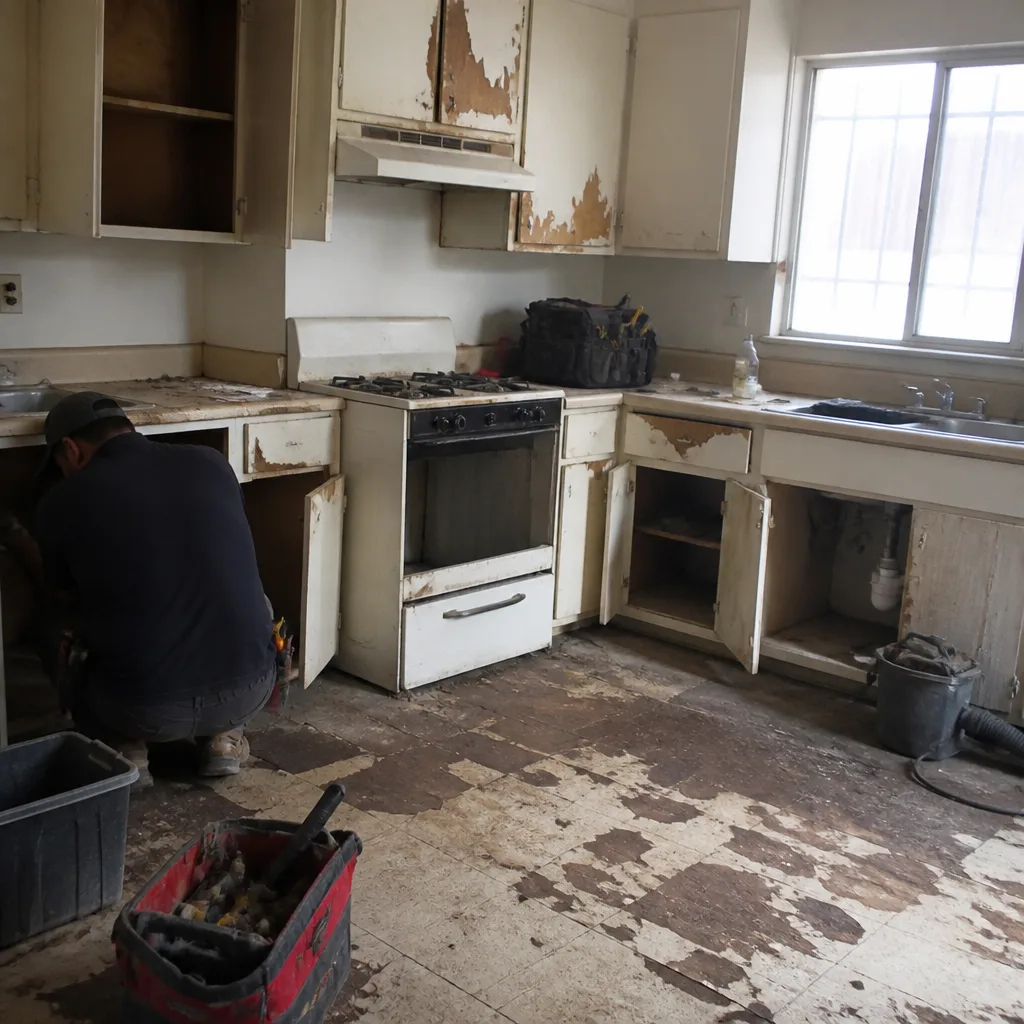 Before
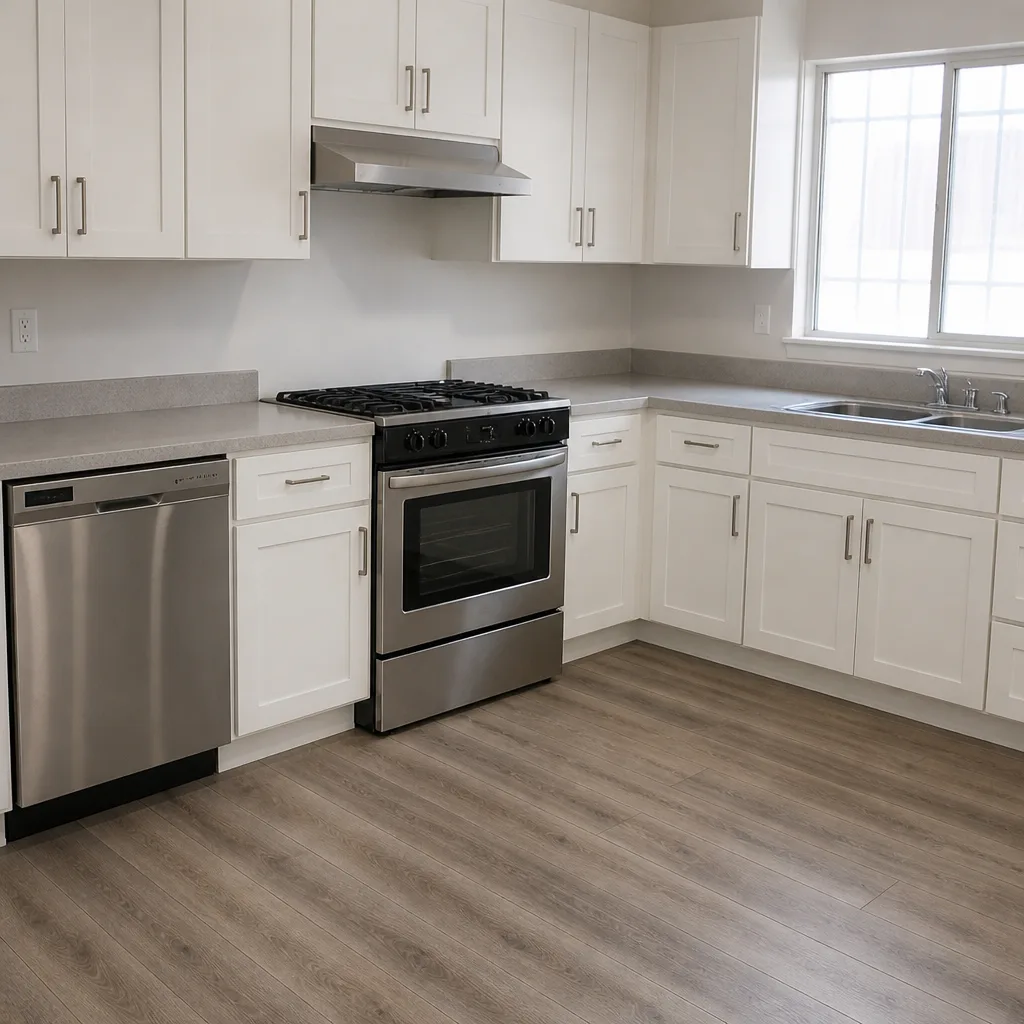 After
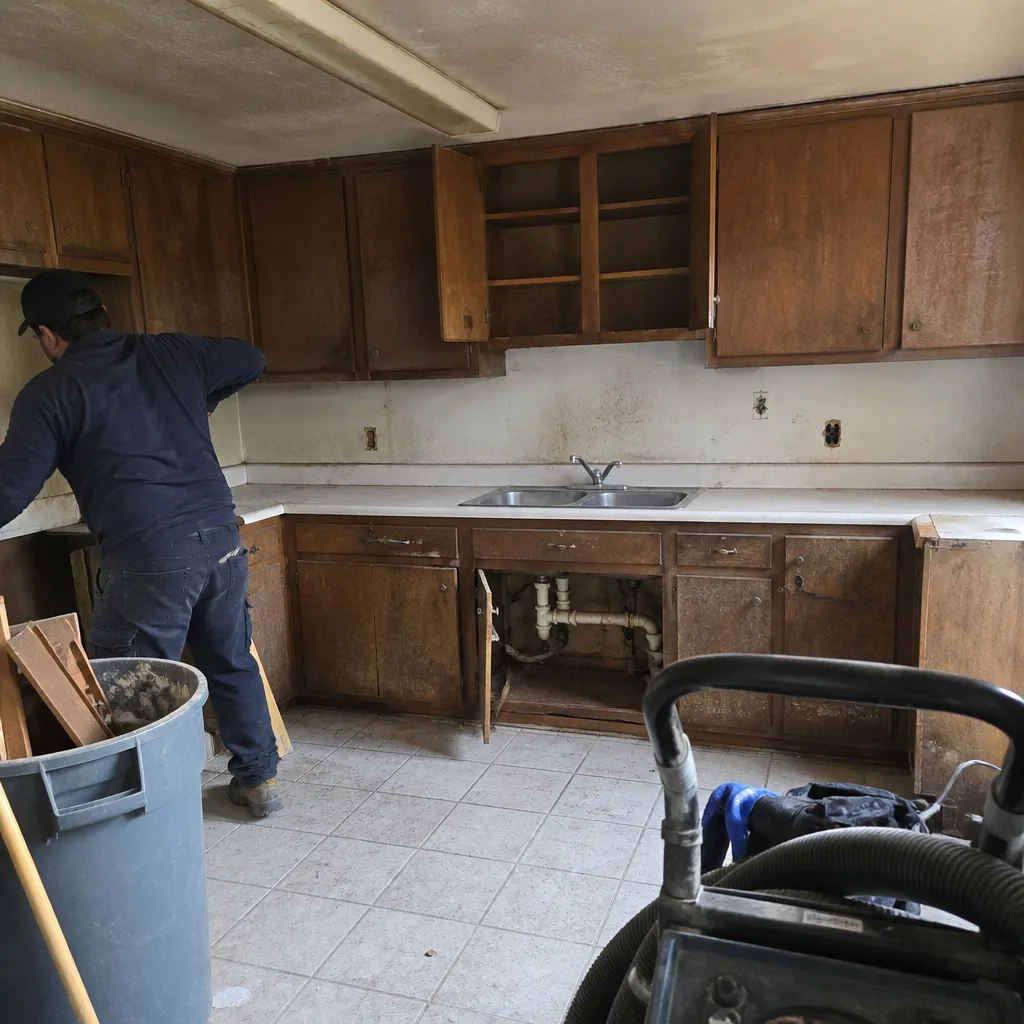 Before
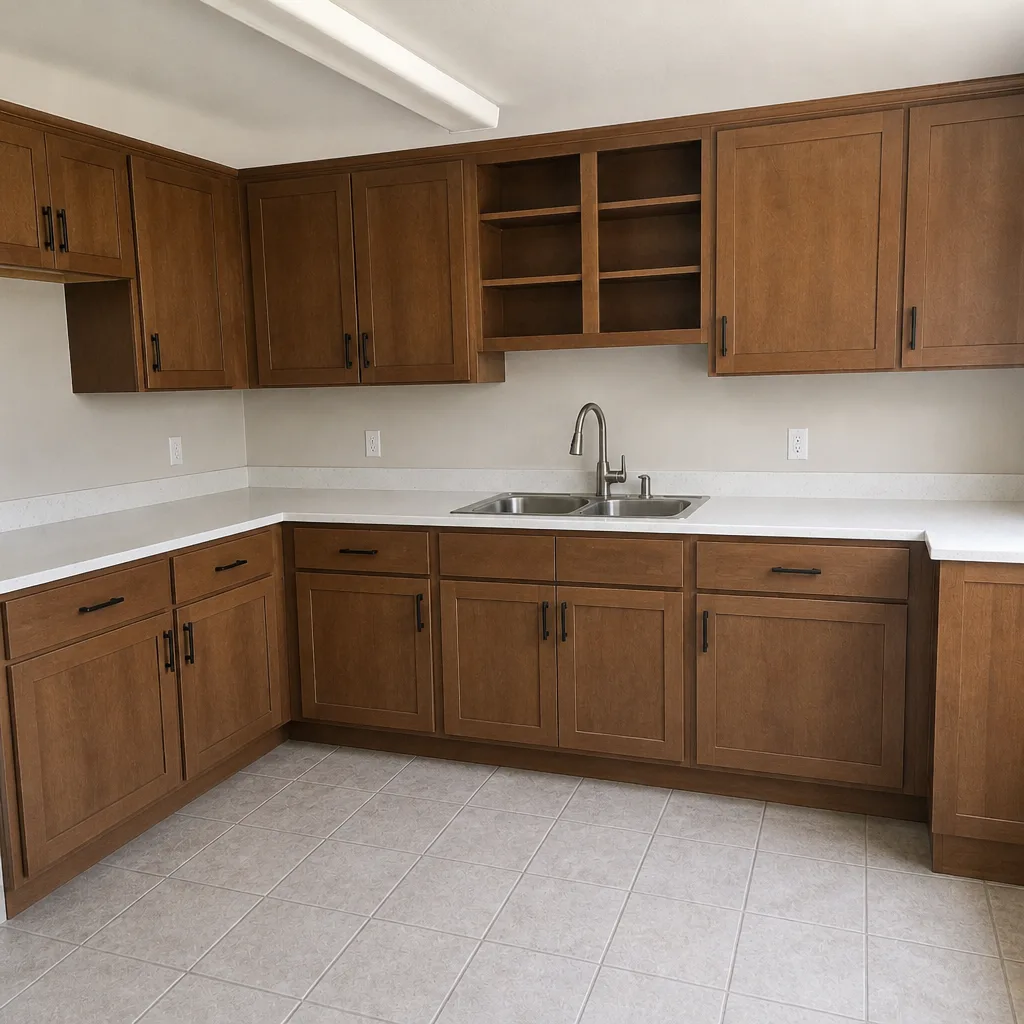 After
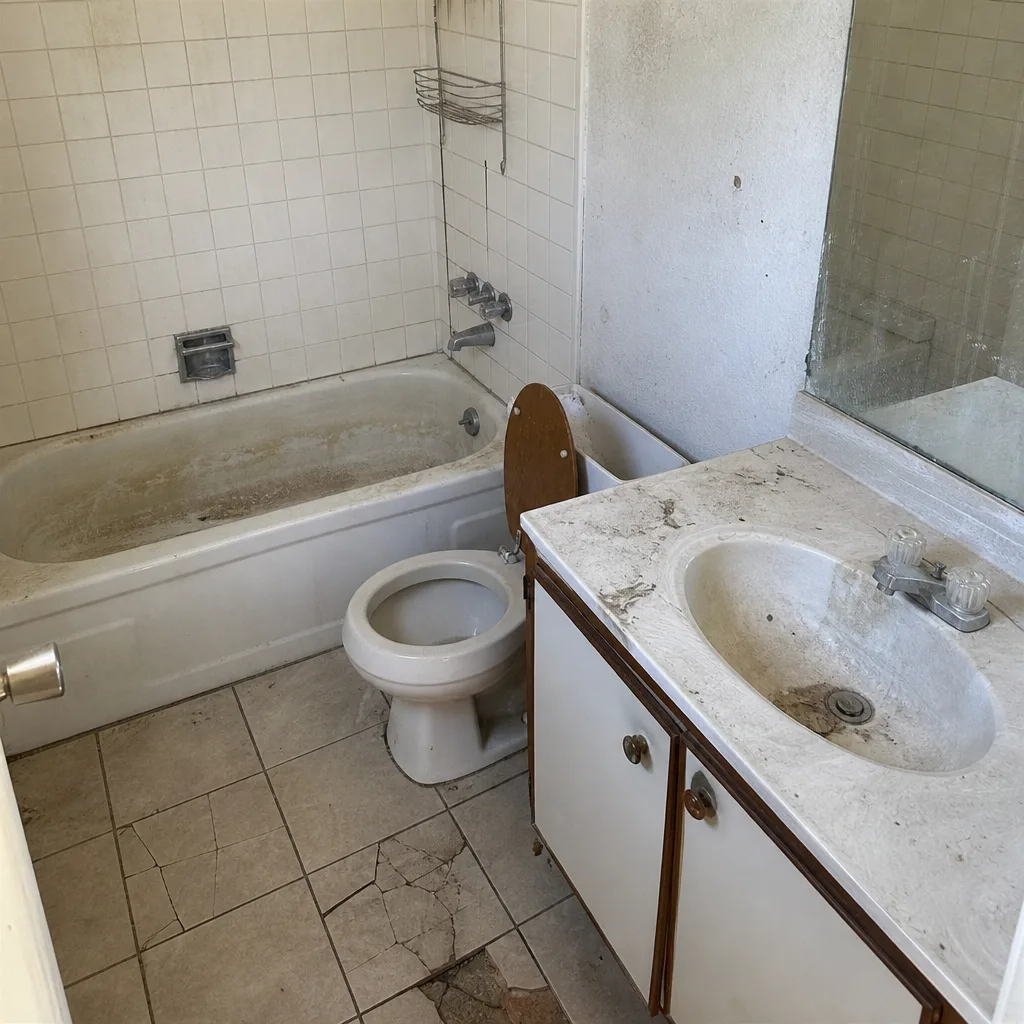 Before
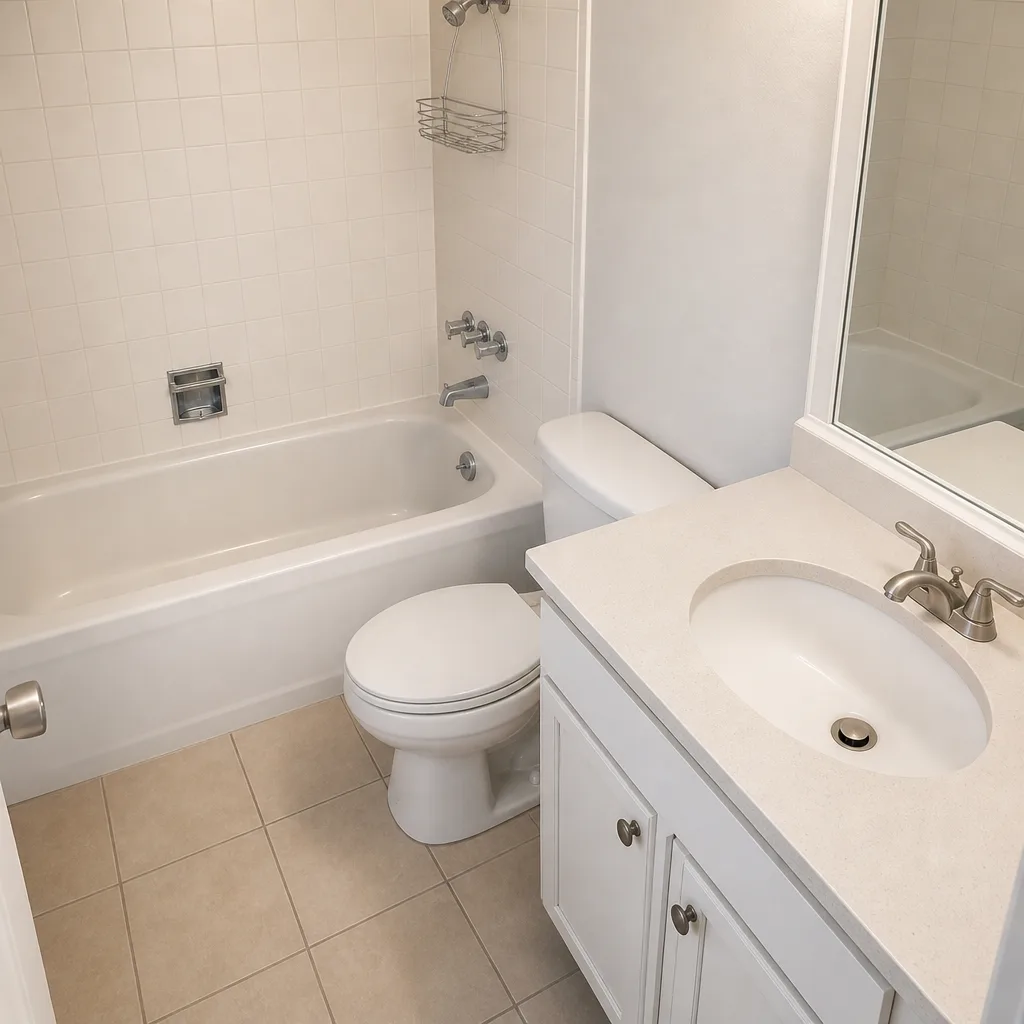 After
When to Call a Professional
Some renovation problems are safe to handle yourself. A loose cabinet knob, a hairline caulk seam, a paint touch-up. But any of the following should get a licensed professional involved, and you should stop work until they’ve had a look: anything involving electrical wiring, gas lines, or plumbing behind a wall; a structural concern like a sagging ceiling or a widening crack; a failed inspection; any dispute with your current contractor that has stalled for more than a week; or an abandoned project where you need documented next steps. The Sawyer Remodel North Las Vegas home team works with homeowners across the valley, and if you’re considering a kitchen remodel in North Las Vegas, we can help you plan the scope before work starts, which is when most problems are actually prevented. Sawyer Remodel North Las Vegas offers free estimates in North Las Vegas – call (844) 834-9656.
Frequently Asked Questions

Photograph it, then put your complaint in writing with a date and a reference to the contract line it violates. The written record is what unlocks every resolution path. If the problem involves electrical, gas, or plumbing behind a wall, stop work and call a licensed professional before anything else. Call (844) 834-9656 for a free estimate if you need an independent read on the situation.
The Board can investigate and discipline a licensed contractor, and in some cases a residential recovery fund can help with a monetary loss, but it does not force a specific repair. It’s a regulatory body, not a court. That’s why your written contract and payment records matter so much: they make any complaint stronger. Call (844) 834-9656 to schedule a free estimate if you’re deciding whether to repair or replace the work.
Usually not. Our desert temperature swings cause minor hairline cracks in stucco and grout, and they’re normal wear. A defect is when water is getting behind the wall, which means the flashing, caulk, or building envelope has failed. Call (844) 834-9656 for a free estimate to take a look.
It shouldn’t, if you have a written line-item price and a written change order process. On a well-run project, hidden damage found after demo is the only legitimate reason the price moves, and that should always come as a signed change order before work continues. Sawyer Remodel North Las Vegas puts the written price in your hands before any work starts, so the number on the invoice is the number you approved. Call (844) 834-9656 for a free estimate.
Yes. Any licensed contractor you work with should pull the permits and pass the inspections, and the permit number should be in writing before work begins. Unpermitted work can stall a future sale and fail inspection later. Call (844) 834-9656 to talk through the permit scope for your project.
A documented communication problem can resolve in a single week. A licensing board complaint can take several weeks to several months. A court case takes longer. The variable that shortens every path is your documentation. Call (844) 834-9656 for a free estimate if you need a second professional opinion on the state of the work.
The Bottom Line
Renovation problems come in four flavors: workmanship, missed scope, cost overrun, and abandonment. Before you launch a fight, figure out whether you have a contract violation, a code violation, or a communication gap, because each one has a different fix and a different timeline. The other thing that makes any dispute winnable is a simple digital folder from day one: written scope, signed change orders, payment records, permit numbers, and dated photos. That folder is the reason The Relay Visibility Guarantee exists, with a written price before work starts and before-and-after photo updates on every job. If you’re planning a bathroom remodel in North Las Vegas or any other project and want the price in writing before anyone picks up a tool, call Sawyer Remodel North Las Vegas at (844) 834-9656 for a free estimate. You’ll know who is coming, when they arrive, and exactly what it costs before work begins.
Written by the team at Sawyer Remodel North Las Vegas.