
Last updated November 18, 2026








Free written scope consultation - allowances, timeline, and change-order rules on paper before a single trade is scheduled
Kitchen Remodeling Maintenance Schedule: What to Do and When
Grout sealer on a new kitchen backsplash lasts about 12 months in a cooking kitchen. Most homeowners don’t know that. By month 18, the tile looks like it was never new. The kitchen is the highest-use room in the house and the fastest to show wear, but the tasks that protect a remodel investment are dead simple once you know what to check and when. This guide gives you that schedule: a year-one checklist tied to the work that was actually done, a hard-water routine built for North Las Vegas, and the material-specific care that keeps warranties valid and surfaces looking new for years.
Quick Answer
A kitchen remodel needs a simple annual maintenance rhythm: re-seal grout and check caulk every 12 months, adjust cabinet hinges and check appliance clearances at the 6- and 12-month marks, deep-clean the faucet aerator and garbage disposal quarterly on Las Vegas hard water, and inspect the exhaust system once a year. Follow that schedule and a remodel holds up for a decade or more; skip it and the same surfaces start failing within 18 months.
Styles & brands we work with
- Kitchen remodeling
- Bathroom remodeling
- Home additions & ADU
- Roofing
- Windows & doors
- Driveway & pavers
- Fence
Table of Contents
- Your Year-One Kitchen Maintenance Checklist
- Why Las Vegas Hard Water Changes the Schedule
- Caring for Quartz, Quartzite, and Butcher Block
- Cabinet Finish Care: Painted, Stained, and Thermofoil
- The Annual Exhaust System Check
- Seasonal Maintenance for a North Las Vegas Kitchen
- Common Mistakes to Avoid
- Frequently Asked Questions
Your Year-One Kitchen Maintenance Checklist
The first year after a remodel is the proving ground. New cabinets settle, caulk lines shift with temperature swings, and hinges loosen as doors get used daily. If you’ve recently finished a Kitchen Remodeling in North Las Vegas, this is the schedule we walk our clients through once the last box is unpacked.
- Month 1: Adjust every cabinet hinge and drawer glide. New doors swing slightly as the wood and hardware seat. A quarter-turn on the hinge screws restores alignment.
- Month 3: Inspect caulk at the sink perimeter and where the backsplash meets the counter. Any gap or lift gets re-caulked before water finds a path behind the counter.
- Month 6: Check appliance clearances. Refrigerators need breathing room at the coils, and a dishwasher should sit level with no rocking that stresses the supply line.
- Month 12: Re-seal the backsplash and floor grout. Inspect seals around the sink and under-counter edges. Full cabinet hardware check and a hinge re-torque on every door.
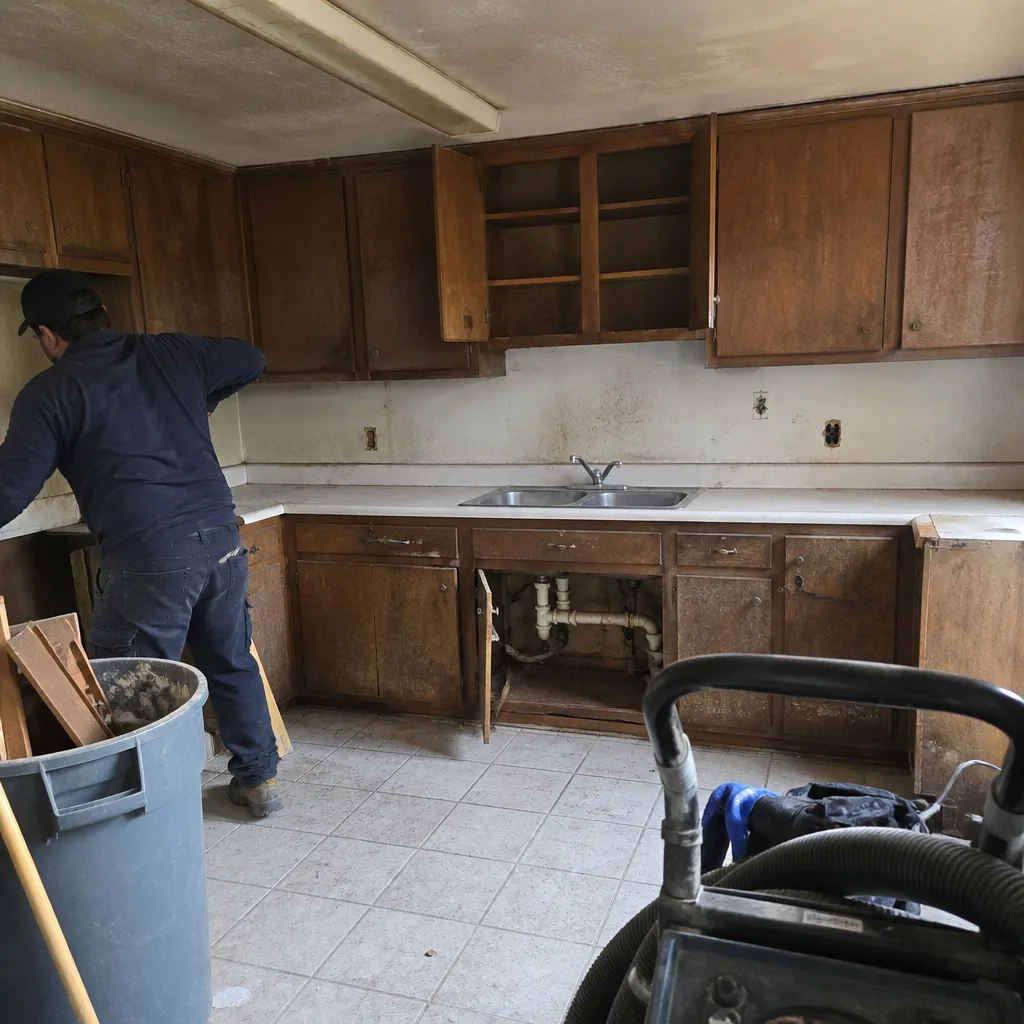
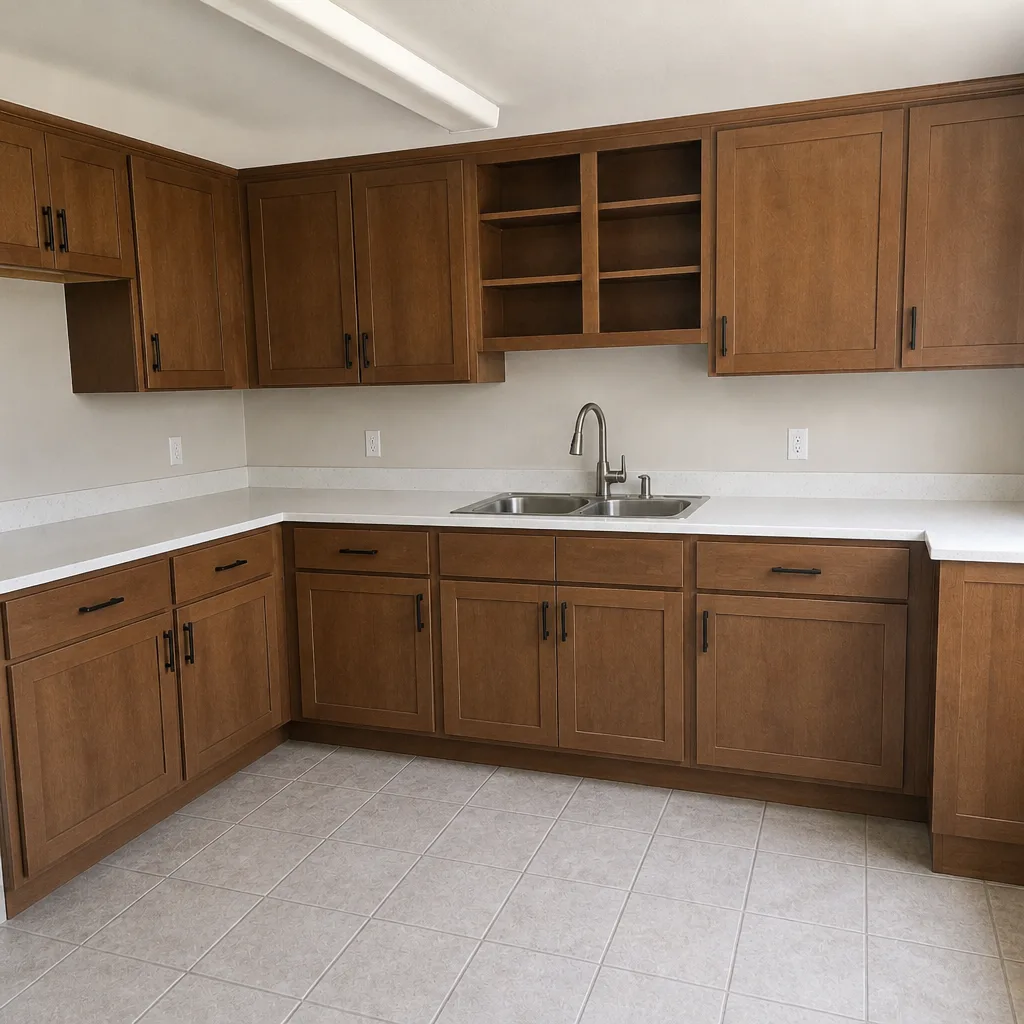
We’ve seen kitchens in the Aliante and Valley Vista neighborhoods where the month-3 caulk check alone prevented a slow leak that would have rotted the cabinet base under the sink. It’s a fifteen-minute task. The repair it avoids runs into the hundreds. Every project we run through The Relay Visibility Guarantee includes the before-and-after photo set, which is genuinely useful here – you have a clean visual record of how the kitchen looked on day one, so you can spot what’s changed.
Why Las Vegas Hard Water Changes the Schedule
Las Vegas water is some of the hardest in the country, and North Las Vegas taps run high on calcium and magnesium. Soft-water markets get away with cleaning the faucet aerator once a year. Here, you’ll be pulling mineral scale out of screens and aerators every three months or the flow drops and the spray pattern clogs.
The faucet aerator is the small screened cap at the tip of the spout. Unscrew it, soak it in white vinegar for an hour, scrub the screen with an old toothbrush, rinse, and reinstall. Do that quarterly. Also wipe the faucet body and handles dry after use – the water spots that etch chrome are mineral deposits hardening in place.
Garbage disposals get their own hard-water routine. Run cold water and a tray of ice cubes through the disposal monthly to knock scale off the grinding chamber, and once a quarter pour a half-cup of baking soda followed by a cup of white vinegar down the drain to clear the smell. Avoid chemical drain cleaners entirely on a disposal you care about; they attack the rubber seals.
If your remodel included new fixtures, this is where premium brands earn their price. Kohler and Moen faucets use replaceable cartridges and accessible aerators, which makes the quarterly routine a two-minute job instead of a plumbing call. Grohe’s finish coatings hold up well against the mineral load, but even the best finish needs the dry-wipe habit.
Caring for Quartz, Quartzite, and Butcher Block
Different countertop materials need genuinely different care, and using the wrong product can void a manufacturer warranty. Here’s how the three most common surfaces break down.
- Quartz (engineered): Non-porous and does not need sealing. Wipe with warm water and a drop of dish soap. Avoid harsh abrasives and high-acid cleaners that dull the resin. Never place a hot pan directly on quartz – thermal shock can crack it. Cambria and Caesarstone both publish care guidelines, and following them keeps the warranty intact.
- Quartzite (natural stone): Porous and does need sealing, typically once a year. Test by dripping water on the surface: if it beads, the sealer is holding; if it darkens and soaks in, re-seal. Use a penetrating stone sealer, not a surface film product. Wipe spills promptly, especially wine and citrus.
- Butcher block: Oil it monthly for the first year, then every few months. Use food-grade mineral oil or a butcher block conditioner, never cooking oil, which goes rancid. Keep it dry, and sand out scratches lightly when they start catching cloth.
We’ve found that North Las Vegas homeowners on quartzite need to re-seal a little more often than the label suggests, because the dry climate and strong sun through kitchen windows accelerate the sealer wearing off on the sun-facing edge of the slab. Check that edge first when you do the water-bead test.
Cabinet Finish Care: Painted, Stained, and Thermofoil
Cabinet finish is where the wrong cleaner does the most damage. Three common finishes, three different rules.
Painted cabinets use a cured paint film that’s tough but not immune to abrasion. Clean with a damp microfiber cloth and a mild soap solution. Skip anything with ammonia, bleach, or scrubbing pads. Touch-up paint from the original job handles small chips at the corners where hands land most.
Stained wood cabinets have a protective topcoat, usually lacquer or a conversion varnish. Dust them weekly with a soft cloth, and clean with a wood-safe product that doesn’t leave a film. Avoid oil polishes that build up and attract dust – a build-up film eventually turns gummy and traps grit that scratches the topcoat.
Thermofoil cabinets are a vinyl film over an engineered core. They’re the ones most likely to be ruined by the wrong product. Heat is the enemy here – never clean thermofoil near an open oven or with a hot, steamy cloth, because heat softens the adhesive and the film can peel at the seams. Use only a damp cloth and mild soap. Avoid abrasive cleaners and solvents entirely, since they can lift the film edge.
Whatever the finish, do the annual hinge and glide adjustment on the same schedule. A door that sags and rubs against its neighbor will wear the finish at the contact point faster than any cleaner ever will. Our technicians have up to 21 years of experience and will tell you that most cabinet “finish damage” they see is actually door-misalignment damage.
The Annual Exhaust System Check
Your range hood does two jobs: it clears smoke and grease, and it keeps your kitchen compliant with fire code. The second one is the reason to check it once a year even if it seems to be working fine.
- Clean the filter. Grease-clogged filters reduce airflow and become a fire hazard. Most metal mesh filters are dishwasher-safe; check the manufacturer’s guidance. Do this monthly if you cook heavily.
- Inspect the duct run. Look for disconnected joints, crushed flexible ducting, or a damper that’s stuck closed. A hood that exhausts into a blocked duct is just noise and a hazard.
- Confirm exterior venting. Recirculating hoods that dump air back into the kitchen are common, and many local codes require exterior venting for a permanent range hood. If your remodel included a new or rerouted vent, confirm it terminates outside, not into an attic or joist cavity.
- Watch for warning signs. Grease buildup on the wall near the hood, lingering cooking smells, or condensation on the hood on a cold morning all point to poor airflow worth investigating.
That annual check matters at home sale time. A buyer’s inspector will flag a range hood that isn’t properly vented, and it can stall a closing or force a repair under deadline pressure. Keep a simple record of your yearly check and you have a paper trail. If your hood or vent was part of a larger renovation, a licensed General Contractor in North Las Vegas can verify the ducting meets current code before it becomes someone else’s inspection finding.
Seasonal Maintenance for a North Las Vegas Kitchen
North Las Vegas has a specific climate rhythm: a brutal dry summer and a mild winter, with big day-to-night temperature swings in spring and fall. That pattern shows up in your kitchen.
In summer, the dry air pulls moisture from wood and can open small gaps at cabinet joints and along caulk lines. This is the season to watch the caulk and re-caulk before the winter rains come. Keep the kitchen from getting too dry by running a humidifier in the main living area if the whole house feels parched – but avoid blasting humidity directly at wood cabinets.
When the winter rains arrive, the risk shifts to water intrusion at windows and under-sink areas. Check the seals around the kitchen window and the base of the sink cabinet after a hard rain. North Las Vegas gets intense, short downpours rather than a steady drizzle, so water finds weak points fast. Fall is also the right time to re-seal stone counters and grout before the wet season.
Spring cleaning is the moment to pull the refrigerator out, vacuum the coils, and check the icemaker line for cracks. If the kitchen was part of a whole-home renovation, we’ve noticed the same seasonal checks that protect the kitchen also protect adjoining rooms – which is one reason we treat maintenance as a house-wide habit, not a room-by-room afterthought. You can see how the rest of the home fits together on our Sawyer Remodel North Las Vegas home page.
Common Mistakes to Avoid
- Using one cleaner on every surface. A product that’s fine on quartz can ruin thermofoil and dull stained wood. Match the cleaner to the material or stick to mild soap and water.
- Skipping the grout sealer. Grout sealer fades in about a year. Let it go past month 18 and the backsplash stains and looks tired no matter how clean it is.
- Ignoring the faucet aerator on hard water. In North Las Vegas, a clogged aerator cuts flow and stresses the fixture. Quarterly vinegar soaks prevent the scale entirely.
- Placing hot pans on quartz or quartzite. Thermal shock cracks engineered and natural stone. Use a trivet every single time.
- Cleaning thermofoil cabinets with heat or solvents. Hot, steamy cloths and abrasive sprays soften the adhesive and peel the film. Damp cloth and mild soap only.
- Letting a sagging door rub. A misaligned cabinet door wears its own finish against the neighbor. Adjust hinges annually.
- Forgetting the exhaust filter. A grease-clogged range hood filter is a fire risk and a home-inspection flag. Clean it monthly if you cook often.
See the difference
 Before
 After
 Before
 After
 Before
 After
When to Call a Professional

Some maintenance is homeowner work; some isn’t. Call a professional if you see water damage or softness around the sink base, if the range hood ducting needs rerouting or code verification, if a countertop has cracked or a seam has separated, or if cabinet doors and drawers have gone so far out of alignment that hinge adjustment no longer holds. Electrical work at the range or disposal and any gas line near the range belong to licensed trades, not a weekend project. Sawyer Remodel North Las Vegas offers free estimates in North Las Vegas – call (844) 834-9656, and you’ll get a written price before any work starts. Our projects fall under the 365-Day Done Right Promise, so if something we installed isn’t holding up, we make it right.
Frequently Asked Questions
Re-seal grout about once a year and test stone countertops once a year, re-sealing porous surfaces like quartzite when water stops beading. Engineered quartz doesn’t need sealing at all. In North Las Vegas, check the sun-facing edge of stone counters first, since the dry climate wears that sealer off faster. Call (844) 834-9656 if you’d like a professional seal as part of a larger refresh.
Hard water is the reason – Las Vegas water carries high mineral content that builds up in the aerator screen. Soak it in white vinegar quarterly to clear the scale. If flow stays low after cleaning, the cartridge may be the issue, and a licensed pro can swap it.
Use a damp cloth and mild soap, and keep heat and solvents away. Thermofoil is a vinyl film, and hot steamy cloths or abrasive sprays soften the adhesive and cause peeling. Never use oven cleaner or scrubbing pads near thermofoil.
Yes, once a year, plus monthly filter cleaning if you cook often. The check confirms airflow, catches disconnected or crushed ducting, and keeps you compliant with fire code. It also prevents a home-inspection surprise when you sell. If the ducting needs work, call (844) 834-9656 for a free estimate.
Seal it once a year with a penetrating stone sealer and wipe spills, especially wine and citrus, promptly. Test with a water drip: beads mean the sealer is holding, soaking in means it’s time to re-seal. North Las Vegas dry air and sun exposure can shorten the interval on sun-facing edges.
It can, and the margin is large. A kitchen that gets the year-one checks and the annual sealer routine typically holds its appearance for a decade or more, while the same kitchen without maintenance starts showing wear within 18 months. Want help setting up the first-year checklist? A free estimate and a walkthrough at (844) 834-9656 is the place to start – for a broader refresh, see our Bathroom Remodeling in North Las Vegas page.
The Bottom Line
Your kitchen remodel is an investment, and the maintenance that protects it is simple, not complicated: seal grout and stone once a year, clean the hard-water-prone faucet aerator and disposal every quarter, match your cleaner to the countertop and cabinet finish, and check the exhaust once a year. Do the year-one checklist faithfully and the schedule settles into a rhythm you’ll barely notice. In North Las Vegas, the dry climate and hard water make the quarterly faucet routine and the annual sealer test especially important. Get those four habits right and the finish that looks new on day one still looks new years later.
Ready to plan your kitchen or set up a maintenance walkthrough? Call (844) 834-9656 for a free estimate. You’ll get a written price before any work starts, live arrival time, and photo updates before and after – the Relay Visibility Guarantee on every job.
Written by the team at Sawyer Remodel North Las Vegas.