Last updated November 18, 2026






Free written scope consultation - allowances, timeline, and change-order rules on paper before a single trade is scheduled
How to Hire a Construction Contractor in North Las Vegas: A Step-by-Step Guide
Nevada’s contractor licensing board logged over 1,200 complaints in a single recent year, and the most common pattern wasn’t fly-by-night operators. It was licensed contractors who subcontracted the work to unlicensed crews the homeowner never met. That’s the trap this guide is built to close. If you’re hiring a contractor in North Las Vegas, “get three bids and check reviews” won’t cut it. This guide walks you through verifying a Nevada license, catching bids that omit permit fees, reading a scope of work like a contract, and structuring payments so you’re never ahead of the work. North Las Vegas has its own permit office, its own inspection pace, and its own desert-specific construction realities – all of which change what a good contractor looks like here.
Quick Answer
To hire a construction contractor in North Las Vegas, verify the contractor’s Nevada license on the State Contractors Board website (confirm status is active and the license classification matches your project), ask who physically pulls the permit and whose license number appears on it, demand a written scope with line-item permit fees, and tie payments to completed phases. The single most protective step is refusing to sign until the written price and scope match what you were promised verbally – everything else flows from that.
Styles & brands we work with
- Kitchen remodeling
- Bathroom remodeling
- Home additions & ADU
- Roofing
- Windows & doors
- Driveway & pavers
- Fence
Table of Contents
- Step 1: How to Verify a Nevada Contractor License in Under Two Minutes
- Step 2: The Permit Question That Exposes Subcontracting
- Step 3: Why Bids That Skip Permit Fees Are a Red Flag in NLV
- Step 4: The Written Scope Specificity Test
- Step 5: Structuring a Payment Schedule You Can Live With
- Step 6: The Desert-Specific Work Your Bid Must Include
- Step 7: The Exact Questions to Ask Before You Sign
- Common Mistakes to Avoid
Step 1: How to Verify a Nevada Contractor License in Under Two Minutes
Every licensed contractor in Nevada holds a license through the Nevada State Contractors Board (NSCB). The board’s public lookup is free, takes about 90 seconds, and tells you more than any review site can. Pull up the license number on the contractor’s bid or business card and search it directly. Here’s what to check on the result page:
- Status. “Active” means the license is currently valid and the contractor can legally work. “Inactive,” “suspended,” or “expired” means they cannot legally contract for work in Nevada – walk away.
- Classification. The license category should match your project. A residential remodeling license covers the scope of most bathroom and kitchen work; a specialty license limits the contractor to that trade. If the classification doesn’t line up with what you’re hiring for, the license doesn’t cover the job.
- Bonding and insurance. Nevada requires licensed contractors to carry a surety bond and workers’ compensation coverage. If those entries are missing or lapsed, you’re exposed if something goes wrong.
- Complaint history. The board logs disciplinary actions and complaints. A clean record matters, but read what’s there – a single old dispute that was resolved is different from a pattern.
A status of “active” is the floor, not the finish line. The classification and bonding entries are where North Las Vegas homeowners get surprised. When we’re brought in for a second opinion on a signed contract, the mismatch is almost always right there on the lookup page – the homeowner just didn’t scroll past the word “active.”
Step 2: The Permit Question That Exposes Subcontracting
Here’s the question to ask verbatim: “Whose license number will appear on the building permit, and which of your employees will actually be doing the work?” The answer tells you whether the licensed contractor you vetted is the one doing your project or just fronting for a crew you’ve never met.
In Nevada, the permit is issued to a licensed contractor, and the license number is tied to the entity responsible for the work. A contractor who pulls the permit in their name but hands the crew off to unlicensed labor is creating a paper trail that protects them, not you. If something goes wrong, the unlicensed crew has no bond, no insurance, and no standing with the board – and the licensed contractor can point to the sub and claim they weren’t the one on site.
Ask two follow-ups:
- “Are the people doing the work on your payroll, or are they subcontractors? If subs, are those subs licensed too?” (The answer must be yes on both.)
- “Will the crew lead on my job be someone I can name before work starts?” A contractor who can name their crew has a crew. A contractor who can’t is brokering your project.
For a whole-home renovation, the subcontracting question matters even more because multiple trades cycle through. Our general contractor in North Las Vegas page explains how we coordinate trades on larger jobs so you’re not the one chasing the electrician. For a scope that’s tile and waterproofing-heavy, like a bathroom, the crew-lead question is the one that separates a real remodeler from a middleman.
Step 3: Why Bids That Skip Permit Fees Are a Red Flag in NLV
Permits in North Las Vegas are not free, and they’re not a rounding error. The city’s permit fees scale with project valuation, and for a bathroom or kitchen remodel they can run several hundred dollars or more depending on scope and inspection count. A bid with no permit line item is telling you one of three things: the contractor plans to skip the permit, the contractor plans to surprise you with the fee later, or the contractor hasn’t done the math on your project.
All three are problems. Skipping a permit means an unpermitted renovation that can complicate a future sale, a refinance, or an insurance claim. Surprising you later means the number you approved wasn’t the number you’ll pay. Not doing the math means the bid isn’t real.
What a permit-correct bid looks like:
- A separate, named line item for permit fees, stated in dollars.
- A note on which inspections will be required (rough-in, framing, final) and who schedules them.
- Language confirming the contractor pulls the permit – not the homeowner.
Nevada law puts the permit responsibility on the licensed contractor for permitted work. If a bidder asks you to pull the permit as the homeowner, that’s a signal the license isn’t set up to cover your scope. In our experience, permit line items in North Las Vegas are where “low bids” quietly lose their shine once you add back what was left out.
Step 4: The Written Scope Specificity Test
A vague scope of work is not a neutral document. It’s a contract that legally protects the contractor, because anything not listed is not owed. “Bathroom remodel per plans” protects the person who wrote it, not the person paying for it. Before you sign, run every line of the scope through this test: could you stand in the finished room and prove whether this line was done or not?
A protective scope names materials, quantities, and standards. Compare these:
- Vague: “Tile flooring in bathroom.” Protective: “Porcelain tile flooring, 12×24 format, 60 square feet, set with modified thinset over cement backer, Schluter edge trim along the shower threshold, sealed with two coats.”
- Vague: “New vanity.” Protective: “KraftMaid 36-inch vanity, Moore color, soft-close doors, with matching top and undermount sink; Moen faucet; shutoff valves replaced.”
- Vague: “Waterproofing per code.” Protective: “Shower waterproofing with a bonded membrane over a sloped mortar bed, flood-tested and inspected before tile.”
The tile and waterproofing example is worth spelling out because it’s the most common hidden omission in North Las Vegas bathrooms. A bonded membrane over a properly sloped bed is the difference between a shower that lasts and one that fails in a few years. If the scope doesn’t name it, price it, and specify inspection, assume it’s been left out. Our bathroom remodeling in North Las Vegas page walks through what a complete scope covers on those projects, and the same standard applies whether you hire us or someone else.
Step 5: Structuring a Payment Schedule You Can Live With
The rule that matters most: at no point should you have paid more money than the value of work already completed and inspected. A payment schedule that asks for 50% up front is asking you to fund a project you have no leverage over. If the contractor walks, you’re chasing a deposit. If the work is slow, you have no way to push it.
A payment schedule that keeps you in control:
- Deposit, capped. A reasonable deposit covers materials for the early phases. Keep it small enough that losing it wouldn’t be catastrophic.
- Rough-in payment. Released after mechanical, electrical, and plumbing rough-ins pass inspection – not when the contractor says they’re done.
- Mid-project payment. Released after tile, drywall, and cabinet installation are complete and you’ve walked the job.
- Substantial completion payment. Released after final inspection passes and you have the signed-off permit in hand.
- Final retention. A small holdback released after your punch list is closed out. This is the leverage that gets a small issue fixed without a fight.
Write the schedule into the contract with specific trigger events. “Half now, half at the end” sounds clean but leaves you with no leverage at the halfway point. Our kitchen remodeling in North Las Vegas page describes how we tie invoices to phase completion on the projects with the most moving parts, and the principle holds for any project size.
Step 6: The Desert-Specific Work Your Bid Must Include
North Las Vegas sits in a high-desert climate with roughly 300 days of sun a year, summer highs that regularly top 110°F, and a wide daily temperature swing. Those conditions change what “good construction” means here, and a bid imported from a coastal climate won’t account for it.
- Exterior products rated for UV and heat cycling. Roofing and siding materials degrade faster under intense sun and thermal movement. This is where specifying a brand you can verify matters – CertainTeed and Owens Corning both publish UV- and heat-rated product lines. A bid that names no brand on the exterior is a bid you can’t evaluate.
- Slab and foundation movement. Expansive soils and drying cycles cause movement that can crack tile, pop grout, and shift door frames. A tile scope that assumes a flat substrate without any substrate prep line item is assuming conditions that don’t exist here.
- Insulation and attic ventilation. A remodel that adds a room or reworks a roofline has to get the thermal envelope right for the desert, or the energy bill climbs every summer. A bid that skips it is a bid that will be revisited in July.
- Water management on the roof. Monsoon-season rain is rare here but intense. Flashing and drainage details that look fine on paper fail when 30 minutes of rain hits a roof with no slope. Ask how the bid handles ponding and weep points.
If a bid reads like a generic national template with no mention of climate, substrate, or product standard, ask why. A contractor who’s actually built in the desert will answer without reaching for a brochure. Our Sawyer Remodel North Las Vegas home page is where we lay out how we approach the climate-specific work on every job.
Step 7: The Exact Questions to Ask Before You Sign
Bring these to your final contractor meeting and write the answers into the contract. A contractor who resists putting answers in writing is telling you something, and it isn’t reassuring.
- “What’s your Nevada license number, and what’s your NSCB status today?” (Verify it live while you’re sitting there.)
- “Will your employees or subcontractors be doing this work, and are the subs licensed?”
- “Whose name goes on the permit, and who schedules the inspections?”
- “What’s the line-item price for permits, and what’s the inspection schedule?”
- “What’s the written price, and will it change if conditions differ from the scope?” (The answer should be: only with a written change order you approve first.)
- “What’s your payment schedule, tied to which phases?”
- “What does your workmanship guarantee cover, and for how long?” (Get it in writing.)
- “What happens if a repair fails after the project closes?”
At Sawyer Remodel North Las Vegas, the answers to these aren’t negotiation points – they’re the reason The Relay Visibility Guarantee exists. A written price before work starts, a live arrival time so you’re not burning a four-hour window, and before-and-after photo updates so you can see progress without chasing. The 365-Day Done Right Promise backs it for a full year after close. The point isn’t that we’re the only contractor who’ll put it in writing. The point is that any contractor who won’t shouldn’t get your signature.
Common Mistakes to Avoid
- Taking “active” at face value. A status check that stops at “active” misses whether the license classification actually covers your project. Read the whole lookup page, including the bond and workers’ comp entries.
- Accepting a bid with no permit line. In North Las Vegas, permit fees are real money. A bid without a line item for them is a bid that’s either skipping the permit or planning to surprise you. Both cost you more than the honest bid did.
- Signing a scope written in generalities. “Remodel per plans” and “tile in bathroom” are not scopes. They’re cover for what won’t be delivered. If you can’t prove a line was done, it’s not in the scope.
- Paying the whole deposit before the permit’s pulled. Money leaves your hand before work exists. Keep the deposit capped and tie the next payment to an inspection, not a calendar date.
- Hiring the cheapest bid without reconciling the differences. The low bid isn’t cheap if it excludes waterproofing, substrate prep, or the permit. Sit the bids side by side and ask each contractor what the other’s bid left out – the answers are revealing.
- Skipping the “who’s on my job” question. The most common complaint pattern is a licensed contractor handing the work to a crew you never met. Ask for names and licenses before anyone walks in.
- Not asking for the guarantee in writing. A verbal “we stand behind our work” isn’t a guarantee. Ask for the document, the coverage period, and the process for a failed repair.
See the difference
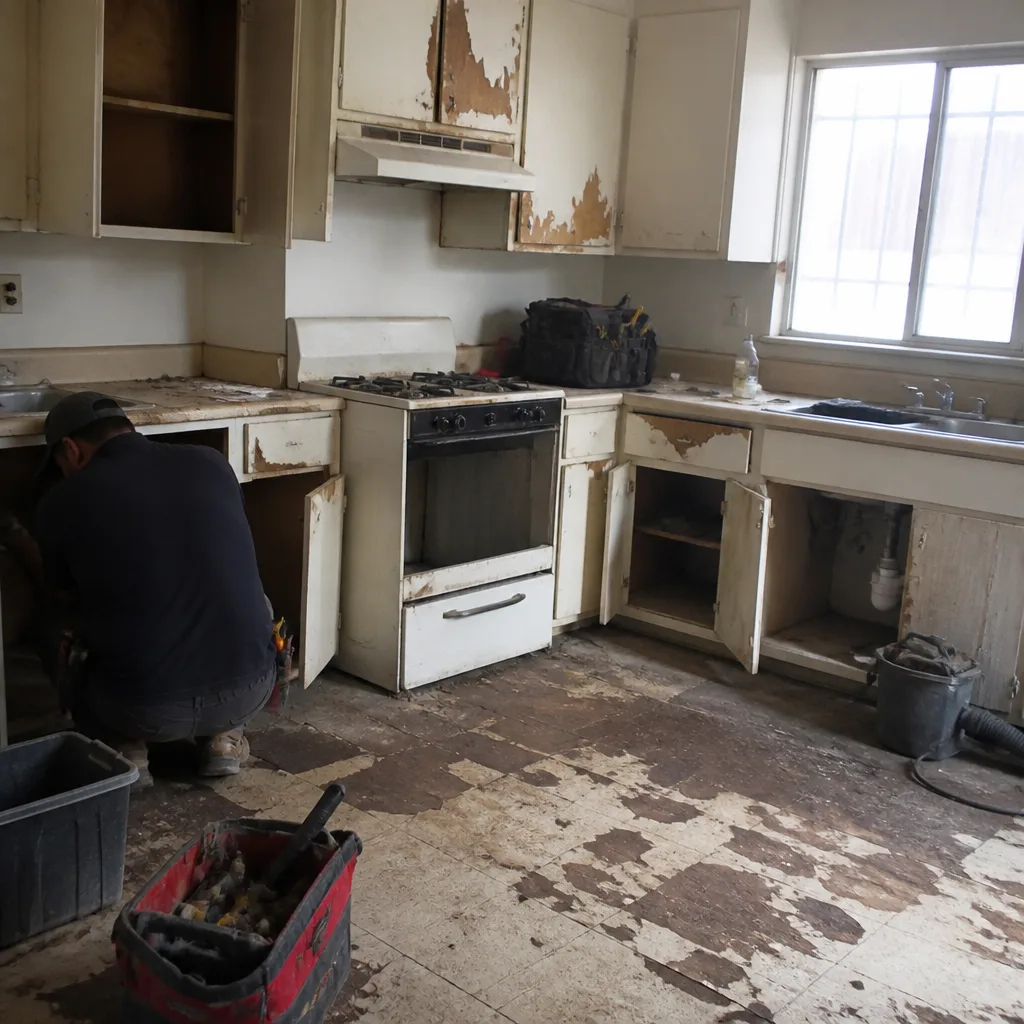 Before
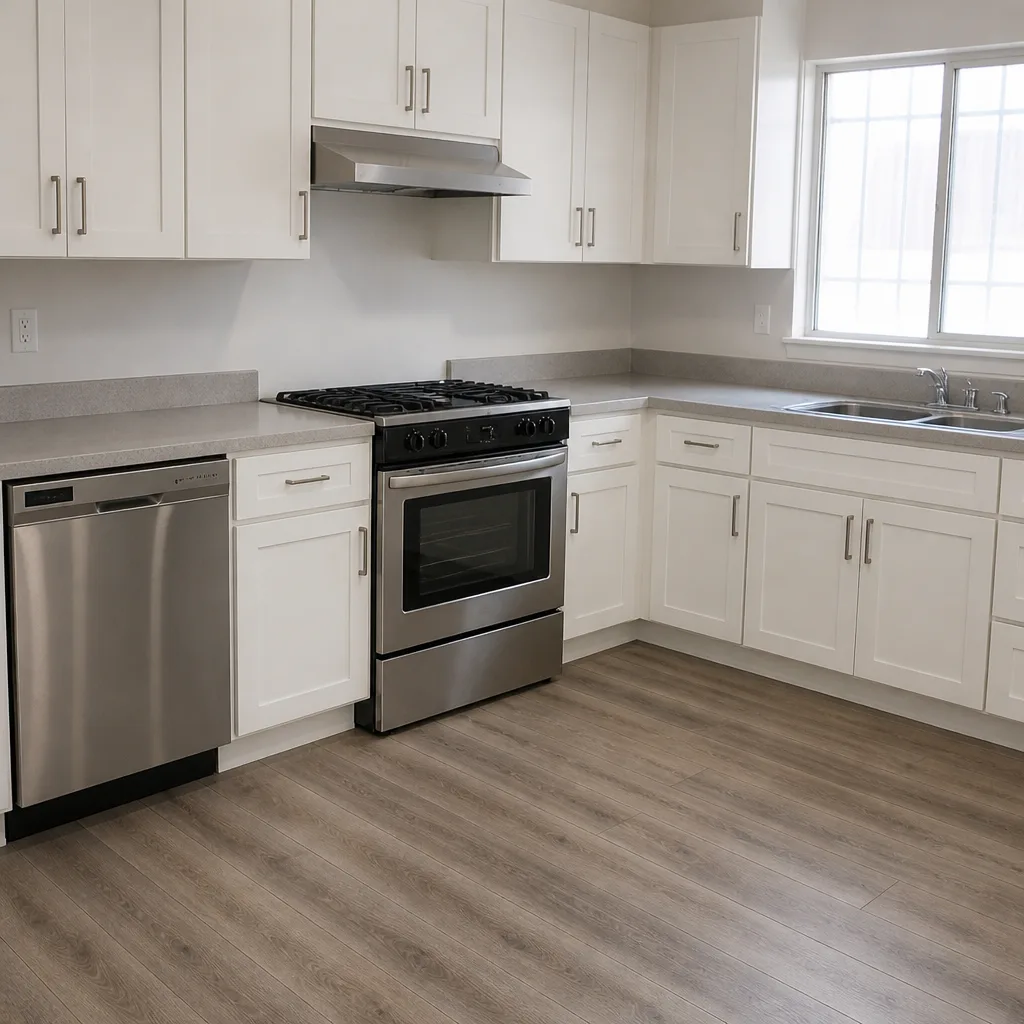 After
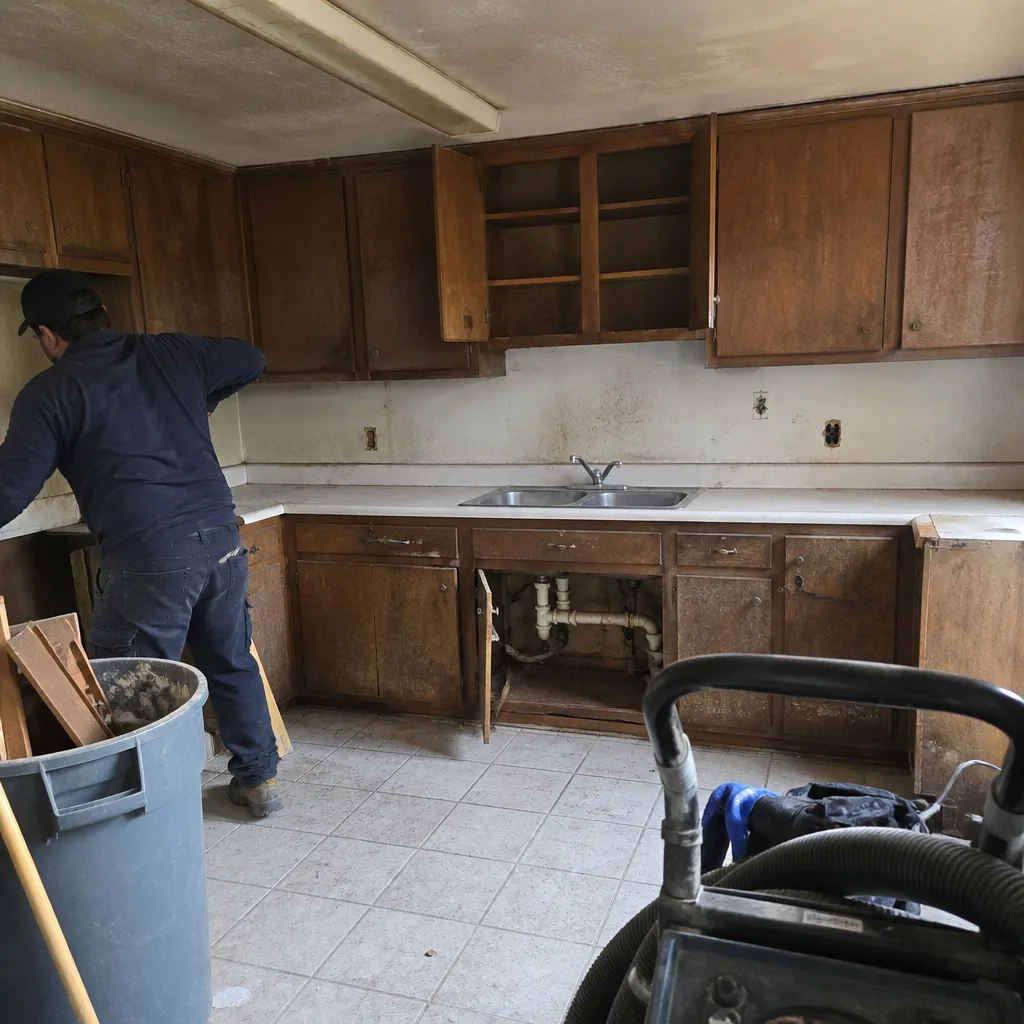 Before
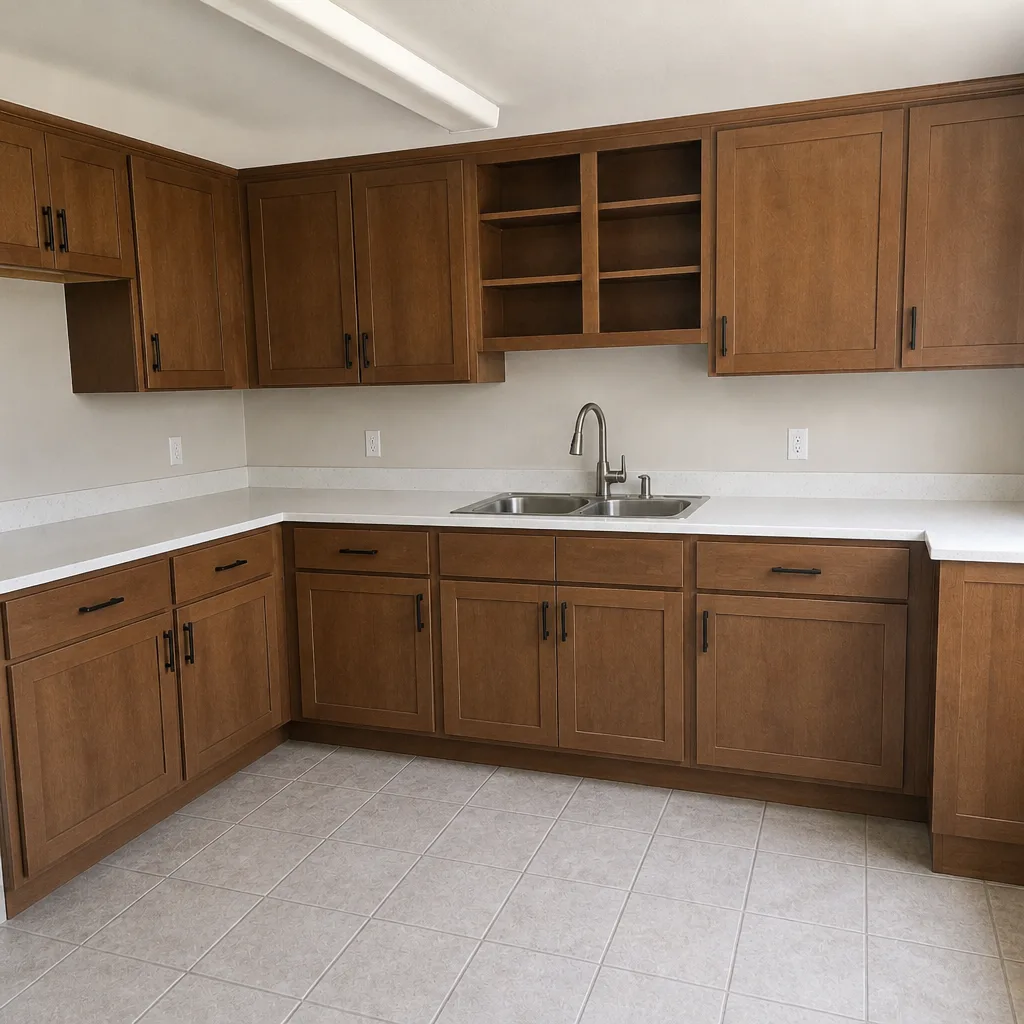 After
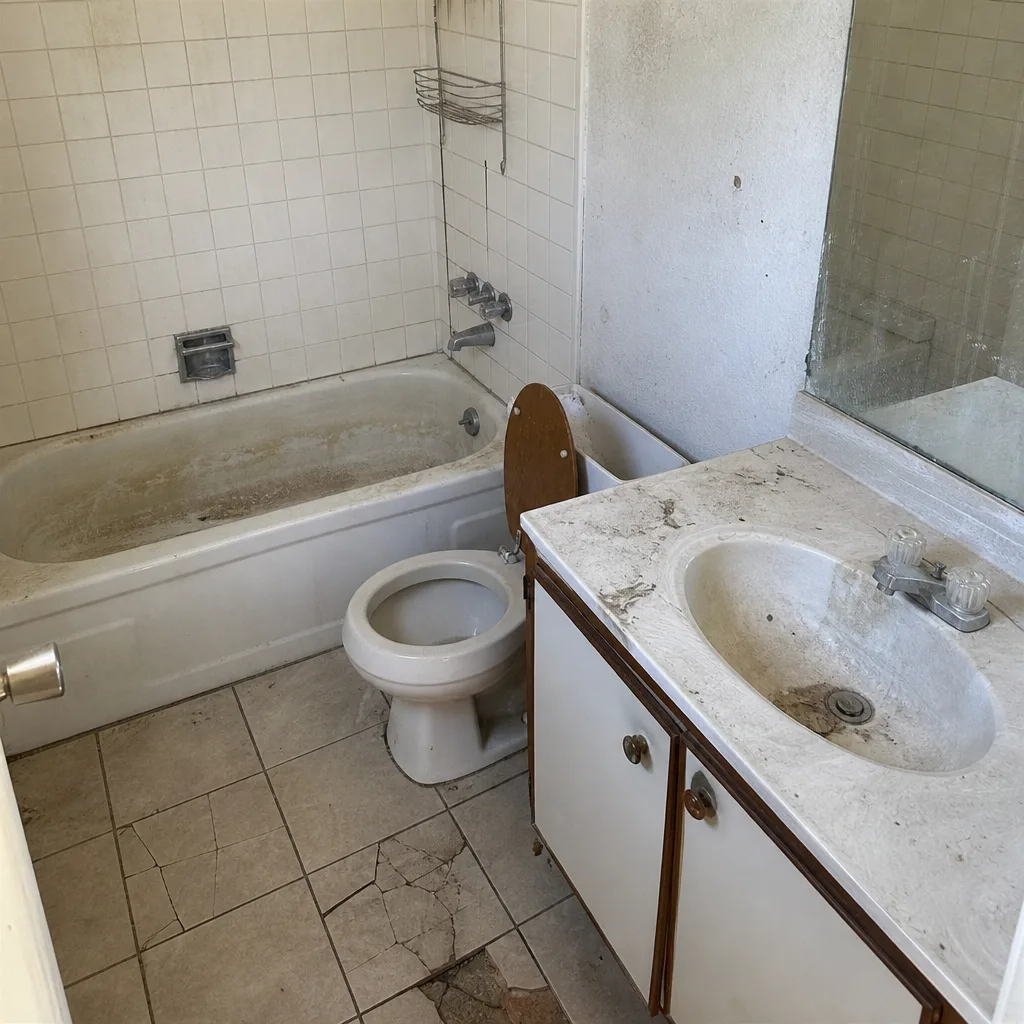 Before
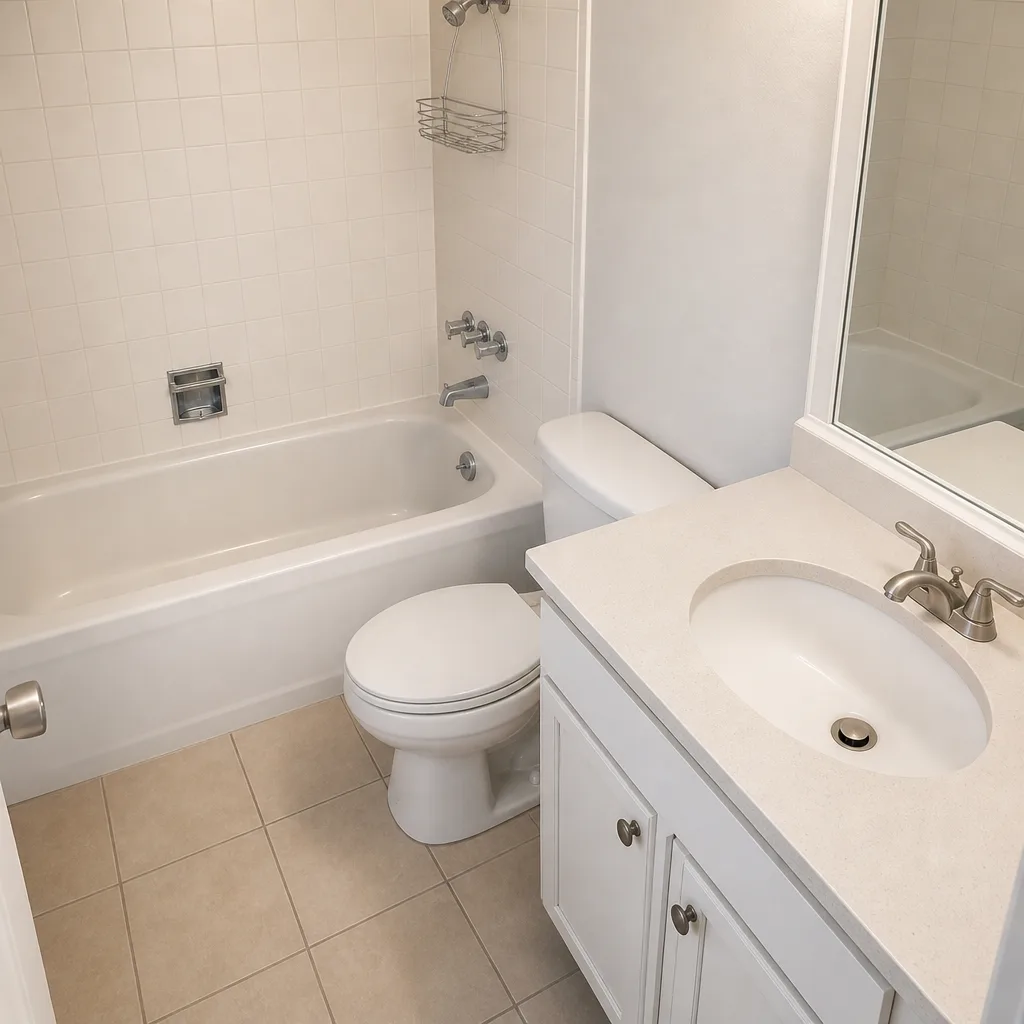 After
When to Call a Professional
Some hiring decisions are easier than others. If your project involves moving plumbing, relocating electrical circuits, opening walls for a structural change, or reworking a roofline or exterior envelope, you’re past the DIY line. These are the scopes where permits, inspections, and licensed trades are all required, and where a mistake shows up years later as water damage or a failed inspection at resale. Bathroom waterproofing is the classic example – a shower that’s not properly sloped and membrane-tested fails quietly, and by the time you see the stain below, the substrate is already gone. North Las Vegas has its own permit and inspection process, its own climate demands, and its own contractor landscape; a pro who’s built here knows these before they quote. Sawyer Remodel North Las Vegas offers free estimates in North Las Vegas – call (844) 834-9656 to schedule one.
Frequently Asked Questions
Search the contractor’s license number on the Nevada State Contractors Board website and confirm three things: status is “active,” the license classification covers your project scope, and the bond and workers’ comp entries are current. Do this before you sign anything, and do it while sitting across from the contractor. If any entry is missing or shows inactive, walk away. Call (844) 834-9656 if you want a second set of eyes on a bid you’re considering.
Yes, in most cases. Any bathroom remodel that moves or adds plumbing, electrical, or structural work requires a permit from the City of North Las Vegas, and the work must pass inspection before it’s closed out. Cosmetic-only work – paint, a vanity swap with no plumbing changes – may not need one, but confirm with the city before assuming. A licensed contractor should tell you which inspections your scope requires before you sign. Call (844) 834-9656 for a free estimate on your bathroom project.
Keep the deposit small enough that losing it wouldn’t hurt you, and tie every payment after it to a completed, inspected phase rather than a date. A deposit that covers early-phase materials is reasonable; a 50% upfront demand is not. The bigger point: never be more than one phase ahead of completed work. Ask for the payment schedule in writing with named trigger events. Call (844) 834-9656 for a free, written, line-item estimate before you compare deposits.
The most common red flag is a bid with no line item for permit fees. In North Las Vegas, permit costs scale with project value and add real dollars to any permitted remodel. A bid that skips them is either planning to skip the permit or planning to add the fee later – both leave you exposed. The second most common is a scope written in generalities that can’t be checked against the finished work. Call (844) 834-9656 to compare a written, line-item estimate against what you’ve been quoted.
It should only change if you approve a written change order first, for a condition that wasn’t visible or known when the scope was written. A reputable contractor puts the price in writing before tools are picked up and doesn’t revise it for work that was already covered in the scope. If your bid doesn’t state that the number is fixed absent a written change order, ask why. Call (844) 834-9656 for a written price before any work starts.
Yes. Nevada requires anyone contracting for construction work on a home to hold an active license through the Nevada State Contractors Board, and the license classification must match the type of work being performed. Hiring an unlicensed contractor leaves you without the bond, insurance, or board recourse that a license provides. Confirm the license number, status, and classification before work begins. Call (844) 834-9656 for a free estimate backed by our 365-Day Done Right Promise.
The Bottom Line
Hiring a contractor in North Las Vegas comes down to verification, not vibes. Check the license on the NSCB site and read past the word “active.” Ask who pulls the permit and whose license number appears on it. Reject any bid without a permit line item. Demand a scope specific enough to audit against the finished room. Tie payments to inspected phases, never to the calendar. The contractor who answers all of that in writing is the one worth signing with – and the one who flakes on any of it has just told you what the rest of the project would look like. Our team at Sawyer Remodel North Las Vegas has up to 21 years of technician experience behind these projects, and the standard we hold is simple: who’s coming, when they arrive, and what it costs – in writing, before work begins.
Ready to price your project? Call (844) 834-9656 for a free estimate. We’ll put a written, line-item price in your hands before any work starts, give you a live arrival time, and send photo updates as the work moves – all under The Relay Visibility Guarantee and backed by the 365-Day Done Right Promise.
Written by the team at Sawyer Remodel North Las Vegas.