Last updated November 18, 2026





Free written scope consultation - allowances, timeline, and change-order rules on paper before a single trade is scheduled
DIY vs Professional Kitchen Remodeling: What’s Safe to Do Yourself
Painting cabinets is a great DIY project. Moving a sink 18 inches to the left looks like a great DIY project – until you’re into a slab foundation with cast iron drain lines and a permit you don’t have. That’s the real dividing line in a kitchen remodel, and it has almost nothing to do with how handy you are. It’s about what’s behind the drywall, under the slab, and inside the electrical panel. In this guide, we’ll map exactly where the DIY line sits in a North Las Vegas kitchen, which tasks you can legally and safely handle yourself, which ones require a licensed Nevada plumber or electrician no matter how confident you feel, and what it actually costs to cross that line the wrong way. You’ll also get the honest version of a conversation most contractors won’t have with you: how to run a hybrid DIY-and-pro remodel without creating liability nobody will touch.
Quick Answer
Safe DIY kitchen work means surface-level tasks that don’t touch plumbing, gas, electrical circuits, or structural framing: demolition, painting, hardware swaps, and backsplash tile over sound existing substrate. Anything that moves a drain, adds a circuit, relocates a gas line, or opens a wall requires a licensed trade and a permit in North Las Vegas – and unpermitted kitchen work creates real resale and insurance exposure in Clark County. The smartest remodels are hybrids: you own the labor-heavy, low-risk work; a licensed pro owns everything behind the walls.
Styles & brands we work with
- Kitchen remodeling
- Bathroom remodeling
- Home additions & ADU
- Roofing
- Windows & doors
- Driveway & pavers
- Fence
Table of Contents
- What Kitchen Work Requires a Licensed Nevada Trade
- Where DIY Labor Actually Saves You Money
- How to Run an Honest Hybrid DIY and Pro Remodel
- The Permit, Resale, and Insurance Reality in Clark County
- The Skill Floor: What Tutorials Compress or Skip
- What the Two Paths Actually Cost
- Common Mistakes to Avoid
- Frequently Asked Questions
What Kitchen Work Requires a Licensed Nevada Trade
Nevada drawing clear legal lines around plumbing, electrical, and gas work is not paperwork for its own sake. Those systems fail in ways that hurt people. A DIY electrical splice inside a wall can smolder for years before it announces itself. A relocated drain without the right fall and venting backs up into your cabinet base within a season. In North Las Vegas, the permits and inspections exist because the failure modes are real.
Here’s where the line sits. These tasks require a licensed professional in North Las Vegas, regardless of your skill level:
- Any plumbing relocation or new supply/drain line – moving a sink, adding a dishwasher circuit, relocating the fridge water line, or converting a gas range to electric (or the reverse).
- Gas line work of any kind – running a new line to a range, capping an old one, or converting a cooktop. This is not a DIY category in any jurisdiction, and Nevada treats it as licensed gas work.
- New or relocated electrical circuits – adding outlets for a microwave drawer, wiring under-cabinet lighting to a new switch, or moving a range receptacle. Replacing a fixture on an existing circuit is a different story; adding a circuit is not.
- Any wall removal or opening – even a “half wall” pass-through can be load-bearing in the tract homes that make up much of North Las Vegas, and a structural engineer or licensed contractor needs to sign off before anyone swings a sledgehammer.
- Range hood ducting through a wall or roof – penetration of the building envelope triggers a permit and inspection in most Clark County jurisdictions.
If you’re weighing a bigger scope than a kitchen, the same rules scale up. Our General Contractor in North Las Vegas page covers how whole-home projects sequence licensed trades, and it’s worth a read before you commit to a hybrid plan.
Where DIY Labor Actually Saves You Money
Plenty of kitchen work is genuinely safe to do yourself, and it’s where your hourly effort converts to real dollars. The best DIY kitchen jobs share three traits: they’re reversible, they don’t touch a licensed system, and a mistake is annoying rather than dangerous or expensive.
- Demo. Pulling old cabinets, tearing out dated backsplash, and hauling debris is the single biggest labor line you can legitimately absorb. Budget a weekend, rent a dumpster, and wear eye protection. The one caveat: stop the moment you’re unsure whether something is load-bearing.
- Painting cabinets and walls. Degrease, sand, prime, and paint. Cabinet painting done carefully can stretch a kitchen’s life by years – a good move before the full remodel, and completely within reach.
- Hardware swaps. Knobs, pulls, and drawer slides. Simple, reversible, and high-impact.
- Backsplash tile over an existing sound substrate. If the drywall is solid and flat, tiling a backsplash is a friendly first-timer project. It goes wrong the moment the substrate is compromised or the layout requires precision cuts around outlets.
- Final painting and trim touch-ups after the pros leave.
What you should not DIY, even though it feels adjacent to the “safe” list: hanging upper cabinets (anchor and leveling errors are structural), building or installing countertops (templating is a trade of its own), and anything that sends a wire or pipe somewhere new. If you want the full scope of what a professional kitchen project includes, see our Kitchen Remodeling in North Las Vegas guide.
How to Run an Honest Hybrid DIY and Pro Remodel
A hybrid remodel – where you own some of the labor and a licensed contractor owns the rest – is a legitimate way to cut a kitchen budget. But it needs to be set up honestly, before anyone signs anything, or you’ll create liability that gets ugly fast. Here’s what most contractors will accept and what they won’t.
What generally works: you handle demo, painting, appliance delivery, and finish touch-ups around the pro’s scope. The contractor handles permits, licensed trades, cabinet installation, countertop templating, and anything structural. The split is clean and the scopes don’t overlap.
What usually doesn’t work: you install your own cabinets and then ask the contractor to “just do the countertops.” Countertops are templated off the installed boxes. If your cabinet install is out of level by a quarter inch, the slab comes in wrong and the blame lands in a gray zone nobody wants. Same problem with backsplash tile: if you prep and the tile fails, the contractor who set it wears it.
Two rules make hybrid remodels work without friction:
- Agree on who owns the permit. If the licensed contractor pulls it, they need to control the scope it covers. You can’t pull a permit for work you’re not licensed to do.
- Get the split in writing with a clean handoff date. Every hybrid that goes sideways has the same root cause: one party waiting on the other with no schedule.
Be upfront about your plan when you call for estimates. A contractor who’s fine with a hybrid will tell you in the first conversation; one who isn’t should tell you why, not just quote around you.
The Permit, Resale, and Insurance Reality in Clark County
This is the section most DIY guides skip. In North Las Vegas, unpermitted kitchen work doesn’t stay hidden. It surfaces during a home sale, a refinance, or an insurance claim – and by then it’s expensive to unwind.
During a home sale in Clark County, buyers’ inspectors and appraisers routinely flag recent kitchen work with no permit record. A second bathroom, a relocated gas line, a new electrical panel, or a wall that came down without a record can: delay or kill a close; force the seller to pull a retroactive permit and open walls for inspection; or force a price reduction to cover the buyer’s risk. Lenders can refuse to finance a home with unpermitted structural or electrical work until it’s brought up to code.
Insurance is the sharper edge. If an unpermitted electrical or gas job causes a fire or a leak, a homeowners policy can deny or reduce a claim because the work wasn’t inspected and permitted. That’s the cost of “saving” a permit. The permit itself in North Las Vegas is a few hundred dollars on a typical kitchen project; the retroactive correction runs into thousands once walls are open and trades have to redo work.
The practical rule: anything that would need an inspection, permit it. A licensed pro pulls it, the city inspects it, you keep the paperwork for resale. That paperwork is worth real money at closing.
The Skill Floor: What Tutorials Compress or Skip
Home-remodel videos make everything look like a weekend. In our experience, three kitchen trades have a skill floor that tutorials compress or skip entirely, and they’re where first-timers get into the most trouble.
Cabinet installation
Hanging uppers is not hanging a picture. It’s finding studs, plumb and level across an 8- or 10-foot run, shimming for a floor that’s never perfectly flat, and matching door reveals so the faces line up. The gap between “level” and “looks right” is where a first-time install reads as obviously amateur from across the room. Add soft-close slides and door alignment and you’re looking at a multi-day skill.
Countertop templating
Stone countertops aren’t cut from measurements. A templater comes out after the cabinets are installed, traces the actual footprint with a physical template (or a digital scan), and the slab is cut off-site. Any wobble in the cabinet install shows up in the slab. This is why we never let a homeowner install boxes and then have a separate stone fabricator top them – the two trades have to own the same handoff.
Tile work
A backsplash tile job is friendly ground. A floor tile or a shower is another trade entirely. The difference is substrate prep, waterproofing (a Schluter membrane or equivalent), consistent thinset coverage, and layout planning. Tutorials skip the prep because it’s boring. Prep is where a tile job actually succeeds or fails. In North Las Vegas’s climate – dry, hot, with seasonal temperature swings – movement and moisture at the floor-wall junction punish shortcuts.
What the Two Paths Actually Cost
Here’s the honest budget picture. These are typical ranges for North Las Vegas kitchens and they show where DIY actually saves money and where it doesn’t.
- Full professional kitchen remodel: typically $25,000 to $75,000 depending on scope, appliance tier, and whether walls move. A cosmetic refresh lands on the low end; a full gut with a relocated sink lands higher.
- Hybrid remodel (you own demo, paint, and touch-ups): shaves roughly 10% to 15% off a full pro scope. On a $40,000 project, that’s $4,000 to $6,000 – real money for the work you can safely do.
- DIY-everything that goes wrong: a failed cabinet install that has to be redone plus a re-cut countertop can cost more than doing it right the first time. Unpermitted electrical that has to be redone after inspection doubles the electrical line and delays the project by weeks.
- Permit costs: a few hundred dollars on a typical kitchen permit in Clark County – dwarfed by the cost of retrofitting one later.
The break-even line: any task with a licensed trade attached will never save you money by doing it yourself. Any task on the “safe” list saves you full labor. Cross the wrong line and you’re paying for the work twice.
Common Mistakes to Avoid
- Assuming a “cosmetic” relocation is cosmetic. Moving a sink, fridge, or range even a few feet triggers plumbing, electrical, and permit scope. Nothing about it is cosmetic once you’re behind the wall.
- DIY electrical to “save a few hundred bucks.” The licensed-electrician line on a kitchen remodel is often less than the cost of the appliance it’s wiring. Skipping it isn’t worth the fire risk.
- Installing cabinets and expecting someone else to template counters. Stone needs the actual cabinet install as its source of truth. Splitting that handoff creates a blame zone that costs more than it saves.
- Pulling a permit for work you can’t legally do. In North Las Vegas, permits are tied to the licensed party doing the work. You can’t pull a permit for plumbing you’re not licensed to install.
- Starting demo before you know what’s behind the wall. In older North Las Vegas homes, cast iron drain lines, aluminum branch wiring, and surprising framing show up more often than tutorials suggest. Open a few inspection holes before you commit.
- Skipping the permit to save a couple hundred dollars. The permit is cheap next to what a home-sale inspection or an insurance denial does to your equity.
- Running a hybrid remodel without a written scope split. Every hybrid that turns into an argument is a documentation problem, not a skill problem.
See the difference
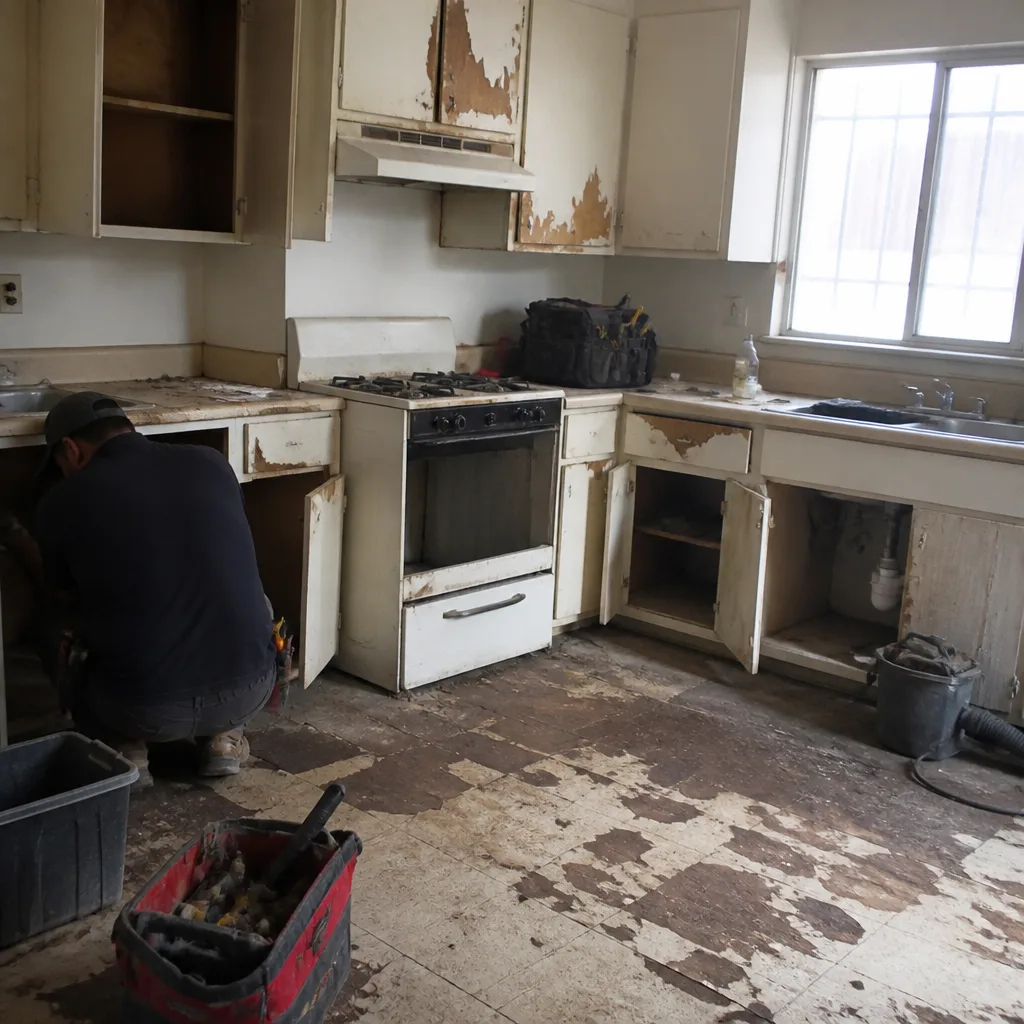 Before
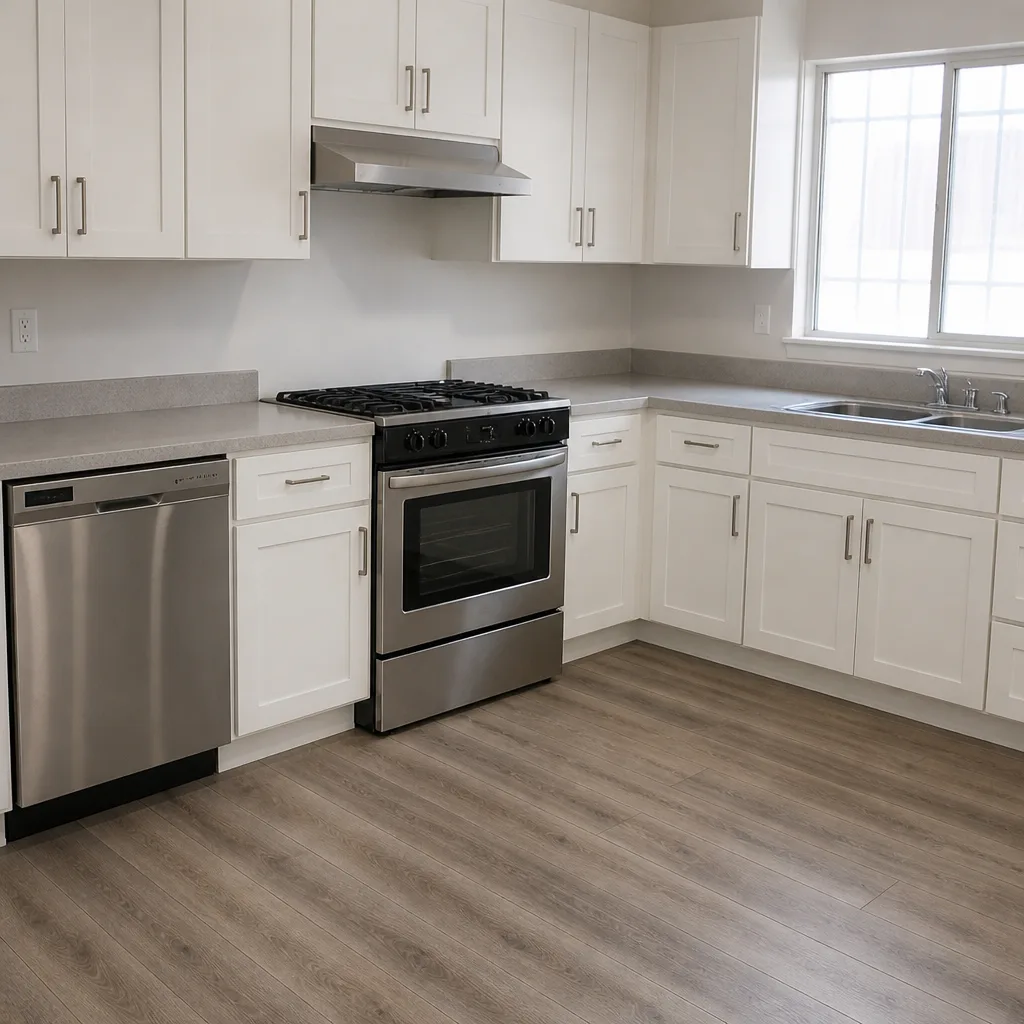 After
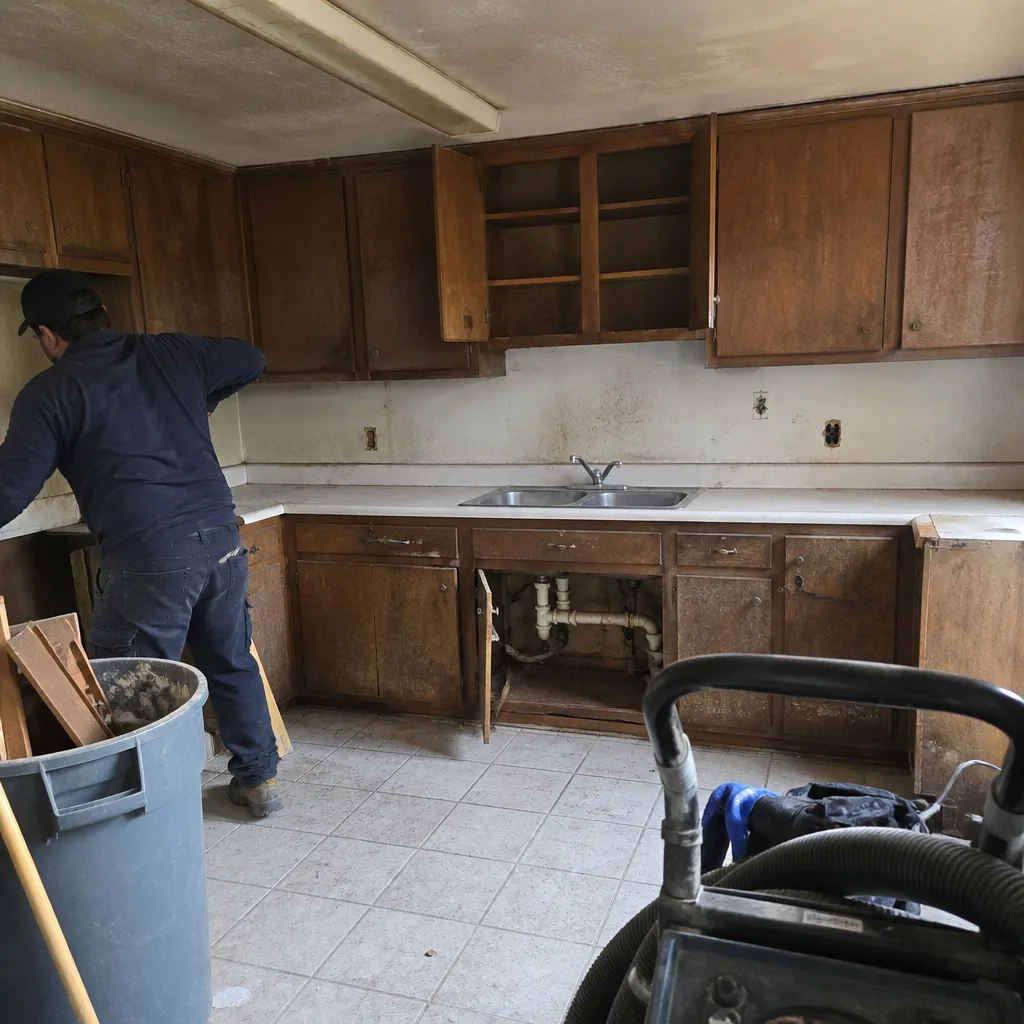 Before
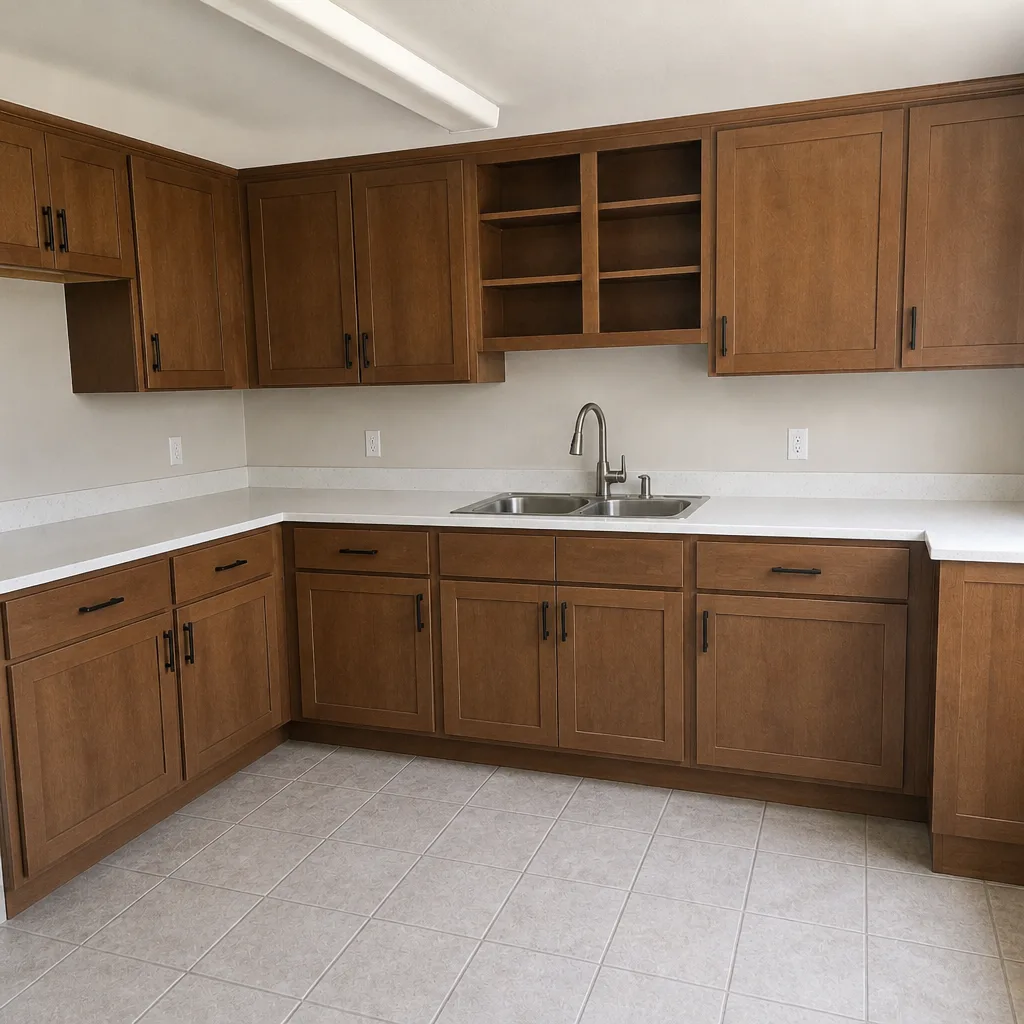 After
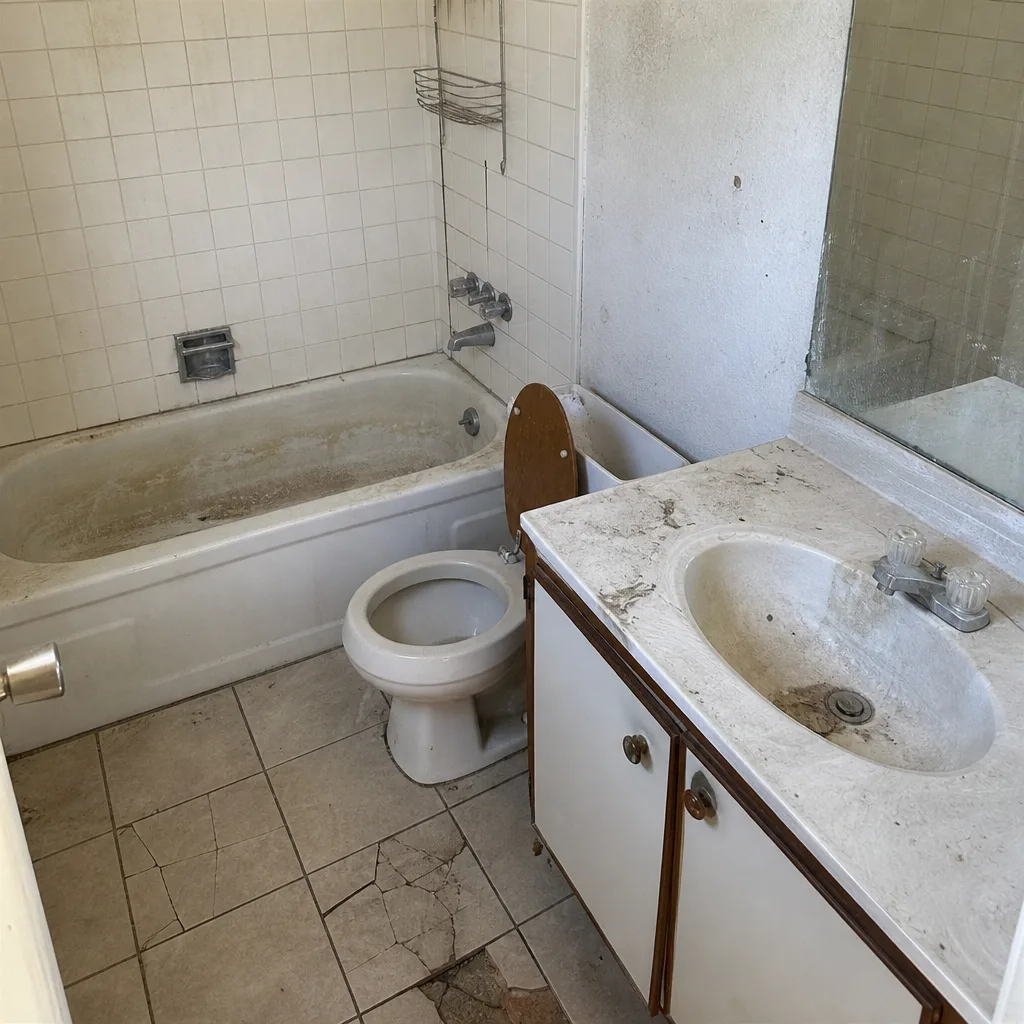 Before
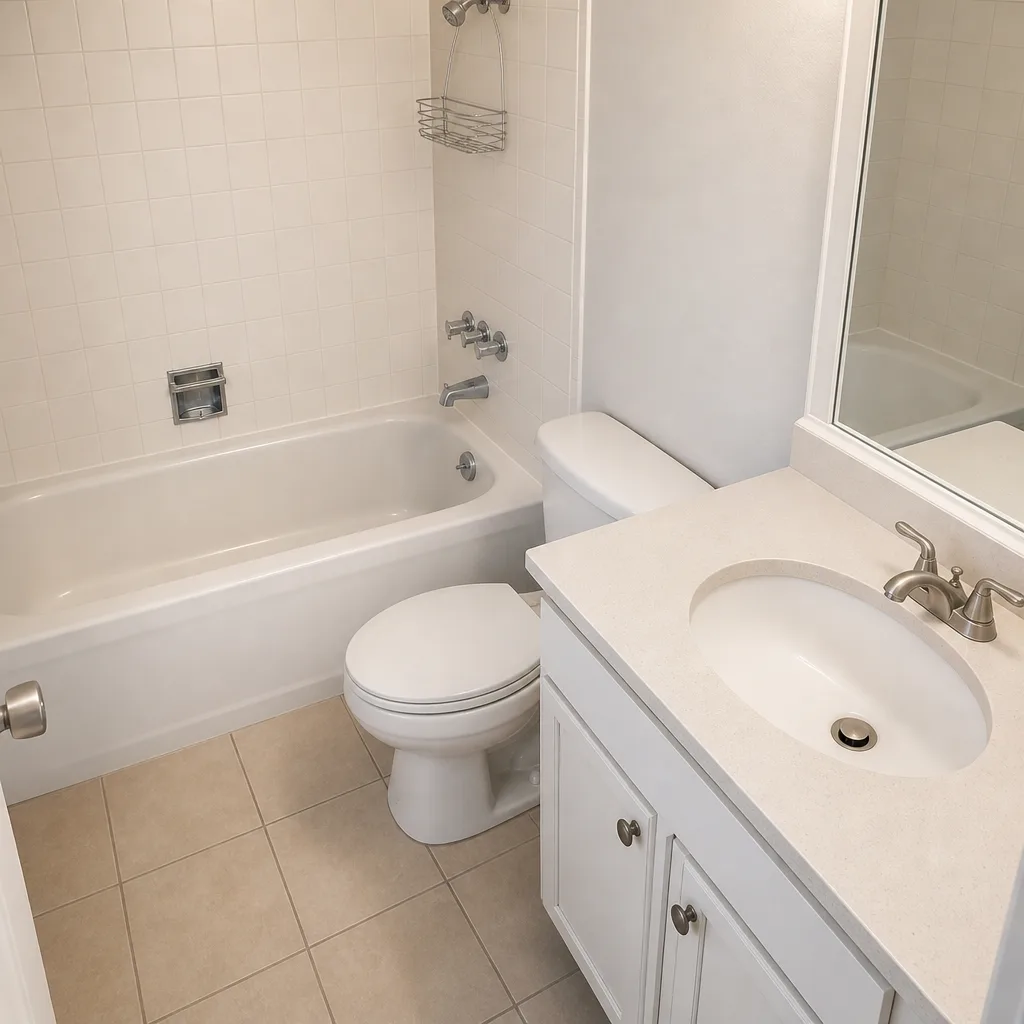 After
When to Call a Professional
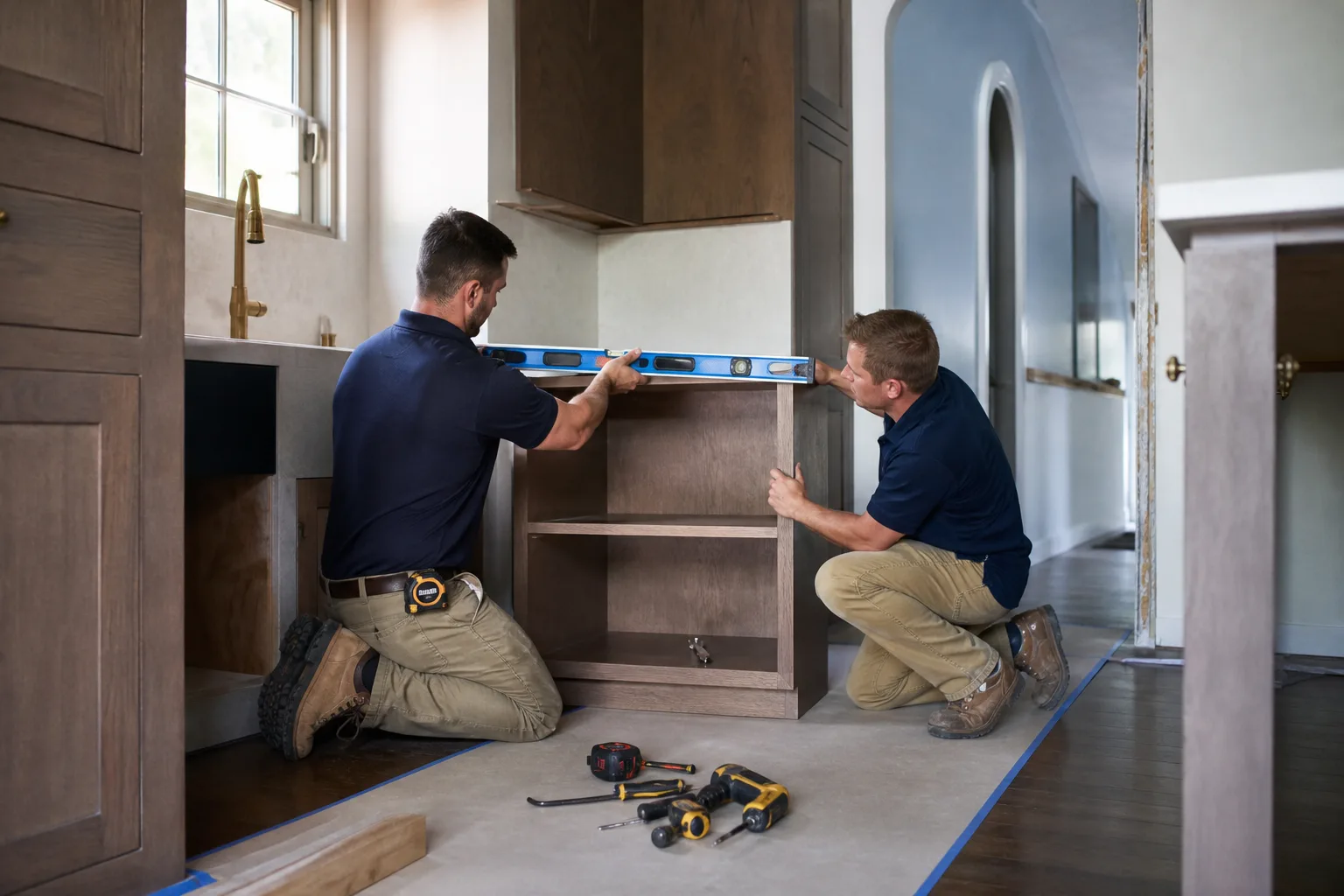
Call a licensed pro – not a tutorial – the moment your plan touches plumbing that moves water, gas lines, electrical circuits you’re adding or relocating, a wall that could be structural, or countertop templating. Also call if you’re on a timeline your family actually depends on, or if you’ve hit a surprise behind the wall (old drain lines, aluminum wiring, cracked framing) that changes the scope. Those moments are where a pro’s estimate is worth more than a weekend of your time. Sawyer Remodel North Las Vegas offers free estimates in North Las Vegas – call (844) 834-9656. You’ll get a written line-item price before any work starts, so you can decide exactly which tasks to keep and which to hand off without guessing at numbers.
Frequently Asked Questions
No – adding or relocating circuits in a Nevada kitchen requires a licensed electrician and a permit. Swapping a light fixture or a faceplate on an existing circuit is generally homeowner-allowed, but anything that runs new wire, adds an outlet, or opens the panel is licensed work. This isn’t a skill ceiling; it’s a legal and safety line. If you’re unsure where your task sits, call (844) 834-9656 and we’ll tell you honestly.
Demo, painting, cabinet hardware swaps, and backsplash tile over sound substrate are the biggest legitimate labor savings – roughly 10% to 15% off a pro scope when combined. These tasks don’t touch licensed systems and are reversible. Task-for-task, this is where DIY effort converts to real dollars without creating resale or insurance exposure. Call us for a free written estimate on the rest of the scope, and you can decide which pile of work is yours.
The right contractor will, but only with a clean scope split and a written handoff. What most won’t accept is liability for work that depends on something you did – like templating counters off cabinets you installed. Bring your plan to the first conversation, and a contractor who’s honest will tell you which splits they’ll take and which they won’t. We’ll give you a written price for the pro portion before any work starts.
It usually gets flagged during the buyer’s inspection and can delay or kill the sale until it’s corrected. Lenders often won’t finance a home with unpermitted electrical or structural work, and a retroactive permit can mean opening walls for inspection. Clark County buyers are attuned to this, and unpermitted work is a real price-reduction item. The clean path is to permit the work at the start – call us for an estimate that includes permit lines.
No – relocating a sink requires a licensed plumber and a permit, regardless of your comfort level. Moving a drain means working with slab foundations, venting, and fall requirements that fail silently if they’re wrong, and in older North Las Vegas homes you may be cutting into cast iron drain lines. This is one of the clearest line-in-the-sand tasks. Call (844) 834-9656 for a free estimate on the plumbing scope before you plan the rest of your kitchen.
Typically six to ten weeks for a mid-size kitchen, with two to three of those weeks in the hybrid model occupied by your own DIY labor. The schedule tightens when your scope is cleanly separated from the pro’s and the permits are pulled early. The biggest schedule drains are scope surprises behind the wall and DIY tasks that run long and push the handoff date. Get a written schedule with your estimate – call for a free one.
The Bottom Line
The line between safe DIY and licensed work in a kitchen remodel isn’t about confidence – it’s about what’s behind the walls, the slab, and the electrical panel. Demo, painting, hardware, and simple backsplash tile are genuinely yours to take, and they save real labor dollars. Anything touching plumbing, gas, electrical circuits, structural walls, or countertop templating is licensed work, and in North Las Vegas, unpermitted work carries real risk at resale and insurance time. The best approach is a clean hybrid: own the safe work, hand off the rest, and get a written price on the professional scope before anyone picks up a tool. Want to see the full professional side of a North Las Vegas kitchen? Start with our Bathroom Remodeling in North Las Vegas guide for a sense of how multi-trade projects come together, and see how our Sawyer Remodel North Las Vegas home team runs a project end to end.
Ready to put a number on the professional side of your kitchen plan? Call (844) 834-9656 for a free estimate. You’ll get a written line-item price before any work begins – with a live arrival time, photo updates at each stage, and the 365-Day Done Right Promise standing behind the work. Our technicians have up to 21 years of experience, and the tradespeople we coordinate are background-checked and licensed for their scope. Free estimates, no surprises at the invoice.
Written by the team at Sawyer Remodel North Las Vegas.