Last updated November 18, 2026








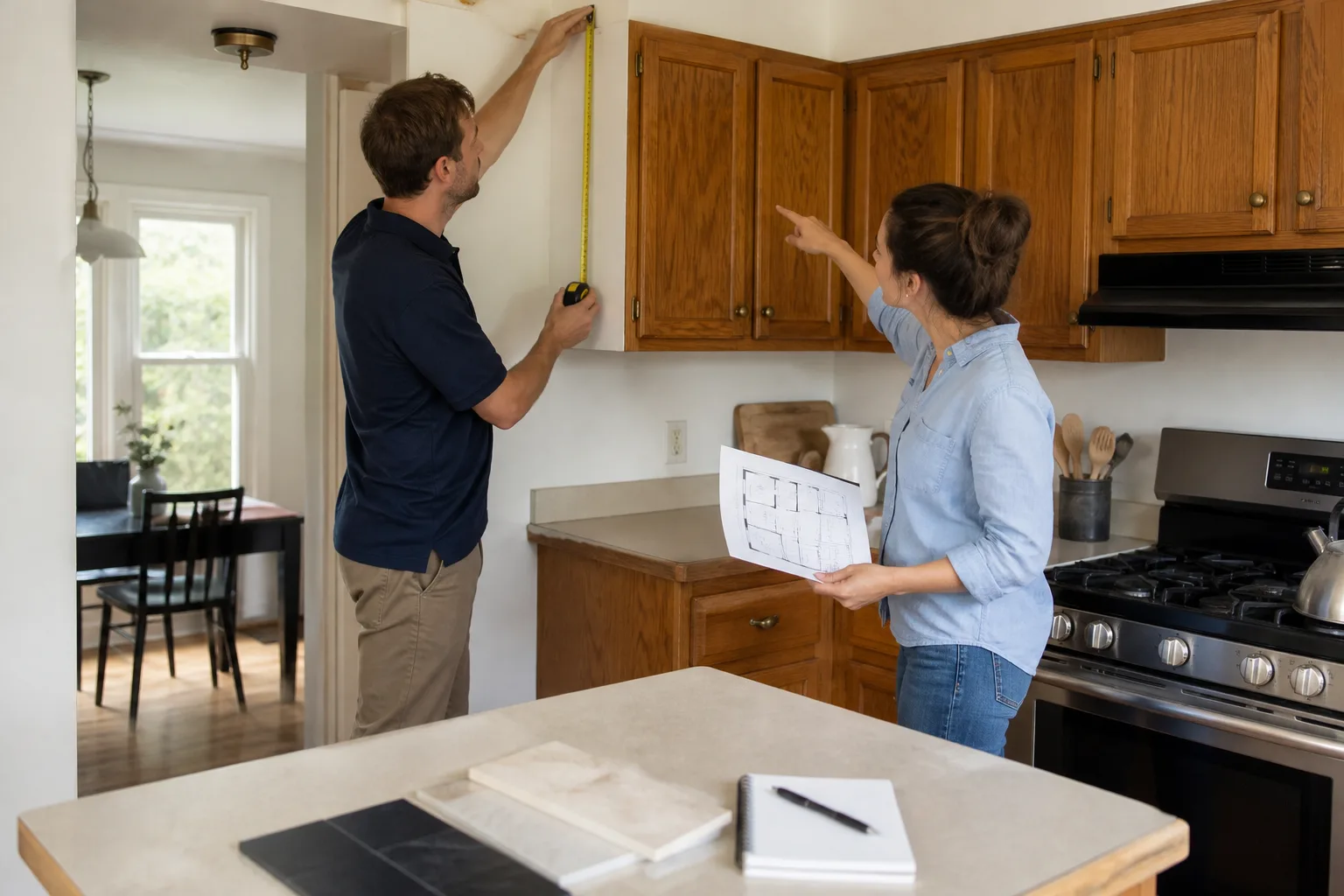
Free written scope consultation - allowances, timeline, and change-order rules on paper before a single trade is scheduled
General Contractor Maintenance Checklist for North Las Vegas Homeowners
Las Vegas Valley tap water averages 278 ppm hardness – roughly three times the EPA’s “hard” threshold. That single number explains more North Las Vegas home failures than any other factor: cracked grout, seized shutoff valves, faucets that spray sideways after four years, water heater tanks that rust from the inside out. Generic maintenance calendars written for humid climates miss all of it. This guide is built around what actually breaks in North Las Vegas homes – the 115°F summers, the July-to-September monsoon window, the flat desert roofs, and the hard water running through every wall.
Quick Answer
North Las Vegas homeowners should inspect their roof and expansion joints every June before monsoon season, flush the water heater and check the anode rod annually because of 278 ppm water hardness, re-caulk sun-baked stucco every two years, and have a general contractor look at anything involving cracking patterns in stucco, sagging roof decking, or flatwork settlement. The rest – aerators, filters, minor caulking – you can handle yourself with a weekend and $50 in supplies.
Styles & brands we work with
- Kitchen remodeling
- Bathroom remodeling
- Home additions & ADU
- Roofing
- Windows & doors
- Driveway & pavers
- Fence
Table of Contents
- The Hard Water Damage Timeline
- Monsoon Season Prep (June Checklist)
- Stucco and Exterior Coating Inspection
- HVAC and Ductwork in 160°F Attics
- Concrete Flatwork and Expansion Joints
- The Full Seasonal Calendar
- Common Mistakes to Avoid
- When to Call a Professional
The Hard Water Damage Timeline
Hard water doesn’t announce itself. It builds up silently in aerators, valve cartridges, and the bottom of your water heater until something fails at the worst possible moment. In our experience across North Las Vegas homes, the failure pattern follows a predictable arc – and knowing it lets you stay ahead of it.
Year 1-2: aerator screens start clogging. You’ll notice reduced flow at kitchen and bathroom faucets. Year 2-3: showerhead spray loses pressure, and the rubber components in single-handle valve cartridges begin to stiffen. Year 3-5: shutoff valves under sinks and toilets seize – the ones you only touch during an emergency. Year 4-7: the water heater anode rod is fully consumed, and the tank begins to rust from the inside. Year 5-plus: grout joints in showers and tub surrounds start eroding from mineral attack.
- Every 6 months: Pull aerators off kitchen and bathroom faucets and soak them in white vinegar overnight. This costs nothing and extends faucet lifespan by years.
- Annually: Flush the water heater tank to remove sediment. North Las Vegas water carries dissolved minerals that settle and accelerate tank corrosion.
- Annually: Have the anode rod inspected. If more than half is consumed, replace it. A $40 anode rod can add three to five years to your water heater.
- Every 2 years: Check shower grout and caulk joints. Re-grout with epoxy-based grout if joints are eroding. This is the single highest-leverage maintenance item in a North Las Vegas bathroom.
- Every 5 years: Have a licensed plumber operate every shutoff valve in the home. A seized valve under a sink can flood a kitchen during a routine repair.
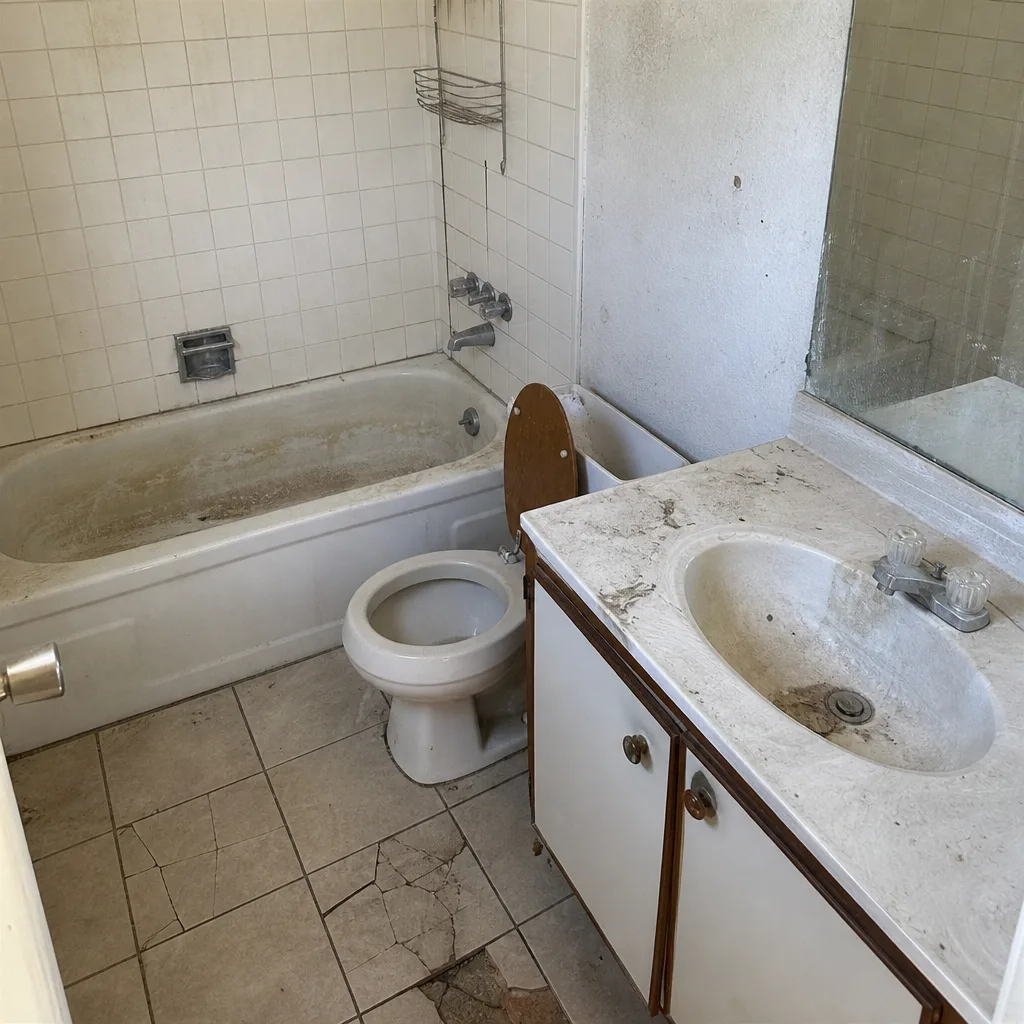
If your home is more than 15 years old and has been on Las Vegas Valley water the entire time, the shower and bathroom fixtures are likely the most degraded parts of the house. It’s a common reason homeowners step up to a full bathroom remodel in North Las Vegas – not because the room is ugly, but because hard water has quietly used up the components.
Monsoon Season Prep (June Checklist)
The July through September monsoon window dumps more rain in three hours than some North Las Vegas neighborhoods see in six months. Desert homes and desert roofs were built for dry conditions, and flat or low-slope roofs in particular catch water in ways pitched roofs never do. That’s why the most important inspection you’ll do all year happens in June – before the first storm rolls in.
A North Las Vegas roof that holds up fine through winter can still leak in a monsoon because monsoon rain comes down at an angle and with force that dry-season runoff never tests. So we look for specific things:
- Drain scuppers and roof drains: The outlets at the low point of a flat or low-slope roof. If a scupper is clogged with dead leaves or debris, water ponds and finds every seam.
- Ponding evidence: Water stains, dark blotches on the roof membrane, or a ring around drains. This means your drainage slope has failed or is being blocked.
- Membrane seams and patched areas: Flat and low-slope roofs (mostly modified bitumen or TPO on North Las Vegas homes) rely on seam integrity. A lifted seam is not a “wait and see” item.
- Flashing at walls and penetrations: Skylights, vents, and wall junctions are where every monsoon leak we’ve diagnosed started.
- Gutters and downspouts: Rare on desert homes but present on some. If you have them, clear them in June, not after the first downpour.
We’ve seen roofs that pass visual inspection in February fail in August because a single scupper was blocked by a palm frond. Have your roof inspected no later than mid-June. If a roofer recommends repair over replacement, that’s usually the conversation you’re hoping for – but say so in writing, and get the scope. If replacement is the right call, brand-name materials (GAF, CertainTeed, Owens Corning) come with manufacturer backing on the install and are worth the small premium in this climate.
Stucco and Exterior Coating Inspection
Stucco is the exterior shell of most North Las Vegas homes, and it takes the kind of UV beating that no other climate delivers. If the sun hits your stucco six hours a day, the elastomeric coating protecting it starts breaking down in five to seven years. Underneath, stucco itself is fine – the coating that fails first.
Inspect exterior walls once a year, ideally in spring. What you’re looking for:
- Hairline cracks in a regular pattern: Usually cosmetic. Sun-driven thermal expansion causes these. A flexible elastomeric caulk in a color-matched shade will hold them.
- Cracks wider than a credit card edge that keep returning after patching: This signals movement behind the stucco – often at seams between the framed wall and masonry, or around window and door openings. Contractor-level diagnosis.
- Chalking or a powdery white film: The coating has given up. Recoat in the next year.
- Dark streaks under windows and along the fascia: Water intrusion. Complicated by our typical wind-driven monsoon rain, which pushes water behind stucco at poorly flashed openings.
Roof and windows are where stucco work matters most. On window-related stucco cracking, the fix usually means pulling and re-setting the window frame – a job for the corner of the trades where general contracting and window installation meet. If you’re replacing windows, choose door and window systems from brands like Therma-Tru or Therma-Tru’s fiberglass options for the front door and ECO Window Systems for the sliding windows common in North Las Vegas homes; the install quality matters as much as the brand. A good general contractor in North Las Vegas can spec both the exterior coating and the window work together so the stucco transition is flashed correctly the first time.
The stucco cycle in this climate is roughly this: inspect annually, patching any hairline cracks the same season, recoat on a 5-7 year cycle, and call in a contractor the moment cracks return within six months of patching.
HVAC and Ductwork in 160°F Attics
An attic in North Las Vegas hits 160°F in July and stays there for hours every afternoon. That temperature stress cooks ductwork, degrades flexible duct insulation, and stresses air handlers in ways that a trained HVAC tech won’t necessarily flag during a routine tune-up – but a general contractor will catch.
Here’s what we look at in attics that a standard HVAC service call often skips:
- Duct insulation integrity: Flexible duct in a 160°F attic loses its insulating value fast. Ceiling insulation degrading from UV and heat is one of the most common silent efficiency drains in a desert home.
- Duct support and sagging: Heat-degraded duct strapping stretches. Sagged ducts reduce airflow, and airflow reduction is what makes cooling systems work harder and fail earlier.
- Air handler access and platform condition: If the unit sits on a degraded platform or has no service clearance, service calls cost more and take longer. A GC can assess whether the platform needs rebuilding.
- Insulation and venting around the attic as a whole: Missed vents, blocked soffits, radiant barrier degradation. The attic is a system, and the HVAC should be treated that way.
- Roof deck condition from below: Stains on the underside of the roof deck show you the next monsoon leak before it’s an interior problem.
Have an HVAC tech service the system annually, but schedule a contractor-level attic inspection every three years. The two are not redundant – they catch different things.
Concrete Flatwork and Expansion Joints
Concrete in the desert moves. Summer days hit 115°F, and the surface of a driveway or patio can swing 40°F between an afternoon and a cool overnight. Expansion joints exist to absorb exactly that movement, and when they fail, the concrete on either side cracks instead.
Inspect flatwork twice a year – once in late spring before the worst heat, once in October when the summer has done its work. Check:
- Expansion joint material: The fiber or asphalt board that sits in the joint between slabs. If it’s compressed flat, missing, or pushed up, the joint is no longer doing its job.
- Joint gaps: A consistent 3/8″ to 1/2″ gap is normal. If a slab has closed the gap entirely, that joint needs attention.
- Hairline cracks radiating from slab corners: Common and usually cosmetic. Fill with a flexible concrete crack filler.
- Lifted or offset sections: One side of a joint sitting higher than the other. This is a settlement issue, often from a poorly compacted base – and it’s a contractor call.
- Drainage pitch: Driveways should slope away from the garage. Ponds forming at the garage door should be addressed before monsoon season.
Re-seal expansion joints every three to five years in North Las Vegas. The material degrades with UV exposure much faster here than in other climates.
The Full Seasonal Calendar
Pulling the individual checklists into a calendar makes them manageable. Here’s the schedule we recommend for North Las Vegas homes:
- January: Water heater flush and anode rod inspection. Interior caulk check at showers and sinks.
- March: Exterior stucco inspection. Recoat if due. Window and door weather-stripping check.
- April: HVAC service call. Attic inspection if due.
- May: Concrete expansion joints and flatwork inspection. Driveway drainage check.
- June: Roof and drainage inspection – the critical pre-monsoon item. Clear scuppers.
- July-September: Monsoon watch. Check for interior ceiling stains after any storm. Interior aerator cleaning if flow drops.
- October: Post-summer concrete inspection. Stucco touch-up if the summer caused new cracking.
- November: Plumbing valve exercise – operate every shutoff. Gutter and drain clearing before winter.
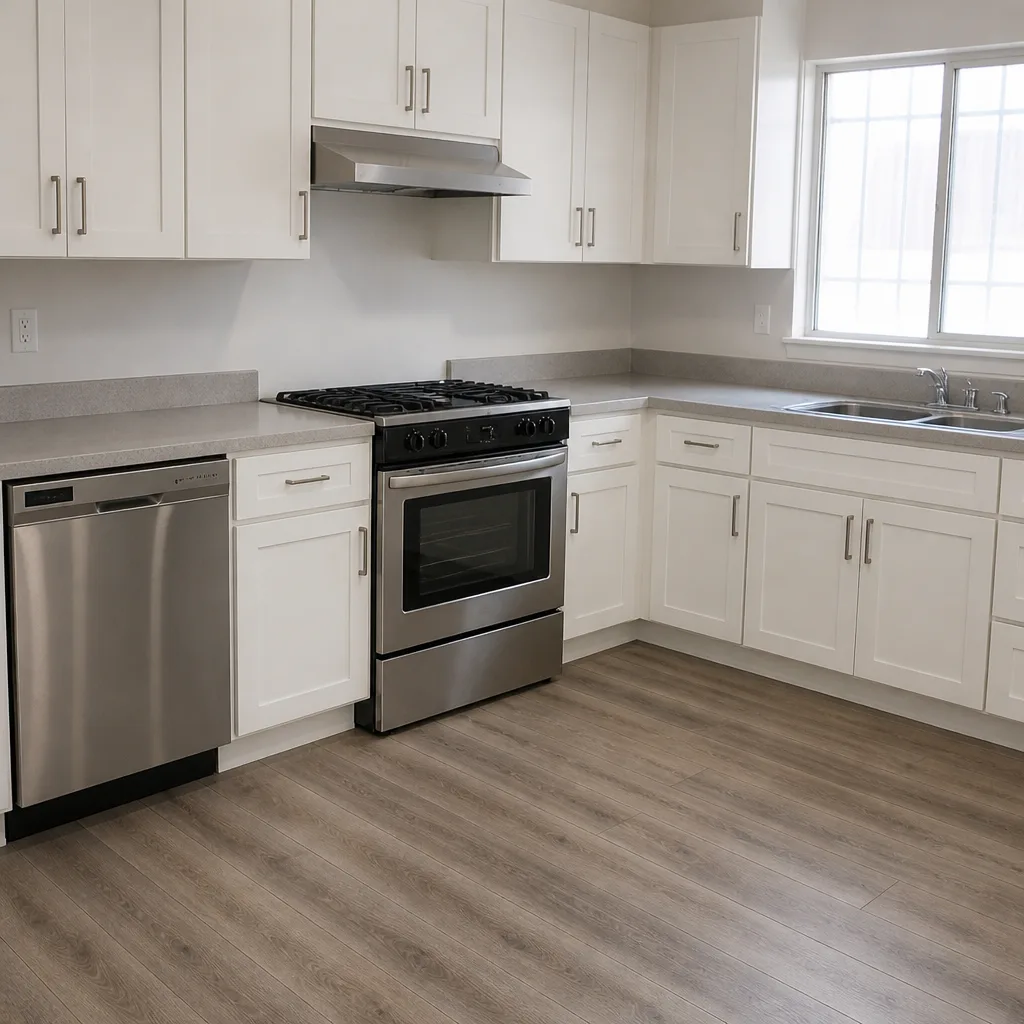
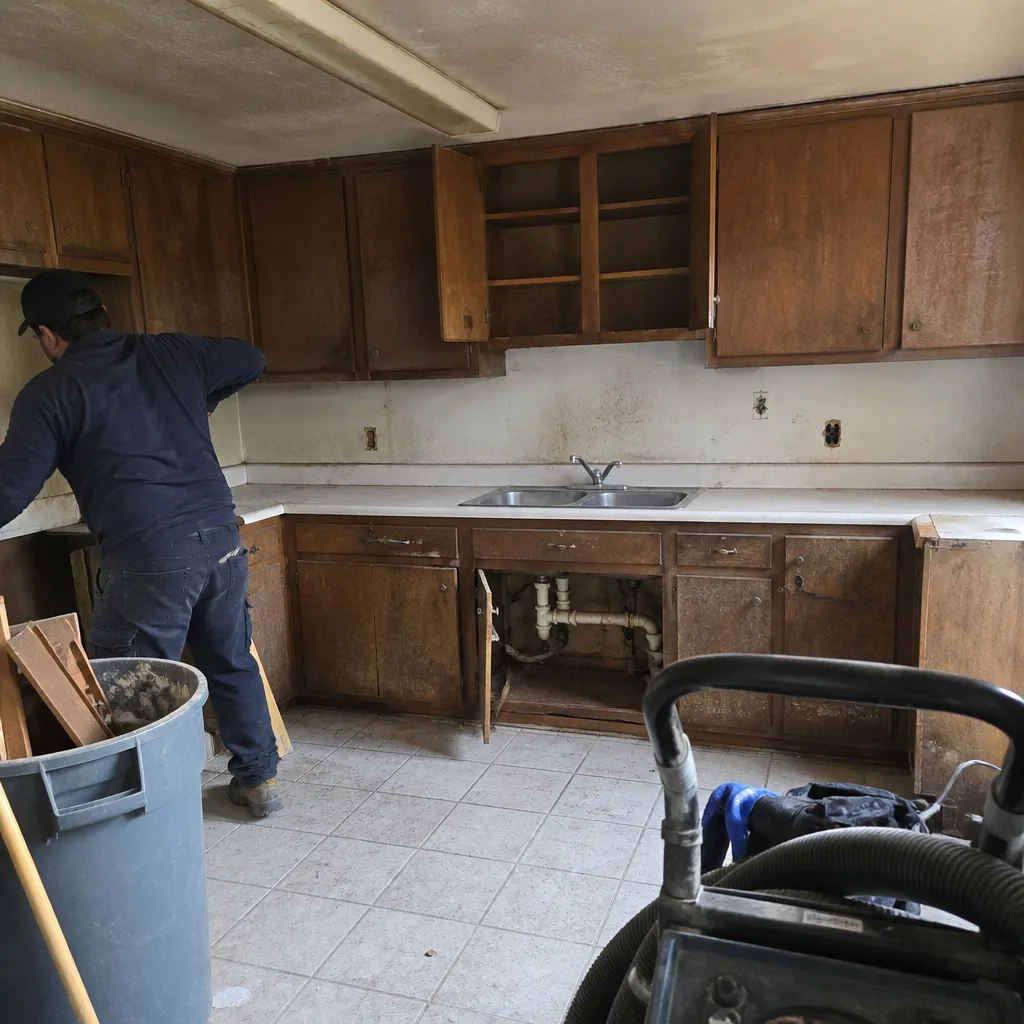
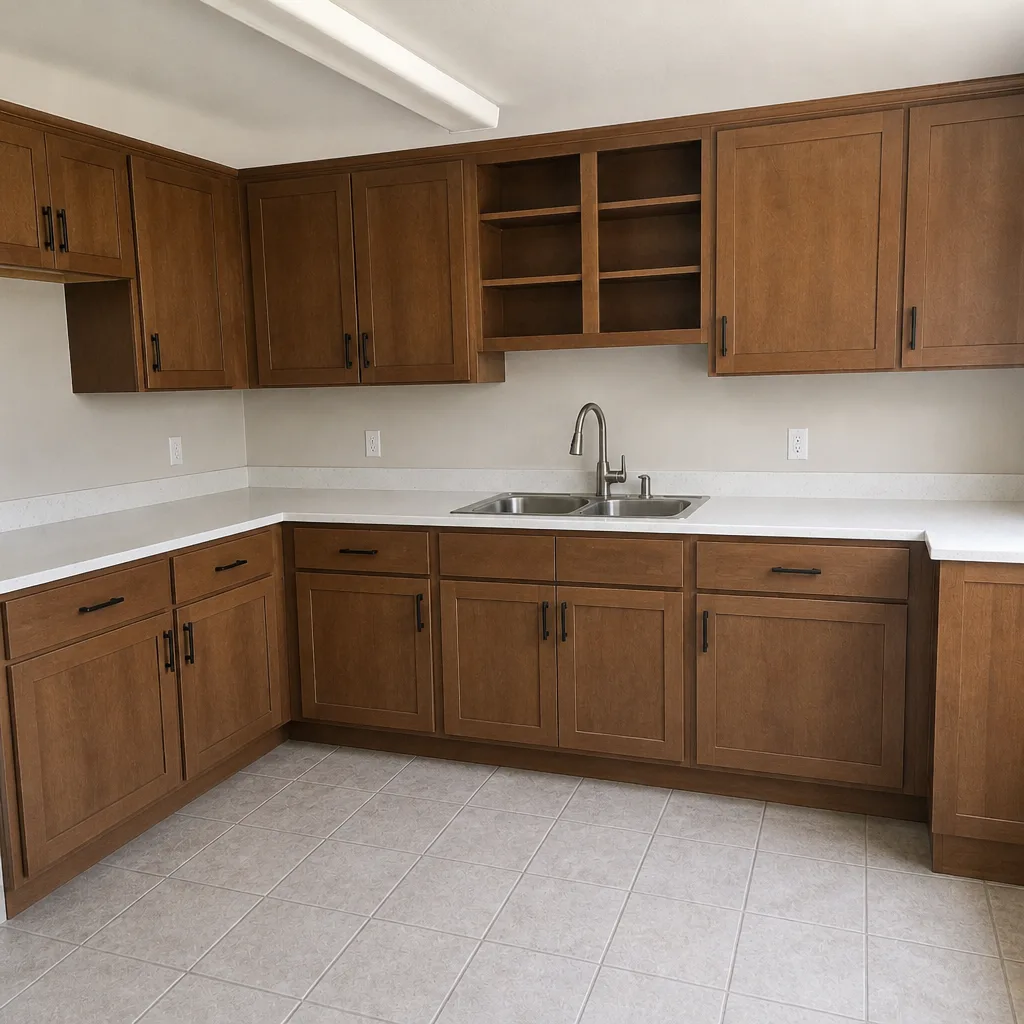
Every item on that list has a North Las Vegas reason behind it. None of it is generic. If you’re planning a whole-home renovation, plan it around this same calendar; a good Sawyer Remodel North Las Vegas home project should start with a maintenance audit, not a material board. And when you’re ready to refresh the kitchen, the kitchen remodeling in North Las Vegas plan should include the plumbing and hard-water protections that belong in a modern North Las Vegas kitchen – a new cartridge and an accessible shutoff valve cost almost nothing to add during a remodel.
Common Mistakes to Avoid
- Following a humid-climate maintenance list. Generic checklists tell you to clean gutters and worry about humidity. Neither is the story in North Las Vegas. In North Las Vegas we recommend a maintenance calendar built around hard water, monsoon drainage, and UV-stressed exteriors – not a version of the same list you’d follow in Ohio.
- Putting off the pre-monsoon roof inspection. A roof that passes visual inspection in February can fail in August. Schedule the inspection no later than mid-June so there’s time to make repairs before the first storm.
- Ignoring hard water because “it’s just a faucet.” A clogged aerator is easy. The seized shutoff valve behind your kitchen sink is not. They’re the same water problem, and the second one floods a floor.
- Patching stucco cracks that keep returning. If a crack is back within six months of patching, the movement isn’t cosmetic – it’s structural. Have a general contractor look at it before the next coat of caulk.
- Treating concrete as “set and forget.” Expansion joints in North Las Vegas cement fail on a three-to-five-year cycle. When they do, the slab cracks instead of the joint.
- Skipping a contractor-level attic inspection because you had HVAC service. HVAC techs service equipment. General contractors look at the attic as a structural system. Both are worth scheduling.
- Doing water heater anode work yourself. Replacing an anode rod involves the pressure relief valve, the tank fittings, and a torch. A failed seal here is a major water event. Have it done.
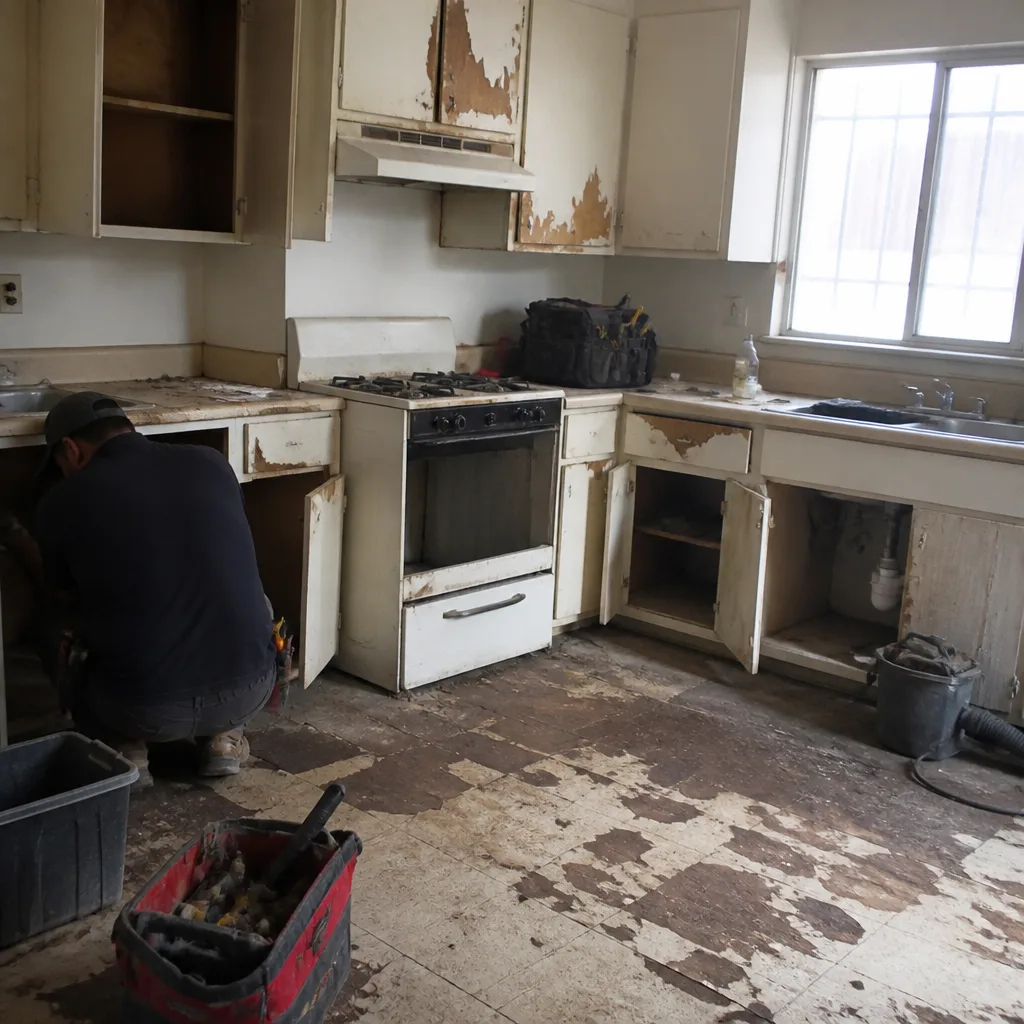
See the difference
 Before
 After
 Before
 After
 Before
 After
When to Call a Professional
Some jobs here don’t belong on a homeowner’s list. Call a licensed general contractor for: recurring stucco cracks that return after patching, roof decking stains from below, water intrusion at windows or wall penetrations, sagging attic platforms, slab settlement that raises one side of an expansion joint, and any water heater work beyond flushing.
A short note on safety: gas appliance work, electrical panel changes, and anything that involves climbing a steep roof should be handled by trained, licensed professionals. Those are the areas where a DIY shortcut costs far more than the repair would have. For free estimates on anything on this list that needs a contractor’s eye, Sawyer Remodel North Las Vegas offers free estimates in North Las Vegas – call (844) 834-9656. The local pro is licensed and insured as their state requires, and every estimate comes with a written scope and price before any work begins.
Frequently Asked Questions

Flush your water heater once a year in North Las Vegas because Las Vegas Valley water averages 278 ppm hardness, and sediment builds up faster here than in most of the country. Flushing removes the settled mineral layer that accelerates tank corrosion. If the anode rod is being consumed quickly, flushing more often than annually won’t help – the rod itself needs to be inspected. Call (844) 834-9656 for an exact quote on water heater service; estimates are free.
Have your roof inspected no later than mid-June, before the July-to-September monsoon window opens in North Las Vegas. The inspection should focus specifically on drainage scuppers, membrane seams on flat or low-slope roofs, and flashing at wall penetrations – the three places we see monsoon leaks start. Contractors are booked out during monsoon season, so June inspection with repairs completed before July is the right order.
Hard water in North Las Vegas is a maintenance problem, not a cosmetic nuisance. The 278 ppm hardness rating means mineral buildup in valve cartridges, water heater tanks, and shower grout on a timeline that’s decades faster than softer-water markets. The practical impact: shutoff valves seize in 3-5 years, water heater tanks fail earlier than rated, and grout joints erode. Annual aerator cleaning and water heater flushing extend the timeline; a full remodel is sometimes the more sensible step once hard water has consumed most of the components.
Hairline cracks in a regular pattern are usually safe to patch yourself; cracks that return within six months of patching are contractor territory. The distinction matters because sun-driven stucco cracks are cosmetic, but cracks that return after patching are almost always structural – often at wall-to-frame seams or window openings that need refitting. If you’re unsure after one patch attempt, call (844) 834-9656 and we’ll schedule a free inspection.
Yes – they check different things and both matter in North Las Vegas. An HVAC technician services the equipment (coolant, filter, compressor). A general contractor inspects the attic as a system – duct insulation integrity, sagging duct support, air handler platform condition, roof deck staining, and soffit venting. Attics hit 160°F in July, and both inspections are how you catch heat-driven failures before they become efficiency problems.
Most of the DIY items on this checklist cost under $50 in supplies – aerators, caulk, and expansion joint filler. Contractor-level work varies widely: a water heater anode replacement is a few hundred dollars, a roof repair on a monsoon-damaged flat roof is typically in the low four figures depending on scope, and stucco repair ranges from a few hundred dollars for a small patch to several thousand for window refit work. The written estimate before work starts is what matters – you approved a range, not a guess. Call (844) 834-9656 for a free estimate.
The Bottom Line
North Las Vegas homes don’t fail on a generic maintenance calendar. They fail on the calendar that 278 ppm water hardness, 115°F summers, and a three-month monsoon window dictate. That means annual water heater attention, June roof inspections, stucco recoat on a five-to-seven-year cycle, attic inspections every three years beyond HVAC service, and expansion joint upkeep every three to five years. Most of the list is a weekend of work and a few hundred dollars. The rest – the recurring cracks, the ponding on the roof, the slab settlement – is contractor territory, and it’s the work you don’t want to postpone. Our technicians have up to 21 years of experience diagnosing exactly these patterns in North Las Vegas homes.
For a free, written estimate on any item in this checklist, call Sawyer Remodel North Las Vegas at (844) 834-9656. Every project comes with The Relay Visibility Guarantee: a written price before work starts, live arrival time, photo updates before and after, and a 365-Day Done Right Promise. No surprise numbers at the invoice.
Written by the team at Sawyer Remodel North Las Vegas.